

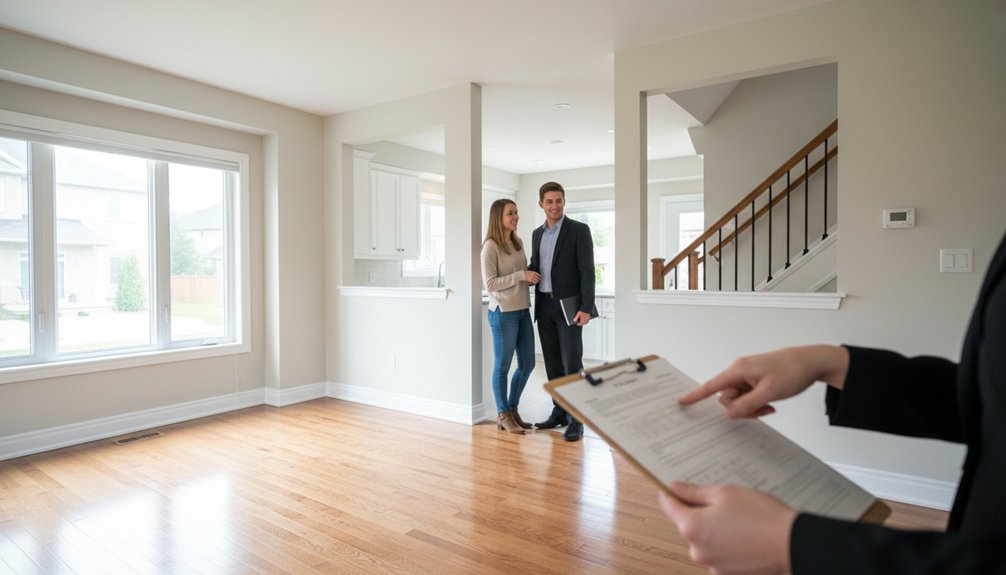
At your Uxbridge viewing, you’ll first confirm the address, boundaries, and any shared rights of way, then photograph each elevation and key fittings. Inside, you’ll log room sizes, light and orientation, and test taps, flushes, heating controls, and extractor fans. You’ll check skirtings and corners for damp tide marks, musty odours, and cracking, and inspect rooflines, pointing, and gutters. If it’s leasehold, you’ll request accounts, major-works notices, and fire/EWS1 evidence. More safeguards follow.
Key Takeaways
- Confirm the exact address, boundaries, rights of way, and any shared access before you assess the exterior and garden space.
- Photograph every room and elevation, noting dimensions, natural light, orientation, storage, and any obvious wear to key fittings.
- Check for damp and structural warning signs: musty smells, tide marks, salt deposits, bulging plaster, and stepped or diagonal cracking.
- Test plumbing, electrics, and heating: water pressure, stable hot water, toilet flushes, extractor fans, radiator heat-up, and RCD protection on the consumer unit.
- For flats, review lease and building safety: service charges, major works, ground rent, lease term, fire risk assessment, and EWS1/remediation status.
Your 15-Minute Uxbridge Viewing Checklist
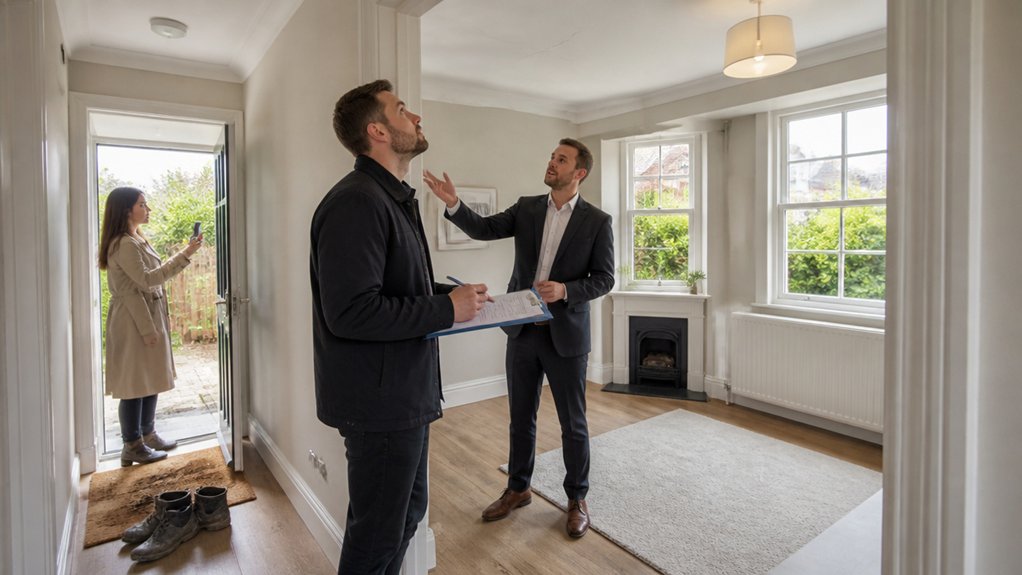
Whether you’re viewing a flat near Uxbridge town centre or a family home closer to Hillingdon’s residential streets, you should treat the first 15 minutes as a structured evidence-gathering exercise rather than a casual walk-through.
Start outside: confirm the address, boundary lines, and any rights of way implied by gates, paths, or shared access.
Inside, log room dimensions, natural light, orientation, and storage capacity; photograph each elevation and key fittings.
Test taps, flushes, heating controls, and extractor fans to evidence functionality.
Check windows and doors for smooth operation and locking points.
Request copies of EPC, service-charge budgets, and recent utility costs.
Compare your notes against recent local comparables for Property valuation, then frame Negotiation strategies around documented deficiencies, not opinion.
Keep a time-stamped checklist.
Spot Damp, Cracks and Roof Red Flags Fast
Once you’ve captured the basic layout and services in your first 15 minutes, you should immediately scan for building-fabric defects that can alter value, insurability, and mortgageability.
Start low: check skirting boards, corners, and air-brick lines for tide marks, blistered paint, or salt deposits indicating basement moisture or rising damp. Note any musty odour and record it.
Then assess wall stability: look for stepped cracking in brickwork, diagonal cracks from window corners, and bulging plaster. Measure crack width with a coin edge and photograph with scale.
Externally, sight along elevations for bowing, failed pointing, and spalled bricks.
Finally, scrutinise the roofline from ground level: sagging ridges, missing tiles, daylight in the loft hatch area, and blocked gutters. Treat repeated patch repairs as a disclosure issue.
Test Plumbing, Electrics and Heating During Viewings
Before you get drawn into décor or negotiation, you should actively test the plumbing, electrics, and heating during the viewing, because latent defects in these systems can trigger material cost exposure, safety risk, and lender or insurer conditions.
For a basic Plumbing inspection, run taps, flush toilets, and check water pressure and temperature stability; look under sinks for staining, damp odour, and recent sealant. Ask when the boiler was last serviced, then switch on heating and hot water, confirm radiators warm evenly, and listen for banging or pump noise.
For Electrical safety, operate a sample of sockets and lights, test extractor fans, and inspect the consumer unit for modern RCD protection. Record observations and request documentary evidence before you proceed.
If It’s Leasehold, Check Charges, Rules and Cladding
Although a leasehold purchase can look straightforward on the headline price, you must treat the lease terms and the building’s compliance position as core due‑diligence items, because service charges, ground rent, reserve fund liabilities, and use restrictions can materially affect affordability, resaleability, and lender acceptance.
You should obtain the management pack, review the last three years’ accounts, budgets, and major-works notices, and query any sharp increases or deficit funding. Check ground rent clauses for escalation, and confirm remaining term, deed of variation history, and any consent fees.
Scrutinise Leasehold nuances: subletting permissions, pet bans, alterations, flooring, and short‑let restrictions.
For Cladding safety, request the latest fire risk assessment, EWS1 status where applicable, and evidence of remediation funding, warranties, and ongoing waking‑watch or alarm costs.
Try the Uxbridge Area: Noise, Parking and Commute
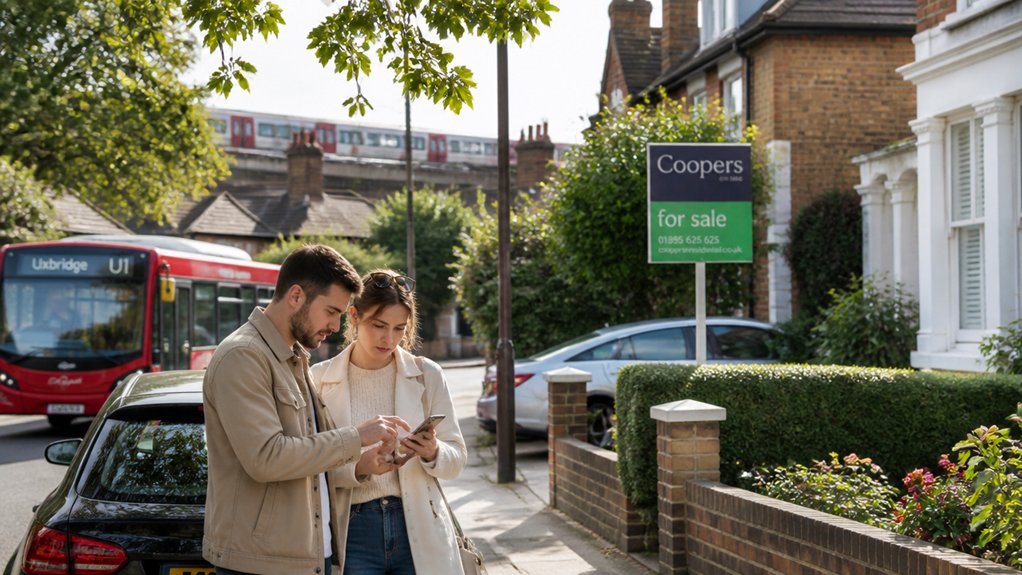
If you can, visit the Uxbridge locality at multiple times (weekday peak, late evening, and weekend), because noise levels, parking availability, and real commute times often differ materially from what a listing or single viewing suggests.
You should document traffic, aircraft paths, and footfall near pubs, schools, and the High Street, and treat any material nuisance as a negotiable issue.
You must test parking in practice: check permit zones, visitor bays, enforcement hours, and whether spaces remain after 6pm.
You should also verify your commute by running the exact route to key stations and road links, allowing for delays.
Walk to local amenities and assess lighting, crossings, and personal safety.
Observe the community atmosphere, noting antisocial behaviour, refuse, and late-night activity patterns.
Conclusion
Treat each Uxbridge viewing as your due diligence window, and don’t waive it. You should document damp indicators, structural cracking, and roof defects, then verify taps, sockets, heating output, and isolation points. If it’s leasehold, you must obtain service charge histories, reserve fund position, restrictions, and any cladding/fire documentation. You should also test the locality for noise, parking constraints, and commute reliability. A viewing is a contract’s rehearsal: scrutinise every line before you sign.