


You’ll shape a Japandi living room by blending Japanese restraint with Scandinavian warmth: keep a 3–5 shade palette of warm whites, greige, clay, muted sage, or smoky blue, then add a sparing inky-black line. Choose low, clean furniture with airy negative space and durable comfort. Layer matte, honest materials—oak, linen, honed stone, and wool—for quiet texture. Use paper lamps and warm 2700–3000K bulbs, plus closed storage to keep surfaces clear. Keep going for finer choices and layouts.
Key Takeaways
- Build a 3–5 shade palette of warm whites, greiges, clay, sage, and smoky blue, repeating one undertone for cohesion.
- Choose low, clean-lined furniture with slim legs and negative space; avoid bulky, ornate forms to keep the room grounded.
- Layer honest materials—oak or walnut, linen, wool, and honed stone—using matte finishes and one dark accent for contrast.
- Use soft, glare-free lighting with paper or linen shades, warm 2700–3000K bulbs, and dimmable layers for calm evening ambiance.
- Prioritize closed, integrated storage to prevent clutter, then style sparingly with functional ceramics, ink art, and a few plants.
Define Japandi: 5 Living Room Rules
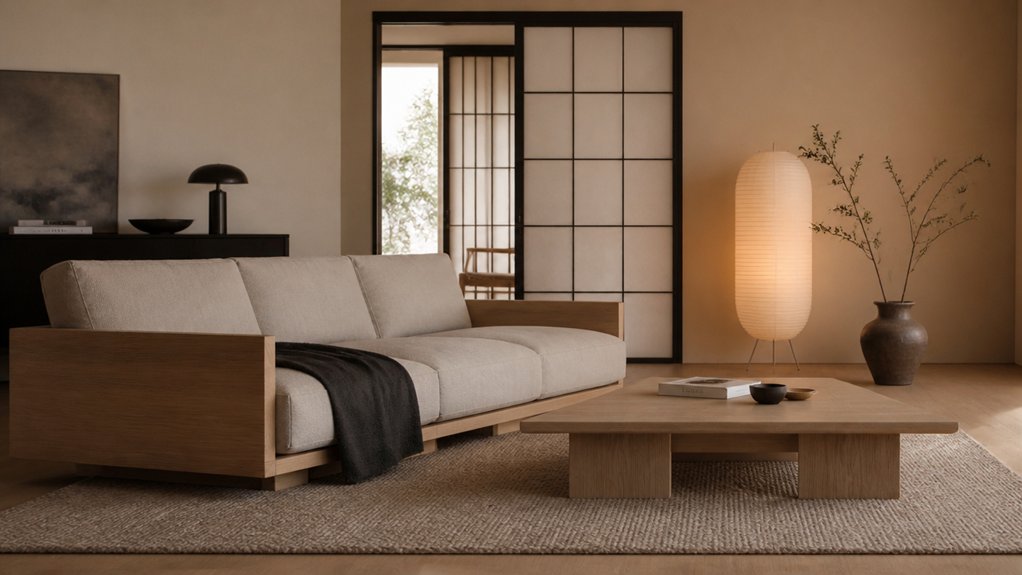
If you want a living room that feels calm but never cold, Japandi gives you a clear framework. You blend Japanese restraint with Scandinavian ease, letting Cultural influences guide choices without clutter.
Follow five rules. First, keep only what you use; edit hard. Second, choose low, grounded seating and clear sightlines so the room breathes. Third, favor honest materials—wood, linen, wool, clay—so texture replaces excess. Fourth, design for function: closed storage, flexible lighting, and one clear focal point. Fifth, add warmth through craft: a handmade bowl, a woven rug, a single branch.
When you follow these steps, Japandi aesthetics stay quiet, practical, and deeply restful, day after day.
Choose a Calming Japandi Color Palette
Because Japandi draws from forests, stone, and sky, your color palette should stay quiet and layered. Start with warm whites, soft greiges, and clay tones to keep the room breathable and grounded.
Use Color psychology to choose hues that lower visual noise: muted sage eases tension, smoky blue slows the mind, and sand or oat adds warmth without glare.
Build Color harmony by repeating one undertone throughout—either warm (beige, terracotta, walnut) or cool (stone, ash, charcoal)—so everything feels intentional.
Add contrast sparingly with inky black or deep brown in small accents to sharpen lines.
Keep finishes matte and natural, and let daylight do the heavy lifting.
Limit your palette to three to five shades.
Pick Japandi Furniture: Low, Clean Silhouettes
While your palette stays quiet, your furniture should do the same—low to the ground, clean in profile, and built for daily use. Choose a sofa with a grounded frame, slim arms, and simple legs, so the room feels open and calm.
Keep silhouettes straight and proportions balanced: a low coffee table, a pared-back media console, and a few well-spaced seats. Let negative space do the work, and skip bulky recliners or ornate details that break minimalist aesthetics.
Aim for pieces that sit lightly in the room, with edges that feel softened and intentional.
If you’re working with monochrome schemes, use shape to add interest: curved corners, tapered feet, or a single statement chair. Prioritize comfort, durability, and easy movement for everyday rituals.
Layer Japandi Materials: Wood, Linen, Stone, Wool
You balance Japandi calm by layering honest materials: wood grain, linen weave, cool stone, and soft wool.
You pair warm tones with cooler surfaces so the room feels grounded, not flat.
You keep each texture purposeful—touch, comfort, and durability working together.
Balancing Natural Textures
When natural textures work in quiet layers, a Japandi living room feels calm, grounded, and useful. You create texture contrast by pairing smooth wood with nubby linen, honed stone with soft wool, and matte ceramics with woven baskets. Keep each material honest and uncoated, so touch matters as much as sight.
Start with wood as your anchor: a low table, slatted media console, or simple shelving. Add linen through curtains and a tailored sofa cover that drapes cleanly.
Bring stone in small, sturdy doses—tray, lamp base, or side table—so it reads as structure, not clutter. Finish with wool: a flatweave rug and one throw for warmth and sound control.
This natural element integration keeps the room quiet, durable, and easy to reset daily.
Pairing Warm And Cool
Because balance lives in temperature as much as texture, pair warm and cool materials so the room feels steady, not flat. Start with pale oak or walnut as your warm anchor, then cool it down with stone, clay, or matte concrete on a side table or hearth. Keep linen and cotton in soft neutrals to bridge both ends, and add wool in a tight weave for quiet depth.
You’ll avoid Jarring color clashes when you let undertones match: warm wood with creamy white, cool stone with gray-beige. Limit contrast to one strong note, like charcoal cushions.
Skip Overly ornate accessories; choose one ceramic vase, one paper lamp, and one textured throw. Your room stays calm, tactile, and easy to live in daily.
Choose Japandi Lighting: Paper Lamps, Warm Bulbs
Although Japandi style keeps décor quiet, lighting sets the room’s mood and function. Start with Paper lamps in rice paper or linen; they soften edges and echo natural fibers. Hang one pendant over the coffee table, or place a tall floor lantern beside the sofa to create calm zones.
Choose warm bulbs at 2700K–3000K so wood tones read rich and skin looks relaxed. Layer light with a dimmable ceiling source, a task lamp for reading, and a low accent glow near plants or art.
Keep fixtures simple: pale oak, matte black, brushed steel. Aim for glare-free light, clean cords, and switches you’ll use daily. You’ll feel grounded every evening.
Add Japandi Storage for a Clutter-Free Room
If your living room feels busy, storage becomes the quiet backbone of Japandi style. Start by clearing surfaces and giving every item a calm home. Choose closed cabinets in light oak or ash, with simple pulls or touch-latch doors to keep lines clean.
Add Hidden storage where you won’t see it: lift-top coffee tables, benches with compartments, and slim drawers under a media console.
Rely on multi functional furniture to reduce what you need. Pick a low sideboard that holds tech, books, and throws, or nesting tables that tuck away when you’re done.
Keep open shelving sparse and balanced, reserving it for daily essentials only. When storage blends in, the room feels larger, quieter, and easier to live in.
Add Lasting Japandi Decor: Art, Plants, Ceramics

Once your storage fades into the background, let a few lasting pieces bring quiet character back in. Choose one anchor of Japanese art—an ink print, woodblock, or simple calligraphy—hung at eye level with generous negative space. Keep frames slim, in oak or matte black, so the image breathes.
Bring life in with indoor plants that match the calm: a rubber plant, bonsai, or fern in a stoneware pot. Cluster plants by light needs, not symmetry, and leave the floor clear for easy cleaning.
Add ceramics you’ll use daily: a textured vase, a tea set, a low bowl for keys. Favor muted glazes, visible clay, and imperfect rims. Let function lead, and beauty will follow.
Conclusion
You’ve learned to shape a Japandi living room with five clear rules: calm color, low clean furniture, layered natural materials, warm paper lighting, smart storage, and lasting decor. Keep linen, wood, stone, and wool in quiet balance, and let every piece earn its place. When you edit with care, the room becomes more than tidy—it feels like a breath of forest air. In the end, less is more.