


Farmhouse decor feels best when you follow three simple rules: keep it warm, useful, and honest. You’ll layer creamy whites, soft grays, and muted greens with real wood, linen, jute, and a few timeworn pieces that show their age. Choose sturdy furniture with clean lines, then add character with warm 2700K lighting, matte black or brass hardware, and simple shelf styling using everyday crocks and boards. Stick around for the room-by-room details and easy upgrades.
Key Takeaways
- Follow the farmhouse formula: keep spaces warm with textures, useful with functional pieces, and honest with real, naturally worn materials.
- Choose a calm palette: warm whites, greige, soft gray, muted sage, with small accents in blue, green, taupe, or charcoal.
- Layer textures intentionally: reclaimed wood anchors, then linen, jute, cotton, baskets, ceramics, and matte metals for contrast and depth.
- Pick durable, simple furniture: solid wood tables, thick benches, sturdy dressers, layered rugs, and linen textiles for a cozy, lived-in feel.
- Use warm lighting and restraint: 2700K LEDs with dimmers, practical shelves and hooks, and rotate seasonal decor to avoid clutter.
The “Right” Farmhouse Decor Formula (3 Rules)

Whether you’re starting from scratch or just freshening up a room, the “right” farmhouse decor formula comes down to three simple rules: keep it warm, keep it useful, and keep it honest.
Start with warmth: layer soft textures, muted paint, and wood tones so the space feels lived-in, not staged.
Next, keep it useful. Choose Farmhouse accessories that earn their spot—hooks by the door, baskets that corral clutter, a sturdy bench that pulls double duty. Let every piece solve a problem.
Finally, keep it honest. Use real materials, show natural wear, and skip fussy shine. A simple lantern, handmade pottery, and linen curtains beat plastic “distressed” tricks.
Carry the same mindset into outdoor decor with weathered planters, a practical doormat, and durable seating.
Modern vs Rustic vs French Farmhouse: Choose Yours
Now you’ve got the rules down, it’s time to pick your flavor: modern, rustic, or French farmhouse.
You’ll spot modern farmhouse essentials in clean lines, mixed metals, and simple, sturdy pieces that still feel warm.
Then you can weigh rustic’s rough-hewn wood and worn-in charm against French farmhouse’s softer curves, lighter colors, and vintage-elegant touches.
Modern Farmhouse Essentials
Before you buy a single barn-light pendant or shiplap panel, it helps to pin down which farmhouse lane you’re in—modern, rustic, or French—because each one sets a different tone for your home.
If you’re leaning modern, keep the bones warm and the lines clean. Start with Modern furniture: a streamlined sofa, simple spindle chairs, and a sturdy dining table with minimal detailing. Layer in cozy texture through linen slipcovers, wool throws, and a jute or flatweave rug.
Choose matte black or aged brass hardware for a crisp, practical edge. Balance all that calm with Contemporary art—one bold canvas or graphic print keeps the room current.
Stick to a tight palette: creamy whites, soft grays, weathered oak, and charcoal accents. Keep surfaces uncluttered, but let a few well-used pieces show.
Rustic Vs French Farmhouse
Once you’ve nailed down modern farmhouse basics, you can decide if your home wants the raw, hardworking grit of rustic farmhouse or the softer, old-world polish of French farmhouse.
Rustic leans on reclaimed beams, knotty woods, black iron, and honest wear. You’ll choose sturdy tables, open shelves, and vintage tools, and you can edge it toward industrial chic with pipe lighting and steel stools.
French farmhouse keeps the soul but smooths the edges: curved legs, linen slipcovers, aged brass, and muted creams. You’ll add a chandelier, florals, and a weathered hutch instead of rough-sawn planks.
If you crave air and light like coastal farmhouse, borrow French palettes, then ground the room with rustic texture—one hefty bench, one patinaed mirror. Keep it simple, keep it useful.
Pick Farmhouse Colors That Always Work
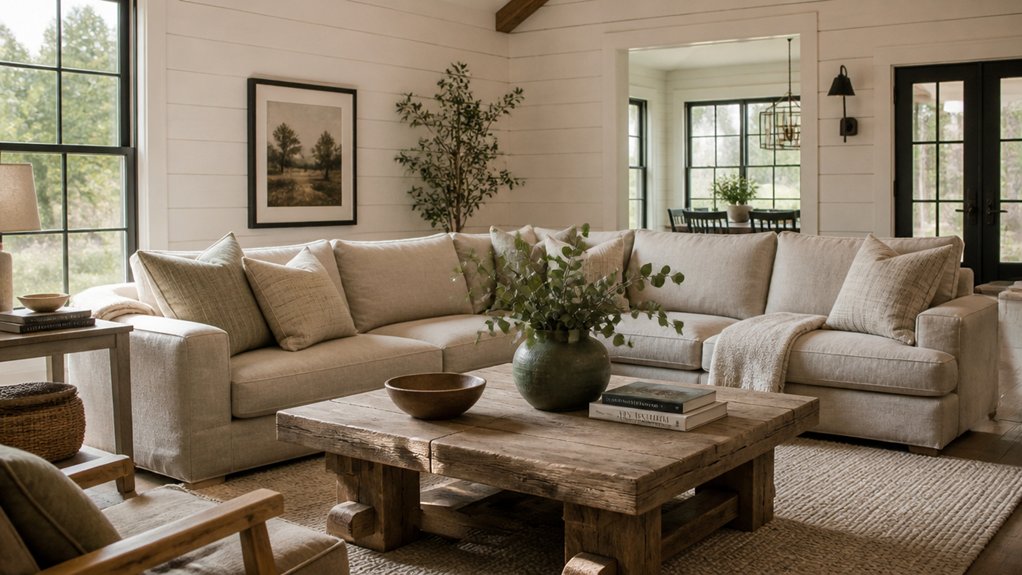
Although farmhouse style welcomes a little wear and weathering, the right color palette keeps your rooms feeling calm, cozy, and pulled together. Start with warm whites or creamy off-whites for walls, then add soft grays, greige, or muted sage to steady the space.
Use Color psychology to guide you: blues and greens soothe, warm taupes comfort, and charcoal adds grounded contrast without feeling harsh. Keep brights as tiny accents so the room stays restful.
Choose a paint finish that fits real life: eggshell or satin wipes clean in kitchens and halls, while matte softens bedrooms and living rooms.
Repeat your core neutrals from room to room, then vary one accent color to keep things cohesive but not boring.
Reclaimed Wood and Natural Textures (How to Layer)
When you mix reclaimed wood with natural textures, you give farmhouse rooms that lived-in warmth without making them feel cluttered. Start with one anchor piece: a weathered beam mantel, a plank shelf, or a vintage stool.
Then layer softer Organic textures around it—linen curtains, a jute rug, cotton throws, and a few woven baskets.
Keep contrast intentional: pair rough wood grain with smooth ceramics, clear glass, or matte metal so the room breathes. Repeat tones, not items; echo the wood’s honey or gray notes in pillow stripes, pottery, and wall art.
Use Reclaimed accents sparingly—one per zone—so each stands out. Finish with greenery and a touch of leather for grounded, cozy depth.
Choose Durable, Timeless Farmhouse Furniture
Layered wood and natural textures set the mood, but sturdy, timeless furniture makes farmhouse style live well day after day. Choose solid-wood tables, thick-legged benches, and well-built dressers that can take scuffs and still look better with age. Stick to simple silhouettes, honest joinery, and finishes you can touch up, like waxed oak or painted pine.
Balance warmth with modern minimalism by keeping lines clean and clutter low. Let one workhorse piece lead the room: a trestle dining table, a slip-seat chair set, or a deep, square-arm sofa in a neutral tone. Then add character with antique accessories—an old bread board, iron hardware, or a weathered mirror—so the furniture feels rooted, not themed.
Buy once, maintain it, and it’ll last.
Cozy Farmhouse Textiles: Rugs, Throws, Curtains
Once you’ve set sturdy, timeless furniture in place, you can warm the room up fast with textiles.
Layer rugs and runners to add softness underfoot and define walkways in hardworking spaces.
Hang linen curtains for easy light control, then toss on linen throws to bring that lived-in, cozy farmhouse feel.
Layered Rugs And Runners
Although your floors take the daily beating, you can make them feel instantly warmer with layered rugs and runners that add comfort, texture, and that lived-in farmhouse charm. Start with a flatwoven jute or sisal base, then top it with a softer vintage-style pattern for Textile layering that looks collected over time.
Dial in Rug placement by sizing the bottom rug to anchor furniture legs, then letting the top rug sit centered with a few inches of border showing. Use runners to guide traffic in halls and kitchens, keeping them long enough to avoid awkward gaps at doorways.
Add a non-slip pad so corners don’t curl and footsteps stay quiet. Choose washable options where spills happen, and rotate layers seasonally for even wear.
Linen Curtains And Throws
When you want a room to feel softer without piling on clutter, linen curtains and throws do the work with an easy, farmhouse kind of grace. Choose linen textures that look slightly rumpled, not shiny, so they read lived-in and warm. Hang panels high and wide to make windows feel bigger, and let hems kiss the floor for a relaxed drop.
Use curtain layering to control light: pair sheer linen with a heavier weave, or add simple tiebacks for daytime. Stick to oatmeal, ivory, or soft gray to keep the palette calm, then add a striped throw for quiet contrast.
Drape throws over chair arms, bench corners, and bed ends, and rotate them seasonally for cozy function.
Mix Vintage Pieces Without Clutter (The Editing Rule)
Because farmhouse style leans on history and character, it’s easy to overdo the vintage and end up with a room that feels crowded instead of cozy. Use the editing rule: for every new find you bring in, remove or relocate one item.
Start with a simple base—clean surfaces, warm wood, and a few hardworking textiles—then add antique accessories with intention. Choose one “hero” piece per zone, like a crock on the counter or an old mirror over the mantel, and keep the supporting cast quiet.
Group smalls in threes on a tray so they read as one visual unit. Leave breathing room on shelves and tabletops; empty space is your best clutter control tool. Rotate seasonal treasures instead of displaying everything year-round.
Farmhouse Lighting That Adds Instant Character
After you’ve edited your vintage finds, you can add instant character with the right farmhouse lighting. You’ll get a warm, hardworking glow by choosing rustic pendant light picks—think aged metal, simple glass, and wood tones that suit your space.
Then you can finish the look with vintage sconce styling tips. Place them at eye level to frame a mirror, bed, or hallway and keep the light soft and steady.
Rustic Pendant Light Picks
Ever wonder how one simple fixture can make your whole room feel warmer and more lived-in? Rustic pendant lights do it fast, especially over an island, farmhouse table, or entry. Look for metal shades, seeded glass, or aged wood details that echo old barns without feeling theme-y.
If you like industrial lighting, choose matte black or oil-rubbed bronze with a simple dome or cage, then keep the rest of the room calm with minimalist accents.
Size matters: pick a wider shade for big tables, tighter cylinders for narrow counters. Hang pendants 30–36 inches above the surface, and space multiples evenly.
Warm LEDs (2700K) keep the glow cozy while saving energy. Add dimmers so you can shift from chores to supper.
Vintage Sconce Styling Tips
When you want farmhouse charm without cluttering surfaces, vintage sconces deliver instant character and a softer, more welcoming glow. Mount them beside a mirror, above a reading chair, or flanking a bed to frame the space and free up tables.
For smart vintage sconce placement, hang them at eye level (about 60–66 inches from the floor) and keep pairs evenly spaced for calm symmetry. Choose aged brass, iron, or milk-glass shades to echo reclaimed wood and linen textures.
If you’re mixing finishes, repeat one metal elsewhere so it feels intentional. Before you wire anything, handle antique lighting restoration: replace brittle cloth cords, add a proper junction box, and use warm LED bulbs to keep the look authentic without heat.
Style Shelves, Mantels, and Walls (Farmhouse Rules)
Because farmhouse style leans on lived-in charm, you can make shelves, mantels, and walls feel right by keeping them simple, useful, and a little weathered. Start with a tight palette: warm woods, whites, and matte black.
Stack everyday pieces—cutting boards, crocks, and a worn pitcher—so the display works even when you’re busy. Mix heights, but leave breathing room.
On a mantel, anchor everything with one large item, then layer smaller finds in front. A framed landscape, an old clock, or a set of barn doors-inspired shutters reads authentic. Add milk glass for soft shine and tuck in a sprig of dried greenery.
For walls, hang art low, group in odd numbers, and repeat textures so it feels calm, not cluttered.
Farmhouse Kitchens and Baths: Quick Upgrades
Once your shelves, mantels, and walls feel settled, bring that same easy, lived-in charm into the rooms you use hardest: the kitchen and bath. Swap knobs for aged brass, add open shelves, and corral clutter with Farmhouse storage solutions like crocks, baskets, and labeled jars.
Refresh your sink zone with simple Farmhouse kitchen appliances in matte black or cream, then soften the look with Farmhouse plant decor—herbs from your Farmhouse garden work and smell great.
Carve out a Farmhouse breakfast nook with a bench, washable cushion, and a peg rail for mugs.
In the bath, update instantly with Farmhouse bathroom fixtures: a gooseneck faucet, framed mirror, and towel hooks.
Don’t forget Farmhouse laundry ideas—hang a drying rack and keep supplies in a lidded bin near the Farmhouse outdoor door.
Farmhouse Decor Mistakes That Make Rooms Look Staged
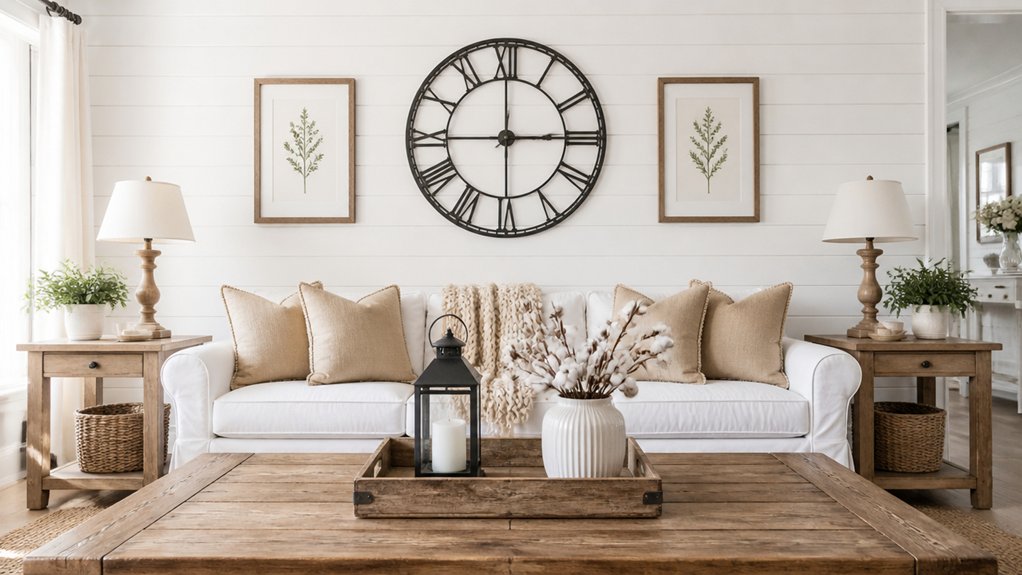
Even if you love that crisp “magazine-ready” farmhouse look, a few common styling habits can make your rooms feel more like a set than a home. If every surface holds a matching tray, lantern, and bead garland, you’ve over-styled. Leave breathing room and let one or two pieces shine.
Don’t line up pillows like soldiers; mix textures, and keep one worn throw handy for real use. Skip signs in every corner—your home doesn’t need subtitles.
Watch the color palette, too: all-white everything can read cold, so add warm wood, brass, and a touch of black. Finally, don’t chase every Farmhouse decor trends at once.
Rotate seasonal farmhouse accents sparingly, and keep everyday items honest and functional.
Conclusion
Now you’ve got the farmhouse decor formula: keep it simple, mix textures, and choose pieces that’ll age with you. You don’t need a full remodel to make it feel warm and lived-in—small swaps do the heavy lifting. In fact, according to the National Association of Realtors, 81% of buyers say staging helps them picture a home, so make yours feel real, not staged. Trust patina, soft light, and honest wood.