

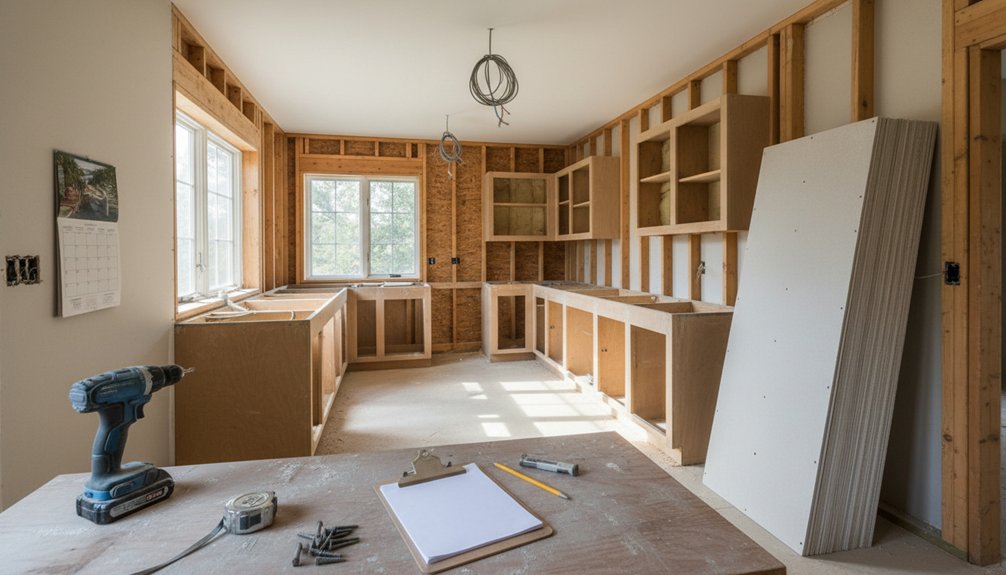
In the next 48 hours, you should verify what’s actually blocking progress on-site, then lock the next critical-path tasks with written start/finish dates from your GC and trades. Issue a two-day lookahead with owners and dependencies, and treat permits, inspections, and long-lead items as schedule gates. Audit material orders for real ship dates, freeze selections to stop churn, and quantify delay costs. Get every milestone shift documented, and push a written recovery plan if dates slip again—more tactics follow.
Key Takeaways
- Verify on-site progress against the schedule, identify true blockers, and lock the next critical tasks with written dates from GC and trades.
- Diagnose the root cause by mapping dependencies, reviewing daily logs and change orders, and quantifying each impact in days.
- Demand a revised schedule with specific start/finish dates, deliverables, and milestones, including holidays, permit turnaround times, and supplier constraints.
- Audit all material orders for confirmed ship dates, backorders, and substitutions, then decide quickly to expedite, source alternates, or adjust scope.
- Protect permits and inspections by booking early, keeping documentation onsite, and building buffers to avoid rework, idle crews, and repeated mobilizations.
Triage: What to Do in the Next 48 Hours

If your renovation timeline’s slipping, treat the next 48 hours like a triage window: confirm what’s actually blocking progress, lock down the next critical path tasks, and stop any work that risks rework or failed inspections.
Pull the latest schedule, compare it to on-site reality, and mark every dependency (permits, inspections, material lead times, trade sequencing). Call your GC and top trades today, get written dates for remobilization, and issue a two-day lookahead with owners for each task.
Recheck Budget planning: quantify delay costs, overtime premiums, and change-order exposure before authorizing acceleration.
Validate contractor selection risks by verifying crew availability and backup subs. Update your milestone dates, document decisions, and reset expectations in writing with photos daily.
Early Signs Your Renovation Is Slipping
Before the missed deadline shows up on your calendar, the schedule usually gives off clear warning signals on-site: promised deliveries slide without new ETAs, inspections get “pushed to next week” without being rebooked, and trades start leapfrogging each other because predecessor work isn’t actually complete.
You’ll also notice daily logs getting vague, with “working on it” replacing measurable progress, and the look-ahead plan shrinking to one or two days.
Material sourcing delays surface when substitutions appear without lead-time confirmation, risking mismatches that affect Design aesthetics.
If your GC stops issuing updated schedules, or critical-path items (windows, cabinets, tile) lack committed ship dates, you’re drifting.
Watch for partial installs, repeated mobilizations, and idle crews—each day adds cost, compresses sequencing, and increases rework risk.
Pinpoint the Real Cause of the Delay
You can’t fix a slipping schedule until you pinpoint what’s actually blocking the next task. Start by identifying bottleneck trades—who’s consistently finishing late, arriving without materials, or forcing rework that pushes every downstream milestone.
Then uncover hidden scope changes by matching daily site notes and change orders to the original plan so you can quantify added time and reset expectations before risks compound.
Identify Bottleneck Trades
Although multiple crews can appear “busy” on site, one bottleneck trade usually dictates the entire renovation’s pace by controlling the next critical handoff. Identify that trade by mapping dependencies: who must finish before the next crew can start, and what inspections or curing times sit in between. Then verify the longest-lead constraints—rough-in completion, drywall close-up, tile setting, cabinetry install—against your schedule.
Walk the site daily and ask for specific dates, not general progress. Compare planned versus actual production rates, crew size, and material availability. Watch for design considerations and aesthetic choices that force rework or extra coordination, especially at junctions (trim-to-floor, backsplash-to-cabinet, fixture-to-tile).
Once you find the choke point, prioritize it: clear access, confirm deliveries, and lock inspection slots.
Uncover Hidden Scope Changes
When a timeline slips and no single trade looks obviously at fault, hidden scope changes usually sit in the critical path. Audit every “small” decision since kickoff: fixture swaps, layout tweaks, added outlets, upgraded tile, or revised paint systems. Match each change to approvals, lead times, and prerequisite work.
Next, reconcile the latest drawings, selections sheet, and purchase orders against what’s actually installed or delivered. If you can’t point to a dated change order, you’ve found a scope leak. Quantify the impact in days, not opinions, then re-sequence tasks or freeze selections to stop churn.
Update budget planning to cover expedited shipping, rework, and overtime. Finally, tighten contractor selection: choose teams that document changes, flag conflicts early, and protect the schedule.
Check Your Contract: Delays, Notice, Penalties
Before the schedule drifts any further, pull out your renovation contract and read the clauses on delays, required notice, and penalties line by line.
Start a contract review by highlighting definitions: “substantial completion,” “force majeure,” “owner-caused delay,” and any cure periods.
Confirm who must give written notice, how soon (e.g., 48 hours), and what proof is required—emails, photos, daily logs, or certified letters.
Check whether missed milestones trigger liquidated damages, back-charges, or retention changes, and whether penalty clauses apply to the contractor, you, or both.
Verify limits: caps on damages, exclusions for weather, and required mitigation steps.
If you spot noncompliance, send a dated notice immediately, and document impacts to costs, access, and inspections.
Get a Revised Schedule (With New Dates)
If the timeline’s already slipping, you need a revised schedule that replaces every “next week” promise with specific dates and dependencies. Ask your contractor to issue a dated baseline: start/finish for each trade, inspection bookings, lead-time items, and owner decisions.
Require weekly look-aheads that show what’s ready, what’s blocked, and who’s responsible. Tie each date to a deliverable (approved drawings, materials on site, rough-in complete), not vague activity.
Run budget considerations alongside the new schedule: overtime, re-mobilization, storage, and temporary housing can spike fast. If performance stays inconsistent, revisit contractor selection and document why you’re considering a change.
Confirm the schedule reflects holidays, permit turnaround, and supplier constraints, and get it in writing with sign-off from all parties.
Identify the Critical Path (What Can’t Slip)
You can’t stop a slip until you map the dependency-driven tasks that control everything downstream, from rough-ins to drywall to finishes.
You also need to flag long-lead materials early—cabinets, windows, custom tile—because late orders quietly push start dates and stack trades on top of each other.
Then you’ve got to protect permit and inspection dates by confirming lead times, booking early, and planning buffer days so a missed sign-off doesn’t freeze the whole job.
Map Dependency-Driven Tasks
When renovation tasks rely on other tasks, the schedule doesn’t fail evenly—it breaks at the dependency points. You need a dependency map that shows what must finish before the next crew can start. List every handoff: demo before rough-in, rough-in before insulation, insulation before drywall, drywall before paint, paint before flooring, cabinetry before countertop templating, and fixtures after tile cures.
Then identify the critical path: tasks with zero float that can’t slip without moving the final date. Track them daily and protect them with tight Design coordination, approved selections, and clear install details. Align Budget planning to this map so change orders don’t trigger rework or resequencing.
If a noncritical task slips, you can resequence; if a dependency slips, you escalate fast.
Spot Long-Lead Materials
Dependency maps show where the schedule can snap; long-lead materials explain why it snaps. Identify every item with a lead time longer than your float: cabinets, custom windows, exterior doors, tile, specialty plumbing trim, and appliances.
Confirm real ship dates, not “estimated,” and log them against install milestones so you see which tasks can’t start without delivery.
Push Material sourcing decisions early: finalize specs, finishes, and quantities, then place orders in writing. Build contingencies by preselecting alternates and verifying compatibility before you need them.
Tighten Contractor communication: require weekly procurement updates, tracking numbers, and a change log for substitutions.
If a long-lead item slips, re-sequence work only where it won’t trigger rework or idle crews later.
Protect Permit And Inspection Dates
Even if crews stay busy, a missed permit milestone or inspection slot can freeze the entire job because many trades can’t proceed past that hold point. Treat permits and inspections as your critical path: foundation, rough-in, framing, electrical, plumbing, and final sign-offs. Map each required approval to the tasks it facilitates, then secure dates early with the jurisdiction and your inspector.
Confirm lead times weekly, and submit revisions immediately to avoid Permit delays. Build a buffer: schedule inspections one to two days before you truly need them, and sequence work so you can pass on first visit. Keep drawings, product specs, and correction logs on site to prevent rework.
Stay proactive with Inspection scheduling, and you’ll stop one missed slot from cascading into weeks.
List Every Dependency: Trades, Deliveries, Approvals
Because one missed handoff can stall five follow-on tasks, you should map every dependency tied to your renovation schedule—each trade’s prerequisite work and availability (demo, framing, MEP rough-ins, inspections, drywall, flooring, cabinets, trim), every long-lead delivery with order/ship/receive windows (windows, custom millwork, tile, appliances, fixtures), and every approval or sign-off that gates progress (permits, inspector visits, HOA reviews, change orders, client selections).
Build a dependency log that shows “can’t start until” links, responsible party, and latest-acceptable dates. Confirm Design considerations that affect sequencing (e.g., lighting layout before rough-in, cabinet elevations before plumbing).
Track material sourcing milestones as schedule gates, not assumptions. Add buffers for cure times, rework, and inspector lead times, then flag any single-point failure that could stop the critical path.
Verify What’s Ordered, Backordered, or Missing

Before you assume next week’s work can start, audit every material and fixture against the schedule and confirm what’s actually ordered, what’s on backorder, and what’s still unselected or missing.
Request order confirmations, ship dates, and tracking for each SKU, then compare lead times to the critical path.
Flag Material shortages that will stall rough-in, drywall, or install, and log exact impact in days, not guesses.
Verify quantities, finishes, and compatibility (valve trims to rough valves, flooring to underlayment, appliance cut sheets to cabinetry).
If an item’s late, decide fast: expedite, source alternates, or approve Design adjustments that preserve dimensions and code requirements.
Update the schedule immediately, and require your contractor to sequence around confirmed deliveries, not hopeful ones.
Speed Up Inspections and Re-Inspections
Once you’ve confirmed what’s actually arriving and when, the next schedule bottleneck is often the inspector’s calendar, not your crew’s. Call the building department and book every required inspection as soon as rough-in dates look credible, then confirm lead times in writing. Ask what triggers re-inspections and build a 24–48 hour buffer in your schedule and Budget planning.
Reduce failures by running a pre-inspection walkthrough with your contractor and trades, using the exact checklist the jurisdiction enforces. Keep permits, plans, specs, and approved change orders on-site and organized so the inspector can sign off fast.
During contractor selection, prioritize teams with a clean pass history and a dedicated field supervisor who can meet inspectors, answer questions, and correct punch items the same day.
Fix Hidden Issues Without Derailing the Project
When you open walls and uncover rot, bad wiring, or plumbing leaks, you’ve got to triage fast: fix safety- and code-critical items first, then slot the work into the nearest open window on your schedule.
You’ll keep the timeline intact by writing a tight scope for each hidden repair, getting price-and-time approvals before proceeding, and tracking change orders against your contingency in real time.
If a surprise threatens the critical path, you should re-sequence tasks, lock decisions within 24–48 hours, and document the risk so it doesn’t quietly expand your delay.
Prioritize Hidden Repairs
Although hidden damage can feel like a surprise detour, you can keep your renovation timeline intact by triaging repairs by risk and dependency, not by annoyance factor.
Start with Hidden repairs that affect safety, weather-tightness, and structural integrity—electrical faults, active leaks, rot, or compromised framing—because every downstream trade depends on them.
Next, tackle code-required fixes that must pass inspection before you can close walls.
Then map sequencing: what must happen before rough-in, insulation, drywall, and finishes? Lock those tasks into the next available work window and confirm lead times for any replacement materials.
Document each discovery with photos and a written scope, then issue a same-day decision to avoid idle crews.
Expect unexpected setbacks, but keep the critical path moving.
Control Scope And Costs
Even if hidden issues keep surfacing, you can control scope and costs by forcing every fix through a fast, disciplined change process instead of letting “just one more repair” creep into the plan. Require a written change order that lists the problem, options, price, added days, and trade impacts before anyone starts work.
Update your Budget planning the same day: shift contingency, cut low-value finishes, or defer noncritical upgrades to keep cash flow predictable. Lock a decision deadline (24–48 hours) so the schedule doesn’t stall while crews wait.
Use contractor selection to reduce surprises: choose pros who document assumptions, open walls methodically, and flag risks early. Track each change on a running log tied to the critical path, and stop work if approvals lag.
Avoid Trade Stacking That Stalls the Schedule
If you stack too many trades into the same window, you don’t gain speed—you create jobsite congestion that turns one delay into a domino effect. You’ll see crews waiting on access, inspectors, or dry times, then rebooking weeks out.
Instead, sequence work with clear handoffs: demo, rough-ins, inspections, close-up, finishes. Build buffers for cure times, punch lists, and inspection lead times, and lock daily start/stop expectations.
Tight Trade coordination means you confirm prerequisites before a crew arrives: walls open, circuits tagged, areas protected, and debris cleared.
Pair that with proactive Material sourcing so every long-lead item is on-site when install starts. Use a two-week lookahead, confirm deliveries in writing, and avoid overlapping high-dust and finish-critical tasks.
Cut Scope Safely: What to Change vs Keep
When your renovation timeline slips, you can’t cut randomly—you need to protect the items that drive daily function, inspections, and long-lead deliveries.
Keep high-impact elements like core layout, structural work, rough-ins, and waterproofing, and trim lower-risk finishes or custom details that trigger change orders and rework.
Simplify with a written scope swap list, confirm cost and lead-time resets with each trade, and lock decisions fast so you don’t trade one delay for another.
Prioritize High-Impact Elements
Although your renovation timeline may be slipping, you can still protect the move-in date by prioritizing the elements that deliver the most function and visual payoff per day of work. Start with code-critical and close-in tasks: rough plumbing/electrical fixes, waterproofing, insulation, drywall, and flooring progression.
Next, target “daily-use” finishes with fast installs: lighting swaps, prehung doors, paint, and ready-to-assemble cabinetry.
Use Design inspiration to define one clear look, then lock decisions in writing so you don’t trigger rework. Keep Material sourcing tight: choose in-stock SKUs, confirm lead times, and approve alternates before ordering.
Sequence work to avoid trade conflicts—cabinet layout before backsplash, vanity before tile cuts. Track these priorities on a two-week lookahead and flag any dependency risks early.
Simplify Without Regret
High-impact priorities keep work moving, but the fastest way to stop a slipping schedule is to trim scope without triggering expensive rework. Start by freezing layouts, plumbing, and electrical routes; changes there ripple through permits, inspections, and lead times. Keep any items already ordered or rough-in dependent, and cut anything that adds trades or sequencing complexity.
Swap custom millwork for standard cabinets, reduce tile patterns, and simplify Creative design features that require extra detailing or specialty labor. Preserve Material quality on “touch points” (flooring, hardware, countertops) so the finished space still feels intentional. Defer noncritical add-ons—built-ins, niche lighting scenes, smart home extras—into a phase-two list with clear dates.
Update the schedule, issue a revised scope sheet, and get written sign-off before crews pivot.
Use Alternates and Allowances to Save Time
If your renovation schedule’s slipping because decisions or lead times keep stalling procurement, alternates and allowances can keep critical-path work moving without locking you into a single product too early.
Use “approved alternates” for long-lead items (tile, fixtures, windows) so your contractor can release orders when the first choice is backordered. Set clear performance specs—dimensions, finish range, warranty, delivery window—so swaps don’t trigger rework.
Use allowances for scopes you haven’t finalized (lighting, hardware) to keep rough-in and framing on track while you shop.
Tie every alternate and allowance to Budget considerations: include taxes, freight, and realistic price tiers.
During contractor selection, ask how they vet alternates and manage lead-time risk across suppliers and subs.
Get Schedule Changes in Writing (Always)
When your contractor shifts a milestone—whether it’s demo start, rough-in, inspections, or cabinet install—get the change in writing the same day so you don’t lose track of the critical path. Ask for the revised date, the reason, and what predecessor task slipped. Confirm impacts to other trades, lead times, and inspection windows, then restate the new sequence in an email or change-order log.
Require updated start/finish dates for each affected scope, not vague “next week” language. Attach photos, site notes, and any Design adjustments that triggered the move. Update your calendar and share it with the team so dependencies stay visible.
Tie every shift to Budget planning: note added labor, remobilization, storage, and temporary living costs. Keep versions.
Escalate When the Schedule Won’t Recover
Even after you’ve documented every shift, a point arrives where the critical path won’t recover without intervention, so escalate quickly and with specifics. Call a meeting within 24 hours, name the slipped milestones, and show the knock-on impacts to inspections, trades, and lead-time materials.
Ask for a written recovery plan: added crews, overtime, resequencing, or scope deferrals, with dates and responsible owners. Tie every option to Budget management: quantify premium labor, storage fees, and change-order risk before you approve acceleration.
Strengthen Team communication by issuing a single updated look-ahead schedule, daily constraints log, and decision deadlines for selections. If commitments aren’t met twice, escalate to the company owner or project executive and pause noncritical work until the path stabilizes.
Conclusion
When your renovation timeline slips, you can’t treat it like a harmless drizzle—it’s a schedule wildfire. In the next 48 hours, you’ll confirm the real bottleneck, review delay clauses, and demand a revised calendar with hard dates, dependencies, and weekly checkpoints. You’ll trim scope with a surgeon’s discipline, swap in alternates or allowances, and document every change order in writing. If recovery stalls, you’ll escalate fast—because “later” becomes “never” quicker than you think.