

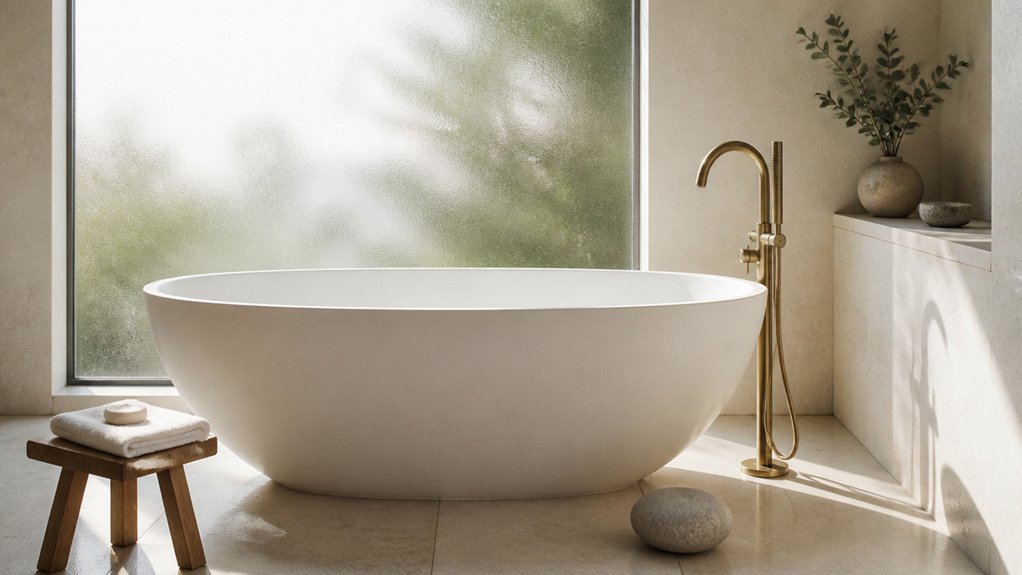
First of all, it’s important to mention, freestanding baths are not as expensive as people often think! You can create that luxury at home for less than you think.
You can give your bathroom an instant lift with a freestanding bath, but the luxury only works if the details line up. You’ll need to think about space, clearances, and how you’ll move around it day to day. Size and material affect comfort, heat retention, and upkeep, while placement can complicate plumbing fast. Before you choose a style on looks alone, there’s one practical factor that can make or break it…
Do You Have Space for a Freestanding Bath?
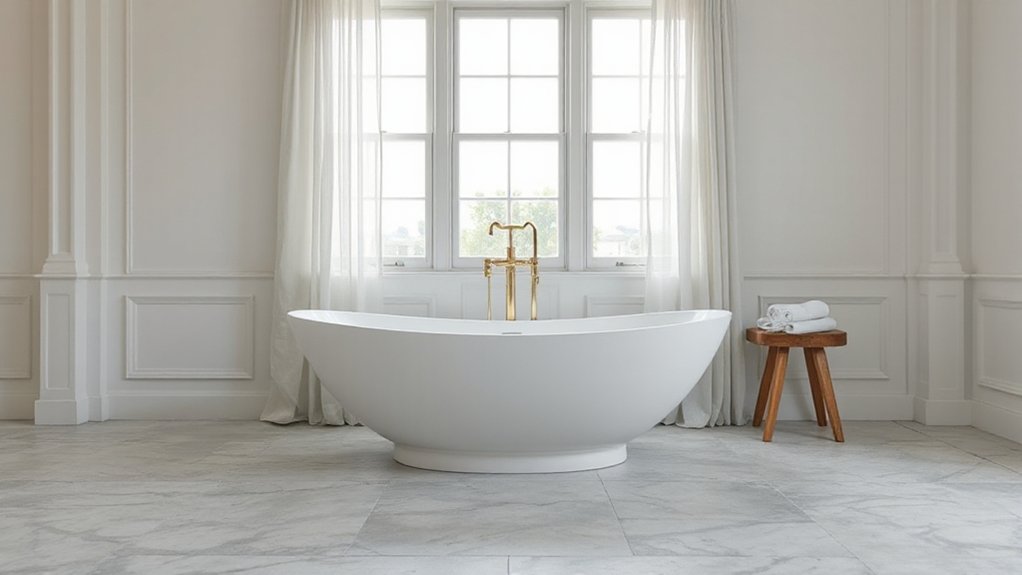
Although freestanding baths can suit many styles, they only work well if you’ve got enough room to place them properly and still move around comfortably. Start by looking at your bathroom’s clear floor area, not just the footprint where the tub will sit. You’ll need space to walk, bend, and clean around it, especially near the tap end and along the outer edge.
Check door swings, drawers, and vanity access so nothing clashes once the bath’s in place. Think about where your plumbing comes up and whether you can route it without boxing in walkways. If your room feels tight, consider shifting fixtures, choosing wall-hung storage, or reworking the layout before committing.
Freestanding Bath Sizes: Measure, Capacity, Comfort
How do you know a freestanding bath will actually feel good to use once it’s installed? Start with your body measurements. Check internal length (backrest to opposite end) and internal width at shoulder height, not just the headline size.
If you’re tall, look for a longer bathing well and a comfortable recline angle, then confirm the rim height won’t make entry awkward. Next, match capacity to your hot-water system: a deeper tub may need more litres than your cylinder can deliver at temperature.
Don’t forget the “filled” weight—water, bath, and you—so your floor and joists cope. Finally, map tap and waste positions so your feet don’t clash and drainage stays fast.
Freestanding Bath Styles for Modern and Classic Bathrooms
Once you’ve confirmed a freestanding bath will fit your body, your hot-water supply, and your floor, the next choice is the look it brings to the room.
For a modern bathroom, you’ll usually lean toward clean silhouettes: oval or rectangular tubs with slim rims, crisp lines, and minimal detailing. Pair them with wall-mounted or floor-standing tapware for a sharp, gallery-like feel.
For classic spaces, you can echo heritage character with a roll-top profile, a slipper shape with a raised backrest, or a double-ended design that feels symmetrical and formal.
If your home mixes eras, choose a transitional style: a simple oval with a subtly flared lip, or a traditional curve set on a streamlined base.
Match the style to your vanity and tiles for cohesion.
Freestanding Bath Materials: Weight, Warmth, Upkeep
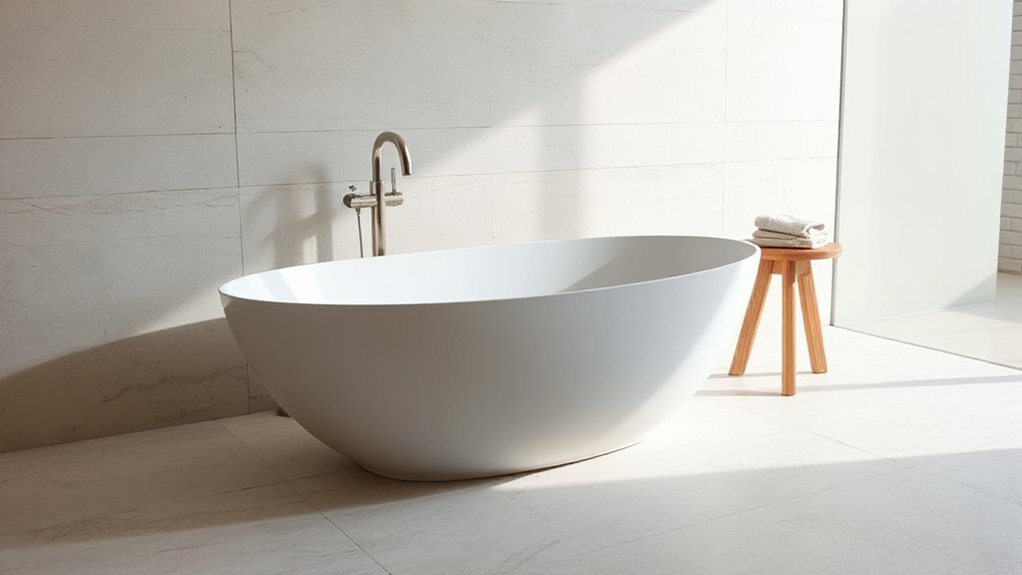
Because the material drives both the feel and the practical demands of a freestanding bath, you’ll want to weigh three things upfront: how heavy it’s on your floor, how well it holds heat for longer soaks, and how much cleaning and care it needs to stay looking new.
Acrylic stays light, affordable, and easy to wipe down, but it can scratch if you use harsh abrasives.
Cast iron brings serious weight and excellent heat retention; its enamel resists stains, yet chips need prompt repair.
Stone resin and solid surface options feel luxe and warm underhand, hold heat well, and clean up with mild soap, though they cost more.
Copper heats fast and looks striking, but you’ll maintain its patina and avoid acidic cleaners.
Placement and Plumbing for Freestanding Baths (Clearances)
Material choice sets the bath’s weight and upkeep, but placement and plumbing determine whether it actually fits, functions, and feels comfortable to use. Start by mapping door swings, vanity drawers, and shower screens, then mark the tub’s footprint with tape.
Leave enough room to step in and to clean: aim for 600–750 mm on the long side you’ll access, and at least 300 mm on the other sides, or more if you’ll wipe behind it. If you’re centering it, keep equal clearances to avoid a cramped look.
Plan the waste position so the trap sits below the floor or within a slim pedestal, and confirm the fall to the drain. Decide between floor-mounted or wall-mounted fillers, and align rough-ins before tiling.
Freestanding Bath Costs: Tub, Taps, and Installation
Before you commit to a freestanding bath, price the whole package—not just the tub—since taps, waste hardware, and labour can easily shift the total more than the shell itself. Acrylic tubs often cost less, while stone, cast iron, and solid-surface models climb quickly, especially in larger sizes.
Next, budget for taps: wall-mounted sets can be cheaper if your plumbing’s already there, but floor-mounted fillers look premium and usually demand extra pipework and bracing. Don’t forget the waste and overflow kit, traps, isolation valves, and any custom pop-up wastes.
Installation costs rise if you’re moving drains, opening floors, or reinforcing joists for heavy baths. You’ll also pay more for tilers and waterproofing if you alter the wet area.
Get itemised quotes so surprises don’t sink your budget.
Conclusion
If you’ve got the space, then designer freestanding baths are one way that can turn your bathroom into a true retreat. When you measure carefully, choose the right size, and think about capacity and comfort, you’ll soak better and style smarter. Pick a design that suits your look, then match the material to your warmth, weight, and upkeep needs. Plan clearances and plumbing early, and budget for the tub, taps, and installation.
Another upside, is these renovations and upgrades add value to your property, should you come to list your home.