


In 2026, you’ll add the most resale value by targeting buyer-visible, code-compliant fixes that move comps: refresh kitchens and baths without changing layouts, repair roofs and water intrusion, and upgrade HVAC with proper load calculations and permits. Pair this with blower-door–guided air sealing and attic insulation to code (often R-49+), plus durable flooring like waterproof LVP. Finish with low-cost curb appeal—mulch, paint, lighting—to cut days on market. Next, you’ll see how to estimate ROI.
Key Takeaways
- Refresh kitchens without moving plumbing: update cabinets, lighting, mid-priced counters, and ENERGY STAR appliances to maximize broad buyer appeal.
- Modernize bathrooms with frameless showers, upgraded valves, large-format tile, and WaterSense fixtures for perceived luxury and daily-use value.
- Improve comfort and efficiency: air-seal first, add code-level insulation, and upgrade HVAC/heat pumps with permits, load calculations, and documented tests.
- Fix major “deal breakers” early: address roof wear and water intrusion with transferable warranties and invoices to reduce buyer risk and negotiation.
- Boost curb appeal cheaply: tidy landscaping, pressure-wash, paint the front door, and add warm LED exterior lighting to increase click-throughs and showings.
2026 Renovation ROI: How to Estimate Payback
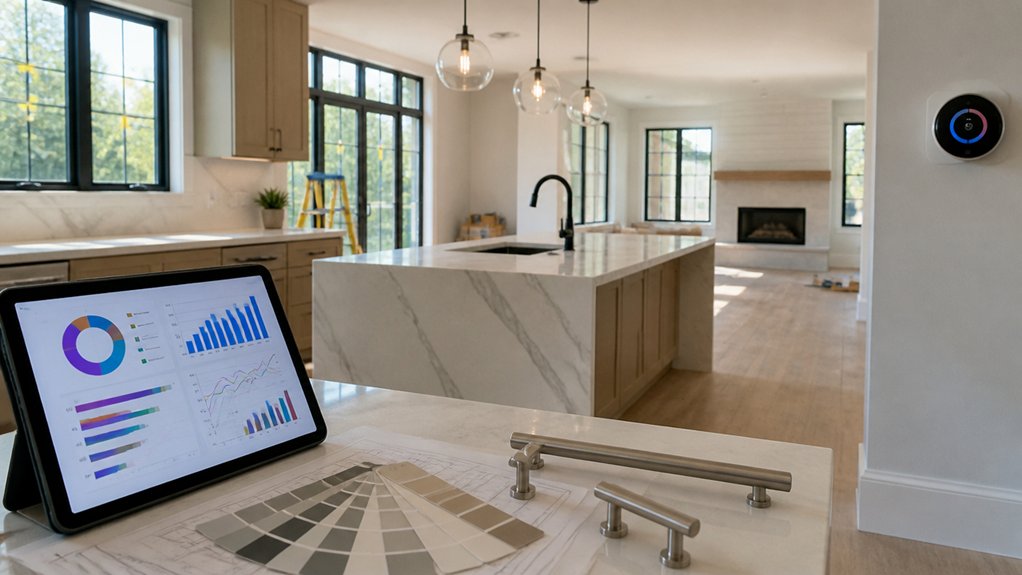
If you want to know whether a 2026 renovation will truly add value, you’ve got to estimate ROI the way appraisers and investors do: start with local comparables, not national averages. Pull 3–6 recent sales within 1 mile (or your MLS norm), match bed/bath, size, lot, and condition, then isolate the price delta tied to the improved feature. Adjust for time using neighborhood sale-price trends, not CPI.
Next, build renovation budgeting from line-item scopes, permits, soft costs, and a 10–15% contingency; investors underwrite to “all-in” cost. Run a sensitivity range for overrun and sale-price variance.
For contractor selection, require licensed bids with identical scope, lien waivers, and schedule assumptions, so your ROI model stays standards-compliant and auditable.
Top Value-Adding Renovation Projects (Quick List)
While ROI always depends on your comps and scope, 2026 data consistently shows a short list of projects that appraisers can price, buyers reliably pay for, and lenders underwrite without drama—because the value ties to measurable condition, utility, and risk reduction.
Prioritize:
(1) minor kitchen refresh (doors, pulls, counters, efficient fixtures) over full gut;
(2) midrange bath update with code-compliant ventilation and water-sense plumbing;
(3) HVAC replacement or heat-pump retrofit with permits and load calcs;
(4) roof or water-intrusion remediation documented by invoices and warranties;
(5) window/air-sealing plus insulation verified by blower-door reports;
(6) flooring replacement in main areas;
(7) interior paint colors in neutral, buyer-tested palettes;
(8) garden landscaping limited to drainage, grading, and irrigation reliability.
Fast Curb-Appeal Upgrades That Sell Homes
After you’ve locked in the high-ROI “underwritable” improvements (kitchen, bath, HVAC, roof, envelope), curb appeal becomes the fastest way to move buyer perception and reduce days on market—often with weekend-scale work and predictable costs.
Start with Landscaping trends that read “low-maintenance”: edged beds, fresh mulch, native plantings, and a clean lawn line; they photograph better and signal lower ongoing upkeep.
Refresh hard surfaces by pressure-washing walks, touching up trim, and repainting the front door in a neighborhood-appropriate color.
Upgrade outdoor lighting with code-compliant, warm-temperature LEDs at the entry, path, and garage; you’ll boost nighttime showings and improve safety cues.
Finish with new house numbers, a modern mailbox, and a clutter-free porch staging. Buyers notice instantly.
Energy Upgrades Buyers Notice on Tours
Inside, you’ll win points with smart thermostats buyers can tap, schedule, and verify on a screen.
Pair them with a modern heat-pump water heater or high-efficiency HVAC label, and keep manuals plus warranties in one folder.
You’re selling measurable savings, not promises.
Air Sealing and Insulation With Best ROI

Because buyers and appraisers increasingly price homes on comfort and operating cost, air sealing and insulation deliver some of the cleanest ROI you can document.
Start with a blower-door test to target leakage at rim joists, attic penetrations, recessed cans, and sill plates; those fixes can cut drafts and moisture risk while improving HERS and utility-bill comps.
Prioritize attic air sealing before adding R-value, then bring insulation to code-aligned levels (often R-49+ attics, R-13 to R-21 walls, climate dependent).
Use insulation techniques that verify performance: dense-pack cellulose for cavities, spray foam only where air control is critical, and baffles for soffit ventilation.
Finish with infrared verification and receipts—buyers trust measurable savings. It supports higher offers and appraisals.
HVAC Upgrades That Boost Value in 2026
Air sealing and insulation set the baseline for lower loads; the next value lever is HVAC that matches that tighter envelope and proves efficiency on paper.
In 2026, buyers and appraisers reward documented performance: right-size equipment using Manual J/S, commission airflow and refrigerant charge, and keep AHRI certificates and model numbers for the listing packet.
Prioritize high-efficiency heat pumps (cold-climate where relevant) with variable-speed compressors to cut peak demand and improve comfort.
Add Smart thermostats with utility demand-response compatibility and verifiable scheduling data.
If you can’t justify full-duct replacement, ductless systems let you zone rooms, reduce distribution losses, and qualify for many rebate programs.
Finish with MERV 13 filtration (where static pressure allows) and a balanced ventilation strategy to meet ASHRAE 62.2 without over-ventilating.
Windows and Doors: When Replacement Pays Off
When you replace aging windows and exterior doors with ENERGY STAR–rated, code-compliant units, you cut heating and cooling losses and strengthen your listing’s efficiency story.
You’ll also lift curb appeal fast—clean sightlines, modern profiles, and consistent finishes tend to translate into stronger buyer interest and fewer pricing objections.
Choose tested, secure hardware and higher-performance glazing to reduce break-in risk and outside noise, two factors that can materially improve perceived quality at showings.
Energy Efficiency Upgrades
Even in a cooling market, you can still access measurable value by targeting the building envelope—especially dated windows and exterior doors that leak conditioned air and fail today’s energy expectations. If your units are pre-2000, single-pane, or visibly warped, replacement often pays off through lower utility bills and stronger buyer demand for efficient homes.
Prioritize ENERGY STAR–certified windows and insulated, tight-sealing exterior doors; verify NFRC U-factor and SHGC match your climate zone. Add continuous air sealing and flashing to meet code and avoid moisture risk.
Pair the upgrade with solar integration or geothermal systems so HVAC downsizing pencils out and HERS scores improve. You’ll also reduce peak-load strain, which matters as insurers and lenders increasingly price climate and operating-cost exposure into underwriting.
Curb Appeal Boost
Energy upgrades can lift HERS scores, but buyers decide fast at the curb—and nothing signals “updated” like crisp window lines and a solid, modern entry door. You’ll see payback when your existing units look dated, fogged, mismatched, or hard to operate, because replacement resets the façade in one scope.
Choose NFRC-labeled windows and an insulated, Energy Star–rated door, and you’ll align with appraiser expectations and disclosure norms. In many markets, midrange replacements recover a strong share of cost at resale, especially when you standardize grille patterns and frame colors.
Pair the upgrade with Landscaping trends—clean edging, drought-tolerant plantings—and add Exterior lighting that meets dark-sky guidance to highlight the entry. Keep trim, flashing, and caulking details tight so the install reads premium.
Security And Noise Reduction
How quickly do buyers decide a home feels safe and quiet? In seconds, and your windows and doors do most of the talking.
If frames rattle, locks feel flimsy, or street noise leaks in, buyers price in risk and hassle. Replacement pays off when you install ENERGY STAR–rated units with multi-point locking hardware, laminated or impact-rated glass, and tight weatherstripping that meets current code.
For Home security, prioritize ANSI/BHMA-graded locksets and reinforced strike plates; appraisers and inspectors note these upgrades.
For noise reduction, target higher STC-rated glazing, sealed gaps, and properly flashed installs to prevent air leaks.
You’ll also cut HVAC load, supporting stronger efficiency comps and cleaner inspection reports at resale.
Kitchen Updates With the Highest Recoup
Because kitchens anchor resale decisions, the updates with the highest recoup in 2026 tend to be targeted, code-compliant improvements that photograph well and reduce buyer objections.
You’ll usually net the strongest return by keeping the existing layout and upgrading visible, high-wear components. Install Custom cabinetry where storage is deficient, using full-extension drawers, soft-close hardware, and moisture-rated boxes.
Pair it with Smart lighting: layered under-cabinet task strips plus dimmable, high-CRI fixtures on dedicated circuits to meet electrical standards and improve listing photos.
Choose durable, midpriced countertops and a water-efficient, pull-down faucet with shutoff-compliant valves.
Replace dated appliances with ENERGY STAR models sized to the space.
Finish with low-VOC paint, slip-resistant flooring, and verified permits—buyers pay more when risk feels lower.
Bathroom Upgrades That Buyers Will Pay For
When you upgrade a bathroom in 2026, you’ll get the strongest buyer response by targeting comfort, storage, and efficiency—features that consistently show up in listing data and buyer surveys.
You can lift perceived value fast with a spa-style shower (frameless glass, upgraded valve, niche lighting) and a double vanity that adds organized storage without shrinking clearances.
You’ll also protect ROI by installing smart, water-saving fixtures that meet current code and efficiency standards, lowering utility costs buyers factor into offers.
Spa-Style Shower Upgrades
If you’re choosing one bathroom upgrade that consistently shows up in buyer wish lists, a spa-style shower delivers measurable market impact: current remodeling cost-vs-value reports routinely rank bathroom projects among the strongest resale performers, and today’s buyers expect showers to feel “hotel-grade,” not builder-basic.
To compete with new builds, you’ll want finishes and performance that signal Spa retreats, not standard enclosures. Install low-threshold or curbless entries where code and slope allow, and pair large-format tile with a linear drain for a premium look.
Upgrade valves to pressure-balanced or thermostatic controls (ASSE 1016) and add efficient shower technology like a 1.75–2.0 gpm head plus a hand shower for accessibility.
Use recessed niches, vapor-rated lighting, and glass with minimal framing to reinforce cleanliness and speed appraisal impressions.
Double Vanity Storage Boost
A spa-grade shower sets the tone, but buyers often judge the bathroom’s day-to-day livability at the vanity, and a double-vanity storage boost tests well in showings.
If you add a double vanity with smart organization, you reduce morning bottlenecks and signal “move-in ready,” a top driver in resale comps. Prioritize full-extension, soft-close drawers, built-in dividers, and a dedicated outlet drawer for grooming tools to meet electrical and safety standards.
Use moisture-rated plywood boxes, sealed edges, and durable hardware so inspections don’t flag swelling or loose anchoring. Specify 34–36-inch counter height, adequate toe-kick, and code-compliant GFCI placement.
Finish with bright task lighting and easy-clean quartz to support higher list prices.
Smart Water-Saving Fixtures
Because utility costs keep climbing and many metros now score homes on conservation features, smart water-saving fixtures have become a resale lever buyers will pay for in 2026. You’ll stand out by installing WaterSense-labeled toilets, low-flow showerheads, and sensor or aerated faucets that cut gallons per day without hurting pressure.
Prioritize units with published flow rates and third-party certifications, and keep spec sheets for your listing packet. Smart leak detectors and shutoff valves add risk reduction buyers understand: fewer claims, less mold exposure, and lower maintenance uncertainty.
Pair upgrades with eco-friendly plumbing materials and clear installer permits to meet code and appraisal expectations. When you market Smart water-saving fixtures with documented annual savings, you give buyers a measurable payback, not a vague “green” promise.
Budget Flooring Upgrades That Modernize Fast
While kitchens and baths grab headlines, flooring delivers one of the fastest “modernization signals” buyers notice, and you can typically refresh a room’s look in 1–3 days with materials that run about $2–$7 per sq. ft. (excluding labor).
For budget flooring, prioritize waterproof LVP or rigid-core SPC; both photograph well, handle pets, and meet common slip-resistance and emissions expectations when you select FloorScore/Greenguard-certified lines.
Use wide-plank, light-oak visuals to align with current comps and reduce visual seams.
If you’ve got hardwood, refinish instead of replacing; a low-sheen, natural stain reads as modern flooring and boosts perceived quality.
Keep transitions smooth, replace baseboards, and match stair treads for an “updated throughout” signal that supports stronger offers.
Renovations That Rarely Add Resale Value
If you want top resale value in 2026, you can’t treat your home like a custom showroom, because buyers pay for broad appeal and code-compliant upgrades.
Over-personalized design choices (bold murals, niche built-ins, ultra-specific layouts) often narrow your buyer pool and show up in comps as neutral—or negative—adjustments.
Luxury upgrades with low ROI, like high-end pools or boutique smart systems, can raise your cost basis faster than they raise market value in most neighborhoods.
Over-Personalized Design Choices
Even when you love a bold look, heavily customized renovations—like themed rooms, ultra-trendy finishes, statement tile everywhere, or nonstandard built-ins—rarely translate into higher resale value in 2026. Buyers typically pay for flexibility, and appraisers often treat idiosyncratic features as neutral or even negative if they limit broad market appeal.
If you lean into personalized decor or a niche design, you’re narrowing your buyer pool, which can extend days on market and pressure price reductions. Listing data consistently shows homes that photograph “clean and classic” attract more showings, while polarizing finishes trigger “needs updating” feedback.
To protect value, keep structural changes reversible, choose standard sizes, and stick to widely accepted palettes and materials. Save your signature style for paint, lighting, and movable furnishings instead.
Luxury Upgrades With Low ROI
A surprising share of “premium” renovations deliver premium invoices but average resale outcomes in 2026. Appraisers typically credit condition, livability, and code-compliant basics more than boutique features, so you can’t count on Luxury upgrades to lift value dollar-for-dollar. When buyers compare comps, they price to neighborhood ceilings, not your custom spend.
You’ll often see Low ROI from pro-grade kitchen packages, elaborate smart-home stacks, luxury landscaping, wine rooms, and spa bathrooms with exotic stone. These additions narrow your buyer pool and raise perceived maintenance risk.
If you still want them, keep permits, follow local standards, and choose reversible options. Then cap budgets to the area’s median finish level and prioritize proven drivers like energy efficiency, roof, HVAC, and functional layouts.
Conclusion
Coincidentally, the upgrades you can measure fastest are the ones buyers feel first. When you tighten air leaks, boost insulation, and add visible efficiency features, your utility bills drop just as appraisers credit documented performance. The week you swap dated flooring and refresh kitchens and baths with midrange finishes, your listing photos improve right when buyers filter for “move-in ready.” Skip overbuilt luxury; in 2026’s market, you win by matching comps and code.