


Start by setting your South Downs National Park non-negotiables—station time, school run, outlook, plot size, daylight, and broadband—then add deal-breakers like flood risk, septic compliance, or tricky access. Pick villages by testing peak-hour drives and visiting midweek and weekends to gauge parking and community feel. Screen listings for National Park planning limits, listed status, covenants, rights of way, and whether lanes are adopted. Next, compare recent sold prices, not asking, and move fast on good homes—there’s more to sharpen each step.
Key Takeaways
- Define must-haves like station access, plot size, outlook, daylight, broadband, and septic compliance; treat covenants, flood risk, and ties as deal-breakers.
- Learn South Downs planning constraints early: National Park policies, listed status, dark-sky rules, and permitted materials for extensions, conversions, and windows.
- Verify access and boundaries: check adopted road versus private track, rights of way, easements, and responsibility for lane and shared services maintenance.
- Choose villages by real-life needs: test peak commuting times, parking, schools, GP, shops, deliveries, and visit midweek and weekends for community fit.
- Use local agents and tight alerts: monitor new listings and price drops, call quickly for viewings, and request planning history, utility proofs, and flood/insurance details.
Set Your South Downs Must-Haves (and Deal-Breakers)

Before you book viewings or set up alerts, get brutally clear on what you need from a South Downs rural home—and what you won’t compromise on.
Start with access: station reach, school run time, and whether winter lanes or bridleways affect you. Decide your non-negotiables on outlook, plot size, and daylight; south-facing gardens and unspoilt views price in fast.
Check practicals that catch buyers out: septic compliance, private water, broadband speeds, and flood risk in valleys.
Build a firm stance on restrictions—National Park planning, listed status, and covenants can limit extensions and holiday lets.
Finally, weigh Village history and local traditions: they boost character and resale, but also mean church bells, fêtes, and busy summer weekends.
Pick the Right Downs Village Base for You
Choose your village base by matching everyday needs to what the Downs actually offers: shops, a pub, school, GP access, and realistic links to stations and the A27.
Then weigh the landscape and pace—chalk ridge views and footpath access often come with quieter nights and fewer services, while valley villages can feel busier and pricier.
Finally, test the community fit by visiting midweek and at weekends, because parking pressure, tourism, and local clubs can change how a place lives year-round.
Village Amenities And Access
Where will you actually spend most of your week once you’ve moved—at the farm shop, the station, the primary school gate, or stuck on a single-track lane behind a tractor? Start by mapping your regular trips: groceries, school runs, NHS dentist, and parcel drop-offs.
In many Downs villages, a “shop” might mean limited hours, so check opening times and delivery coverage.
Prioritise rail and A-road access if you commute; some valleys add 20 minutes just reaching the main route. Test mobile signal and broadband, not just promised speeds.
Factor in the local pub significance: it’s often your easiest weekday meal and informal noticeboard. Scan village event calendars for road closures, parking pressure, and seasonal visitor spikes.
Landscape, Pace, And Community
Once you’ve checked the day-to-day basics—shops, stations, signal, and school runs—the next step is matching your home search to the Downs’ feel on the ground: the landscape under your windows, the pace on your lanes, and the kind of community you’ll actually slot into.
Choose chalk ridge villages for big skies and scenic vistas; valleys and wooded hangers trade panoramas for shelter, birdsong, and deeper rural tranquility.
Then test the tempo: some places stay quiet midweek but swell with walkers at weekends; others keep a steadier local rhythm. Look at pub nights, parish events, and who uses the village shop—commuters, retirees, young families—because that mix shapes noise, parking, and volunteer culture.
Finally, track micro-markets: view premiums sit on edges, and tucked lanes price in privacy.
Check Commuting Times From the South Downs
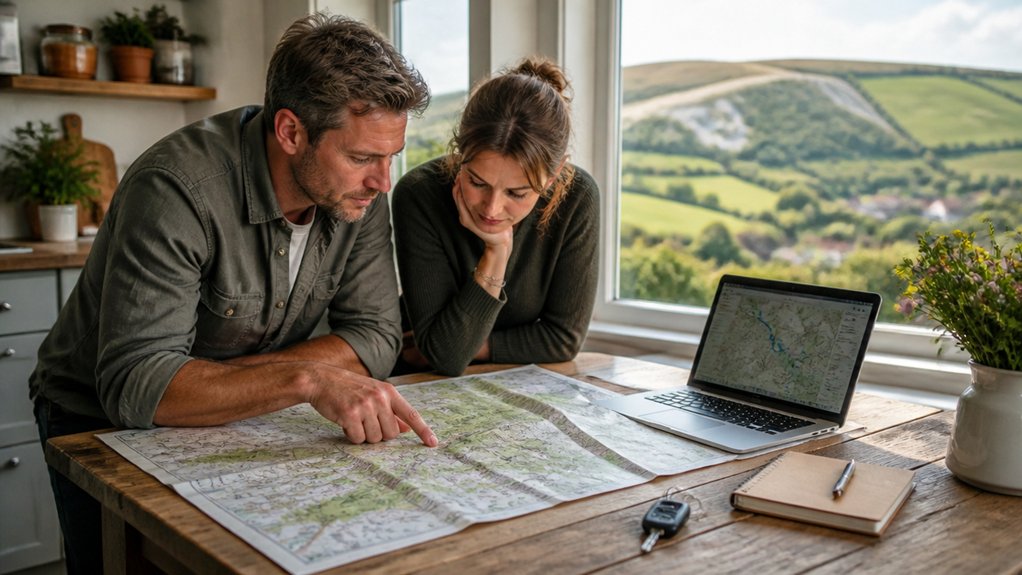
How quickly can you really get from a South Downs village to the places you’ll use most—your office, school run, or the nearest station? Don’t rely on map pins; test it. Check morning peak times from key hamlets to hubs like Lewes, Petersfield, Midhurst, Chichester, Brighton, and Winchester.
Compare commuting options: drive-to-station, direct rail, bus links, and bikeable lanes to a reliable stop. Measure travel distances on the actual roads you’ll use, because single-track stretches, tractors, and tourist traffic can add 15 minutes fast.
Look for homes within a realistic 10–15 minute reach of a station with frequent services, and confirm parking availability. If you’ll hybrid-work, verify mobile signal on your route and at home too.
Budget for Rural Extras (Septic, Oil, Upkeep)
After you’ve sanity-checked the commute, run the numbers on rural running costs that don’t show up in a city-style budget: private drainage, oil or LPG heating, and higher day-to-day upkeep.
Ask when the septic tank was last emptied, if it’s compliant, and what a local contractor charges per visit. Check the oil tank age and gauge; deliveries cost more in winter, so price in a top-up before completion.
Build a line for seasonal maintenance: gutter clearing after storms, chimney sweeping, track or driveway grading, hedge cutting, and roof moss removal.
Don’t forget rural property taxes (council tax bands can surprise) and insurance for outbuildings. If costs look tight, use them to negotiate or walk away.
Know National Park Rules Before You View
Before you book a viewing in the South Downs National Park, check the planning constraints that could limit extensions, barn conversions, or even replacement windows. Ask the agent for the property’s planning history and any National Park Authority designations so you don’t waste time on a home that can’t match your plans.
Then confirm access and rights—whether the lane is adopted, if there are easements, and where public footpaths run—because these details can affect value and day-to-day privacy.
Understand Planning Restrictions
Although the South Downs feels like open countryside, National Park status brings tighter planning controls that can shape what you can (and can’t) do with a rural home—so check the rules early, not once you’ve fallen for the view.
Ask the agent for the property’s planning history and any conditions tied to previous Planning permissions, especially on extensions, outbuildings, glazing, roofing, and lighting.
In many villages, you’ll face design guidance that protects dark skies and traditional materials, so “like-for-like” replacements aren’t always straightforward.
If the home is listed or sits in a conservation area, expect extra scrutiny and longer timelines.
Don’t rely on “it was there when we bought it”: verify certificates, sign-offs, and Building regulations compliance for conversions, insulation, electrics, and septic upgrades.
These checks affect price, mortgageability, and your renovation budget.
Check Access And Rights
How will you actually get to the house—year‑round, in a van, and without annoying the neighbours? Before you book a viewing, confirm the access route is adopted highway, a recorded byway, or a private track with explicit access rights. Ask the agent for the title plan and any easements, then match them to what you see on site.
In the South Downs, bridleways and footpaths can cross farms; they don’t guarantee vehicle access. Check who maintains the lane, where you can turn, and whether gates get locked during lambing or shoots. Walk the boundary lines and compare fences, hedges, and ditches to the deeds so you’re clear on property boundaries.
If access is shared, price in upkeep and neighbour relations.
Use Portals With the Right South Downs Filters
When you use property portals that let you filter specifically for South Downs villages and rural boundaries, you’ll cut through the coastal spillover and commuter-belt listings that muddy the search. Set your map draw to the National Park edge, then add “village” radius around places like Alfriston, Ditchling, Harting, or Selborne to stay properly rural.
Use filters that match local stock: set property type to cottage, barn conversion, or smallholding; add “period features” to surface Historic architecture, and tick “outbuildings” if you want workspace.
Sort by “newest first” because good plots move fast, then save alerts for price bands that reflect micro-markets. Finally, scan the description for lanes, dark skies, and parish notes that signal genuine Rural charm.
Find Local South Downs Agents Worth Calling
If you want the first call you make to actually move your search forward, pick agents who live and breathe the Downs rather than a coastal office stretching its patch inland. You’ll get sharper intel on lanes, access, parking pinch points, rights of way, and which villages feel busy on summer weekends.
Ask who handled the last three sales in your target parish and what they achieved versus guide price; that reveals Rural property pricing in real terms. Get them to talk through Local market trends: grazing land premiums, annex demand, barn conversion appetite, and how AONB-style constraints shape values.
Check they understand wells, septic systems, and EPC realities in older cottages. Finally, judge responsiveness—if they can’t answer quickly now, they won’t later.
Set Alerts That Catch “Quiet” Village Listings
Good local agents will tip you off, but you’ll still miss the “quiet” village cottages unless your alerts do the same job daily.
Set up searches on Rightmove, Zoopla, OnTheMarket, and local firm sites, then tighten criteria: parish names, “no onward chain,” “edge of village,” and a wide radius to catch mis-pinned listings.
Run two alerts: one broad for new stock, another for price drops and “back on market” returns. Include “guide price” bands slightly above your ceiling because reductions arrive fast in the Downs.
Filter for older listings too; some vendors test the water quietly before relaunching.
Check alerts at lunch and early evening, then call the agent immediately to secure viewings while Village charm and rural tranquility still feel attainable.
Check Broadband, Mobile Signal, and Utilities

Before you book a second viewing, you’ll want to verify what broadband actually reaches the property, not just the postcode, because speeds can change house to house in the Downs.
You should test mobile signal on-site across networks, as valleys and woodland edges still create dead spots that catch buyers out.
Finally, check utilities early—mains vs private water, drainage, and any LPG/oil heating—since these details affect running costs and can shift what a “good value” asking price really means.
Verify Broadband Availability
Where will you actually get a usable connection once you’re tucked into a South Downs hamlet—at the kitchen table, out in the garden, or only at the gate? Before you offer, verify what the postcode can truly deliver, not what the brochure implies. Check Openreach and alternative network maps, then cross-check each address with major Broadband providers, because neighbouring cottages can sit on different cabinets or ducts.
Ask the agent for the current package name, advertised speed, and whether it’s FTTP, FTTC, or fixed wireless. Request a recent router speed test screenshot from the seller. If you work from home, factor install lead times; rural FTTP can take weeks.
Finally, look for past complaints about dropouts and variable signal strength during evenings, when contention bites.
Assess Mobile Signal And Utilities
Broadband can look strong on paper, yet day-to-day living in the South Downs still hinges on mobile coverage and how the utilities behave once you’re off the main road. Before you offer, stand in the kitchen and garden and run real-world tests on two networks; valleys, flint walls, and woodland edges can kill signal. Ask neighbours which provider holds up during storms and tourist weekends, when masts get busy.
Then pin down utility connections: is water mains or a private borehole, and what’s the summer reliability? Check sewage—mains, septic tank, or treatment plant—and budget for servicing and compliance.
Confirm electricity capacity for heat pumps and EV chargers, and whether outages are common. If you’re on LPG or oil, map delivery access in winter.
Confirm Access, Parking, and Rights of Way
Although a cottage can look perfectly secluded on a listing, you’ll want to confirm exactly how you and your visitors will get to it day-to-day. Ask the agent for the title plan and any deeds setting out access rights, then walk or drive the route yourself.
In the South Downs, “private lane” can mean shared maintenance, seasonal ruts, or a neighbour’s gate you can’t block. Check whether the approach crosses a bridleway, byway, or public footpath, and whether farm traffic has priority.
Next, pin down parking regulations: on-plot spaces, roadside limits, and any village permit schemes. If you’ll need deliveries, oil tankers, or emergency access, measure turning space.
Clear, documented access and workable parking protect value and reduce future disputes.
Screen for Flood Risk, Damp, and Drainage
How confident are you that a pretty valley setting won’t turn into a winter headache? Start with the Environment Agency flood map, then ask the agent for any past insurance claims, photos of historic flooding, and the property’s current premium.
In the South Downs, chalk can drain fast, but clay pockets and dry valleys can still flash-flood after intense rain.
Next, check drainage basics: where do gutters and downpipes discharge, and does water run away from the house or pool on tracks and courtyards? Ask whether it’s mains sewer, septic tank, or treatment plant, and request service records and percolation test results.
For Damp prevention, prioritise airflow, working extractor fans, and evidence of maintained drains. If risk is flagged, price in Flood mitigation like raised electrics and demountable barriers.
View Homes Like a Survey: Roof, Walls, Land
When you view a South Downs rural home, walk it like a surveyor: scan the roofline for slipped tiles, sagging ridges, and clean gutters that actually discharge away from the house.
Then check walls for cracks, bulges, and blown pointing—repairs in flint, chalk, or lime mortar can shift your budget fast in this market.
Finally, trace the boundaries and ground falls so you spot failing fences, retaining issues, or water tracking toward the building.
Assess Roof And Drainage
Before you get distracted by views and character, look up: the roofline and the way water leaves the building will tell you more about long-term costs than almost anything else in the South Downs.
Start your roof inspection from the lane: check for sagging ridges, slipped tiles, patchy moss, and uneven flashing around chimneys and valleys. Ask the agent for the roof age, last repair invoices, and whether it’s slate, clay, or concrete—local pricing varies widely.
Then run a drainage assessment: follow gutters to downpipes, check for staining, overflow marks, and mismatched sections, and confirm water discharges to a soakaway or proper drain, not straight onto paths.
After heavy rain, visit again; damp smells often follow poor runoff.
Inspect Walls And Boundaries
Once you’re happy water’s not getting in from above, turn your attention to the walls and boundary lines—this is where South Downs “character” can hide expensive movement and ongoing maintenance.
For Wall inspection, walk the elevations slowly: look for stepped cracking, bulging flint panels, crumbling lime mortar, and patched render that traps damp. Check around openings for sagging lintels and fresh repointing that might mask settlement. Inside, note doors that stick and skirting gaps.
For boundary verification, don’t assume the hedgeline matches the title plan. Ask for Land Registry plans, old estate maps, and any stewardship agreements. Confirm who owns ditches, banks, and shared access tracks.
In this market, clear boundaries and stable walls protect price and saleability later.
Make a Strong Offer Without Overpaying
Although South Downs listings can look tranquil on the surface, the best rural homes often attract multiple serious buyers, so you’ll need to pitch your offer to the local market rather than your gut feeling.
Anchor your price to recent sold comparables in the same village, not asking prices, and adjust for acreage, outbuildings, access, and views over the escarpment.
Use Market timing: if a home’s fresh and showings are busy, lead with your strongest number; if it’s lingered past one season, press for value.
Apply Negotiation strategies that signal certainty—tight deadlines, proof of funds, and a flexible completion date—without tossing in needless extras.
Keep your ceiling set before you bid, then walk away if it’s breached.
Do the Legal Checks That Trip Up Downs Buys
You can win the price battle and still lose the purchase if the legal side isn’t clean, and South Downs deals have a few repeat offenders. Start with the Title deeds: check exact boundaries, access strips, and whether the lane is adopted or you’ll be funding upkeep. Confirm rights of way across yards and fields; footpaths can affect privacy and future extensions.
Next, test for Legal pitfalls tied to the National Park: restrictive covenants, listed-building controls, and previous unauthorised works that can trigger enforcement. If it’s a cottage on septic, demand compliance certificates and discharge consents. For private water, verify abstraction rights and shared maintenance obligations.
Finally, scrutinise overage clauses and agricultural ties; they’re common locally and can cap value or block mortgages.
Conclusion
You’ve narrowed your must-haves, picked your village base, tested the commute, and priced in oil, septic, and upkeep. You’ve checked park constraints, flood maps, damp clues, and drainage runs. You’ve walked viewings like a surveyor, then offered with nerve—yet not bravado. Now comes the part that catches buyers out in the South Downs: rights of way, covenants, access, and services. Get those legal checks nailed, and the home’s yours—quietly.