


Pick your patch first—Wester Ross, Speyside, or Sutherland—and write ruthless non‑negotiables for water, septic, broadband, and winter access so you don’t get swept away at viewings. Set tight portal alerts by village/postcode, add keywords like “croft” and “stone-built,” and bin auctions and shared ownership. Phone local agents and a Highland solicitor early, then work the noticeboards, Facebook groups, and village hall chat for off‑market leads. There’s plenty more to sharpen your edge.
Key Takeaways
- Choose target Highland areas and define non-negotiables like water, septic compliance, broadband minimums, and winter access before viewing.
- Set tight portal alerts by village/postcode, add keywords like “croft” and “stone-built,” and exclude “auction” or “shared ownership” listings.
- Work proactively with local estate agents and Highland solicitors to hear about suitable properties early and navigate crofting, titles, and access rights.
- Network locally for off-market leads via community halls, noticeboards, Facebook groups, and conversations with crofters, shopkeepers, and neighbours.
- Screen listings fast for red flags, verify maps and Home Reports, and confirm access, water, septic, and broadband before making an offer.
Choose Your Scottish Highlands Area and Non-Negotiables
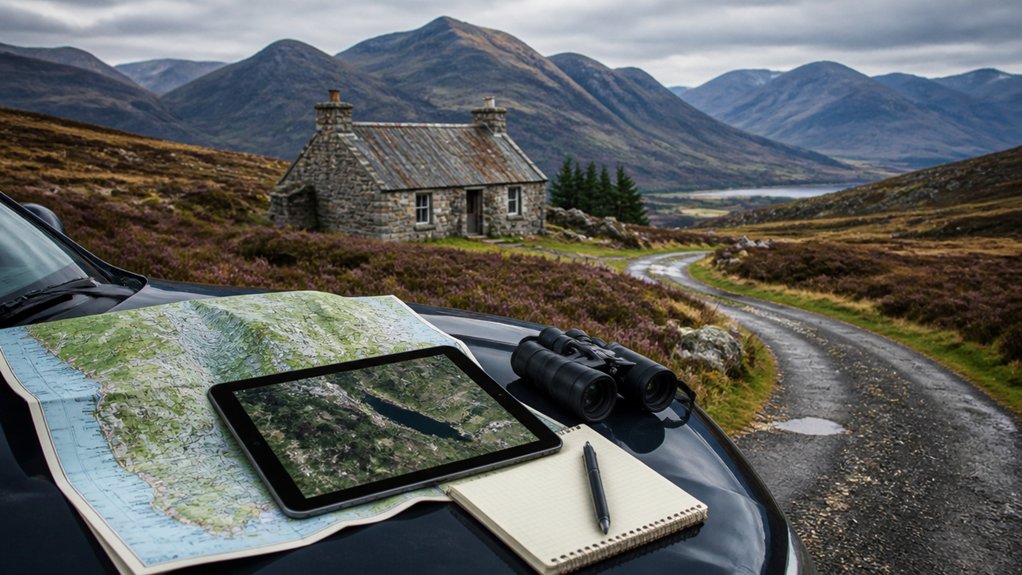
Before you fall for a postcard-perfect cottage listing, pick your patch of the Highlands and lock in what you won’t compromise on. Decide whether you want Wester Ross’s sea lochs, Speyside’s wooded straths, or Sutherland’s big skies, then map your daily life: school run, GP, nearest shop, and winter road reliability.
Set your must-haves: mains water or a tested private supply, septic compliance, broadband minimums, and an access track you can drive after a thaw. If you’re drawn to Historical architecture, budget for stonework, slate, and conservation constraints. If Cultural traditions matter, choose a community with a strong ceilidh scene, shinty club, or Gaelic presence.
Write your non-negotiables down and stick to them when viewings tug at your heart.
Set Portal Alerts for Highland Cottages for Sale
Once you’ve chosen your Highland patch and nailed your non-negotiables, set portal alerts so you see the right cottages the minute they hit the market. Use Digital property portals and save searches for village names, glens, and postcode districts, not just “Highlands” broadly.
Tighten filters: price ceiling, plot size, EPC, distance to a main road, and whether it’s on mains water or a private supply.
Turn on instant email or app notifications and add keywords like “croft,” “bothy,” “stone-built,” and “Cottages with gardens.” Exclude “shared ownership” and “auction” if they’re no use.
Check alerts morning and evening—new listings often land midweek. When something fits, book a viewing fast and line up maps, flood data, and broadband checks.
Work With Highlands Estate Agents (and Local Solicitors)
Although the portals do a good job of surfacing listings, you’ll move quicker—and hear about cottages sooner—if you build relationships with a couple of Highlands estate agents and a local solicitor. Call, introduce yourself, and share your must-haves: hamlet or glen, budget, land, and tolerance for renovation and septic systems.
Ask agents what “typical” looks like in that patch—roofing, access tracks, and Traditional architecture details like dormers, stonework, and sash windows.
Line up a local solicitor early. They’ll explain offers, closing dates, title quirks, crofting issues, and rural servitudes, and they’ll flag survey needs.
Stay visible: pop into branch offices when you’re up for Local festivals, and follow up fast when a viewing slot appears.
Find Off-Market Cottages in the Scottish Highlands
If you want the best rural cottages in the Highlands, you can’t just rely on listings—you’ve got to tap local word-of-mouth. You’ll hear about quiet sales faster by chatting with neighbours, crofters, shopkeepers, and community groups.
Then backing that up with calls to land agents and estate managers who handle private deals. Stay polite, be specific about your budget and patch, and you’ll get tipped off before a board ever goes up.
Local Word-Of-Mouth Networks
Because many Highland cottage sales never reach the property portals, you’ll often get the best leads by tapping local word-of-mouth before an agent ever lists the home.
Start by showing up: village halls, community council meetings, local shows, and the wee shop noticeboard.
Join local Facebook groups for the glen and nearby towns, but don’t lurk—post a clear, polite “looking to buy” note with your budget range and what you can offer (cash, quick move, flexible dates).
Ask crofters, tradesfolk, and posties who’s thinking of downsizing or moving south; they hear it first.
Build community networks by returning calls and keeping your promises. Follow up gently, and let word of mouth referrals do the heavy lifting.
Land And Estate Agents
While the big portals focus on what’s already public, land and estate agents in the Highlands often know about cottages that’ll sell quietly—sometimes before a sign ever goes up. Ring a few firms that cover your target glen, then ask to be logged as an active buyer with funding lined up. Be specific on budget, access, crofting potential, and whether you’ll take a project.
Good agents understand Historical landownership, so they can flag title quirks, shared tracks, estate burdens, and what a seller will and won’t entertain. They’ll also steer you toward Architectural styles you actually want—stone longhouses, estate workers’ cottages, or white-harled farm steadings—before they hit the open market.
Keep in touch monthly, move fast on viewings, and you’ll get first call.
Spot Red Flags in Rural Highland Cottage Listings
When you’re scanning listings for a rural Highland cottage, you’ll save yourself a long drive and a costly survey by spotting the red flags early. Start with the photos: if every shot is tight-cropped, dark, or oddly angled, assume it’s hiding damp, sagging roofs, or tired stonework.
Read the description like a crofter—words like “cosy,” “rustic,” and “brimming with potential” often signal work. Watch for red flag indicators such as missing Home Report details, no mention of septic tank, water supply, or access rights, and vague “nearby” distances to schools or shops.
Cross-check the map pin, postcode, and EPC: listing inaccuracies here usually mean tricky tracks, poor broadband, or an exposed siting. If it’s “offers over” but stale, ask why locally.
Move Fast Safely: Home Report, Viewing, Offer, Survey
If you’re serious about a Highland cottage, you need a plan that lets you move fast without getting burned: read the Home Report the day it lands (valuation, survey notes, EPC, and any damp/roof/rot flags). Book the viewing immediately, and line up your solicitor so you can offer with the right conditions.
At the viewing, check access, water supply, septic, broadband, and where the wind-driven rain hits. Take photos and ask about factoring, common repairs, and crofting ties.
If you can’t get north, use Remote viewing with a local agent and a clear checklist.
Then move: submit a note of interest, set your offer date strategy, and commission a specialist survey for stonework or timber.
Don’t skip Legal considerations—servitudes, boundaries, and title quirks can bite.
Conclusion
You’ll find the right Highland cottage when you marry patience with pace: be ready, but don’t be rushed. Keep your alerts humming, stay friendly with local agents and solicitors, and ask around in the village—word travels faster than Wi‑Fi up here. If a listing looks too tidy, dig deeper; roofs, roads, and rights of access can bite. When it’s right, move quick: Home Report, viewing, offer, survey—then get the keys.