

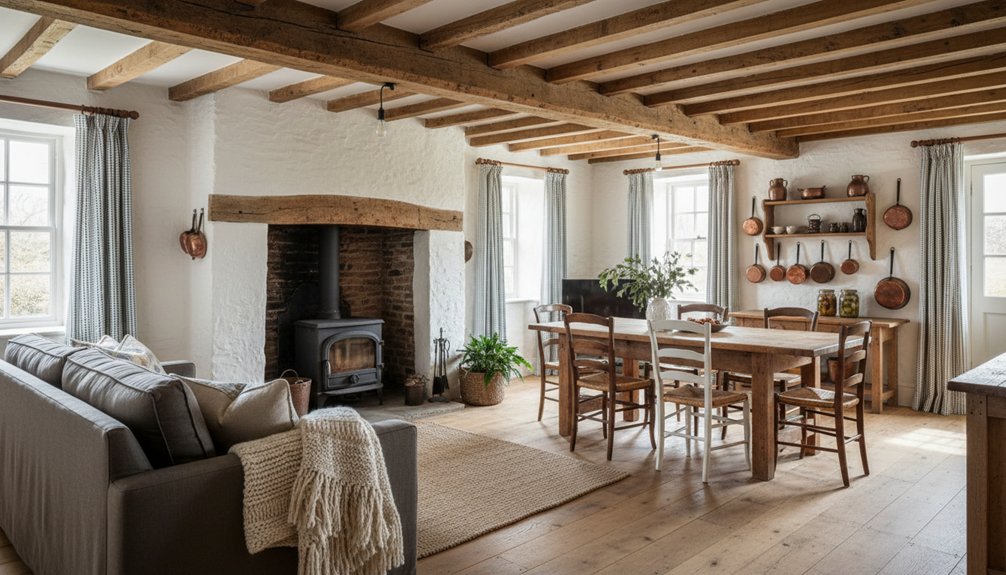
Start by mapping your restoration room by room, set a realistic budget with a 15% cushion, and tackle safety and comfort first. Save what’s original—doors, trim, beadboard, windows, and built-ins—then repair floors and beams gently so you keep their honest patina. Fix moisture and drafts, and treat lead paint safely. Warm up rooms with creamy whites, sage, and soft textiles, plus layered 2700K lighting. Keep kitchens clean-lined and baths vintage, with more ideas ahead.
Key Takeaways
- Plan restoration room by room, budget with a 15% cushion, and prioritize safety, comfort, and high-use spaces first.
- Preserve original doors, trim, windows, beams, and built-ins; label and photograph vintage hardware and fixtures for reuse.
- Repair floors and joists minimally, keep tool marks and patina, and finish wood with hardwax oil for warmth without shine.
- Control moisture, drafts, and lead paint using proper grading, ventilation, humidity monitoring, weatherstripping, and safe testing or encapsulation.
- Create country comfort with warm sun-washed colors, layered cotton-linen-wool textiles, aged metals, and soft 2700K lighting on dimmers.
Set Your Farmhouse Interior Plan, Budget, Priorities
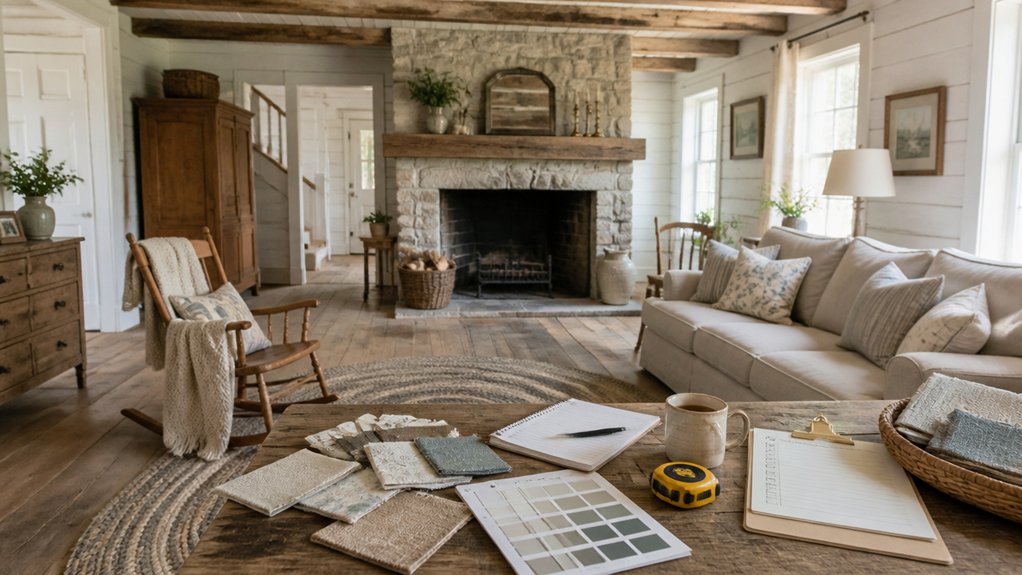
Before you pick up a paintbrush or start pulling up floorboards, take a little time to map out your farmhouse interior plan—what you’ll restore, what you’ll replace, and what you’ll leave charmingly worn. Walk room to room, jot needs, and decide how you want each space to feel, not just look.
Set a realistic budget with a 15% cushion for surprises, then rank projects by safety, comfort, and daily use. Price materials, labor, permits, and delivery, and lock your must-haves before you browse Farmhouse decor.
Choose a simple palette, repeat finishes, and buy fixtures in phases to stay steady. Don’t forget outdoor spaces; a tidy porch light and durable entry mat stretch your impact.
Spot Original Farmhouse Features Worth Saving
Although it’s tempting to gut a room and start fresh, you’ll get the most authentic farmhouse interior by slowing down and spotting the original features that still have good bones. Walk each space with a notebook, then look up, down, and behind later add‑ons.
Check for solid interior doors, old trim profiles, beadboard, and built‑ins that can anchor the room’s story. Open closets and attic hatches to find antique barnwood planks, early hardware, and forgotten shelves worth reusing.
Notice stair newel posts, handrails, and fireplace surrounds with honest wear. Test windows for smooth operation and intact muntins, and watch for plaster medallions or tongue‑and‑groove ceilings.
Gather vintage fixtures—sconces, knobs, registers—and label what comes from where. Photograph everything before you lift a tool.
Repair Floors and Beams Without Erasing Patina
Once you’ve mapped out what’s original, turn your attention to the floors and beams that carry the house’s weight and its history. Walk the rooms and listen for soft spots, then lift only the boards you must. Sister joists or add discreet blocking, and re‑nail planks from below so the top stays scarred and honest.
On beams, keep tool marks and smoke stains; brush off loose dirt, then use a mild soap and water, not aggressive sanding. Patch checks with tinted wax or epoxy sparingly, and leave a few cracks as proof of time. Finish with a hardwax oil that deepens tone without gloss.
Treat this like Vintage furniture restoration: stabilize first, polish last. When sunlight pours in from the Farmhouse garden, the patina will glow.
Solve Old-House Issues (Moisture, Drafts, Lead Paint)
Once the floors and beams feel steady underfoot, you’ll want to tame what you can’t always see: moisture that creeps in, drafts that whistle through old trim, and lead paint that needs respectful handling.
You can keep the house dry with smart ventilation and targeted sealing, then chase down drafty rooms with weatherstripping and careful air-leak fixes.
And if lead paint is part of your walls’ history, you’ll manage it safely with proper containment, cleanup, and the right protective gear.
Moisture Control Strategies
When rain, soil, and everyday living start pushing moisture into an old farmhouse, you’ve got to guide that dampness back out before it can sink into beams, plaster, and paint. Start outside: slope soil away, keep gutters clear, and extend downspouts so water doesn’t pool at the foundation.
Inside, run bath and kitchen fans, vent dryers outdoors, and fix leaks fast—especially around tubs, sinks,, and supply lines.
For Mold prevention, keep humidity near 40–50% and watch closets, corners, and cellar joists. Smart dehumidifier selection means sizing to the square footage and dampness level, choosing an auto-drain option for basements, and using a hygrometer to verify results.
Finish by allowing walls to breathe with vapor-open paints where possible.
Eliminating Drafty Rooms
Why do some farmhouse rooms feel chilly even with the stove humming? You’re likely losing warmth through gaps around windows, doors, and sill plates. Start with simple draft proofing techniques: add door sweeps, set rope caulk along window sashes, and apply removable weatherstripping where frames rattle.
Then hunt leaks with a candle on a windy day and seal cracks at baseboards and trim with paintable caulk.
Next, choose insulation options that suit old walls and attics. Top up attic batts or blown-in cellulose, and insulate rim joists in the basement to stop cold air washing the floors.
Hang heavier curtains, keep registers clear, and you’ll feel that steady, country comfort settle in.
Managing Lead Paint Safely
How do you freshen up peeling trim in an old farmhouse without stirring up trouble? Start by assuming any pre-1978 paint may contain lead, and treat it with respect. Test with an EPA-recognized kit or call a certified pro so you know what you’re facing.
To reduce Lead paint hazards, keep dust down: mist surfaces, skip sanding and dry scraping, and seal off the room with plastic and tape. Wear a P100 respirator, gloves, and coveralls, and keep kids and pets away.
For safe removal, use a HEPA vacuum, wet-wipe as you go, and bag debris tightly. When the wood’s sound, encapsulate with a bonding primer and fresh paint, and let your farmhouse shine safely.
Choose Warm Farmhouse Interior Paint Colors and Trim
Two paint choices can make or break a warm farmhouse interior: your wall color and your trim. Start with Farmhouse color palettes that feel sun-washed and honest—creamy whites, oatmeal, soft greige, muted sage, or a dusty clay that warms old plaster.
Test swatches morning to night, and let the home’s wood tones steer you toward cozy, not stark.
For Trim and molding choices, keep it simple and period-friendly. Choose a slightly deeper white or a gentle putty on trim so it frames doors and windows without shouting. Use a satin or semi-gloss finish on trim for wipeable durability, and keep walls in eggshell for a mellow glow.
If ceilings feel low, paint them a shade lighter to lift the room.
Add Cozy Texture With Linen, Wool, and Cotton

Once your paint and trim feel settled, you can warm the rooms with honest, touchable textiles. Layer linen on beds and sofas for easy softness.
Then add wool throws and cushions to bring in that snug, fireside weight. Mix in crisp cotton sheets, slipcovers, and towels so everything breathes and stays comfortable year-round.
Layer Linen For Softness
While painted wood and antique pieces set the tone, it’s the textiles that make a restored farmhouse feel truly lived-in.
Start with Linen layering: slip a washed linen cover over your sofa, then add a second linen throw at the foot for an easy, rumpled look. You’ll get instant Softness enhancement without losing that crisp, country character.
Choose sun-faded neutrals—oat, flax, cloud—and mix weights so the room feels relaxed, not flat.
On beds, layer a linen duvet with a lighter linen quilt, then finish with cotton percale sheets that feel cool and clean.
In the kitchen, trade stiff towels for linen hand cloths and simple café curtains that filter light. Keep edges raw or lightly fringed for rustic charm.
Incorporate Woolen Warm Accents
As the evenings turn cool, you can balance linen’s breezy ease with a few woolen accents that bring instant warmth and depth. Drape a checked throw over the settee, or fold a chunky blanket at the foot of the bed so it’s always within reach.
Choose Wool accents in natural shades—oat, charcoal, rust—to echo aged beams and worn floors. Add a pair of felted cushions to the bench by the stove, or slip a woven runner across a weathered table to soften its edges.
Hang a simple wool tapestry in the entry to hush sound and welcome you home. When you mix these cozy textiles with your linen layers, the room feels gathered, grounded, and ready for long, slow nights.
Mix Cotton For Breathability
When the fire’s low and the house still needs to breathe, you can bring in cotton to lighten the mix without losing that farmhouse coziness. Layer crisp cotton sheets under a wool blanket, or slip cotton covers over linen pillows to keep the bed from feeling heavy.
In the living room, drape a simple cotton throw across a worn leather chair and let it soften the lines without trapping heat.
Choose sturdy weaves and muted plaids that nod to old feed sacks, then balance them with nubby linen and a touch of wool. You’ll get breathable fabrics that handle changing seasons and everyday living.
For cotton sustainability, look for organic, recycled, or responsibly dyed options, and wash cool to make them last longer.
Choose Timeworn Finishes: Wood, Metal, Hardware

Because farmhouse rooms earn their charm through years of use, you’ll want finishes that look like they’ve lived a little. Choose wide-plank wood with knots, saw marks, and a soft matte seal so it feels handled, not glossy.
Pair it with Antique furniture that shows honest dings, then echo those warm tones in Rustic textiles like grain-sack stripes and washed linen.
For metal, lean on aged brass, blackened iron, and zinc with a dulled patina. You can mix metals if you repeat them: iron on hinges, brass on pulls, and pewter on hooks.
Pick hardware with simple shapes—bin pulls, latches, skeleton keys—and mount it with visible screws. If new pieces are necessary, distress lightly, then wax for depth and protection.
Plan Farmhouse Interior Lighting for Soft, Warm Glow
Although a farmhouse can handle a few bold fixtures, you’ll get the truest, most welcoming feel by layering soft, warm light throughout the room. Start with ambient light: a simple lantern pendant or iron chandelier on a dimmer sets the tone without glare.
Next, add task lighting where hands work—sconces by the sink, a swing‑arm lamp near your reading chair, and under‑shelf lights in built‑ins. Keep bulbs in the 2700K range so Farmhouse lighting stays golden, not blue.
Then tuck in accent light: a shaded table lamp on a sideboard, a candle‑style fixture in the hall, or a tiny picture light over heirloom art. Mix aged brass, blackened steel, and linen shades, and you’ll keep that steady warm glow all evening.
Make a Modern Kitchen Fit Your Farmhouse
To make a modern kitchen feel at home in your farmhouse, you’ll want to blend clean lines with a touch of rustic soul. Choose honest farmhouse materials—wood, stone, and iron—that can stand up to daily life and still look timeless.
Then add heritage details like an apron-front sink, open shelving, or vintage-style hardware so the room feels rooted and welcoming.
Blend Rustic And Sleek
When your farmhouse kitchen needs modern function, you don’t have to trade away its soul to get it. You can blend rustic warmth with Modern minimalism by keeping sightlines clean and storage smart, while letting a few heritage touches anchor the room.
Aim for calm, uncluttered counters and streamlined lighting, then balance them with timeworn character in your styling.
Bring in a hint of Urban chic through matte black hardware, simple bar stools, or a crisp, geometric runner. Choose one sleek focal point—like a pared-back hood shape or an integrated appliance front—so the space feels current, not chaotic.
Keep your palette quiet, add texture through linens and pottery, and let natural light do the softening.
Choose Farmhouse Materials
If you want a modern kitchen to feel right at home in a farmhouse, start with materials that carry honest texture and age gracefully. Choose wide-plank oak or pine floors, soapstone or honed granite counters, and a fireclay or stainless sink with a softened sheen. Favor matte finishes over high gloss so light lands gently, not sharply.
Bring in warmth with painted or stained wood cabinetry and simple iron or aged-brass pulls. Use open shelving in reclaimed wood to keep the room airy and practical.
Soften hard surfaces with Vintage textiles like grain-sack towels, linen café curtains, or a flatweave runner. Finish with Rustic decor—stone crocks, wooden boards, and woven baskets—so your sleek appliances feel grounded, not flashy.
Add Heritage Details
Natural materials set the tone, but heritage details give your modern kitchen its farmhouse soul. Add a turned-wood island leg, a beadboard panel, or a salvaged lintel above the range to anchor new cabinetry in timeworn character.
Choose bridge faucets, bin pulls, and exposed hinges that echo Heritage craftsmanship, then keep finishes honest—aged brass, black iron, or unlacquered copper that will patina with use.
Bring in historical authenticity with a freestanding hutch for dishes, a plate rack, or open shelves on simple brackets. Swap sleek pendants for schoolhouse shades, and frame windows with plain linen café curtains.
If you can, reuse original doors as pantry fronts, and let small imperfections tell the story.
Give Bathrooms Vintage Farmhouse Comfort
Although a bathroom’s often the smallest room in the house, you can make it feel like a cozy slice of vintage farmhouse life with a few well-chosen details.
Start with Vintage bathroom fixtures: a bridge faucet, porcelain lever handles, or an apron-front sink that looks timeworn but works like new. Swap harsh lighting for a warm-glow sconce with an aged brass or oil-rubbed bronze finish, and let it cast a soft, evening-ready shine.
Lean into farmhouse vanity ideas by choosing a painted wood base with simple shaker doors, a honed stone or butcher-block top, and a framed mirror that feels collected.
Keep your palette creamy whites, muted greens, and weathered wood tones, then finish with thick cotton towels and a subtly patterned runner for comfort.
Add Charming Storage With Built-Ins and Baskets
When you tuck smart storage into the bones of your farmhouse, the whole interior feels calmer and more welcoming. Start with built-ins that look original: a shallow mudroom bench with cubbies, a dining hutch inset between studs, or a hallway nook turned into a bookcase. Paint them a soft cream, then distress the edges so they blend with aged trim.
For charming storage that still feels relaxed, rely on built-in baskets. Slide woven seagrass bins into lower shelves for shoes, dog leashes, and mittens, and label them with simple tags. Use lidded baskets up high for linens and seasonal décor, so clutter stays hidden.
Keep a few open trays for keys and mail, and you’ll always know where things belong.
Conclusion
You’ve mapped your plan, guarded your budget, and saved what time tried to steal—those worn beams, honest floors, and old trim that whisper like Homer’s hearth. You’ve tamed drafts, moisture, and lead, then warmed the rooms with gentle colors and lamplight. Your kitchen and baths feel modern, yet belong. With built-ins and baskets, every corner earns its keep. Now, when you step inside, the house meets you halfway—steadfast, welcoming, lived-in.