

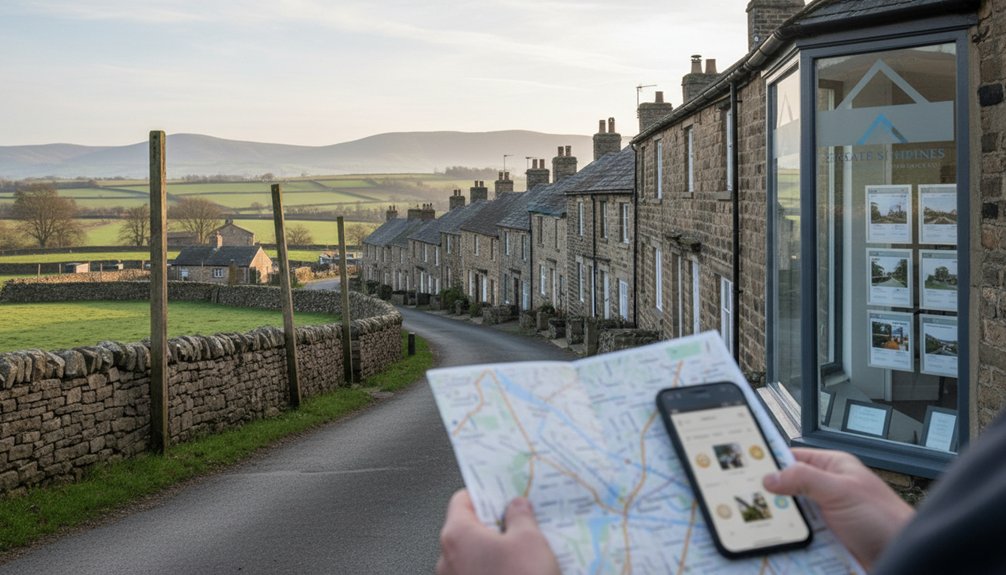
Set a realistic budget that covers rural extras like higher heating (oil/LPG), insulation upgrades, septic or private water costs, and weaker broadband or mobile signal. Target better-value inland villages off the A1 and the fringes of Alnwick, Hexham, and the Tyne Valley, where amenities still stack up. Use Rightmove “Reduced” and “Sold STC,” cross-check EPC heating details, and compare Land Registry sold prices to spot negotiable listings. There’s more to help you time viewings and offers.
Key Takeaways
- Set a realistic budget including council tax, insurance, repairs, rural heating costs, broadband upgrades, and longer travel and maintenance expenses.
- Target inland villages and market-town fringes near Alnwick, Morpeth hinterland, Hexham outskirts, and Tyne Valley edges for better value.
- Check amenities and connectivity: primary schools, shops, GP access, buses, and mobile/broadband signal; consider 4G/5G or satellite options.
- Use Rightmove “Reduced” and “Sold STC,” track days-on-market, and benchmark with Land Registry data to spot underpriced listings.
- View midweek or winter, assess insulation and heating, then time offers after reductions with short expiries and proof you’re ready to proceed.
Set Your Northumberland Budget (Incl. Rural Costs)

Before you book viewings in Northumberland’s villages and hamlets, pin down a realistic budget that accounts for rural extras as well as the headline price. Start with your deposit, mortgage ceiling, and a hard monthly cap, then add council tax band, home insurance, and a repair buffer for older stone cottages.
Price in heating: oil, LPG, or solid fuel can swing winter costs, and some spots need better insulation. Check broadband and mobile signal; you might pay for 4G/5G routers or satellite.
Factor travel: longer school runs and commuting mean more fuel and servicing. Allow for septic tank emptying, private water, or maintenance fees.
Keep discretionary spend honest too—Local dining and Cultural festivals add up if you’re nearby.
Pick Affordable Rural Northumberland Areas to Target
Although Northumberland’s headline prices can look similar on paper, you’ll stretch your budget further if you target villages just inland from the A1 and the market towns rather than the coast or prime commuter hotspots. Aim for places around Alnwick, Morpeth’s hinterland, Hexham’s outlying villages, and the Tyne Valley edges, where you still get decent links without paying coastal premiums.
Check what you’ll actually use week to week: a primary school, village shop, pub, GP access, and a reliable bus route. A strong rural community can also cut costs through sharing lifts, local trades, and informal childcare.
If you need rail, look near stations on the Newcastle–Carlisle line, but stay a mile or two back from the platforms. Finally, compare council tax bands and broadband speeds alongside local amenities.
Find Deals With Rightmove, EPCS, and Land Registry
Where do the real bargains hide when every listing looks “priced to sell”? Start with Rightmove’s “Sold STC” and “Reduced” filters, then set alerts for villages you’ve shortlisted.
Check days-on-market: long listings often signal wiggle room, especially if the price has been trimmed twice.
Next, open the EPC and look past the rating: note heating type, insulation notes, and running-cost hints so you don’t overpay for a “cheap” cottage that’s costly to live in.
Finally, use Land Registry sold prices to benchmark the street, not the postcode, and spot under-asked homes near Local amenities.
Combine all three and you’ll shop smarter within a Rural community, without guessing.
Time Viewings and Offers for Northumberland Discounts
You’ll often bag a better price in rural Northumberland if you book viewings midweek, early mornings, or in the quieter winter months when competition thins out.
Use that off-peak calm to ask sharper questions and spot issues you can cost up, so you’re ready to negotiate.
Then time your offer for maximum leverage—move quickly on stale listings, or go in just after a price cut when the seller’s expectations have softened.
Off-Peak Viewing Strategy
If you time your viewings for Northumberland’s quieter weeks, you’ll often face less competition and gain room to negotiate. Aim for late autumn, mid-winter (outside Christmas), and weekday mornings when agents aren’t juggling back-to-back appointments. You’ll get straighter answers on price flexibility, recent interest, and why the seller’s moving.
Use the off-peak slot to test real running costs. Check heating type, insulation, septic compliance, and broadband speeds before you fall for the view.
Walk the lane at school-run time, then return after dark to gauge noise and lighting.
Spend time on countryside amenities: bus links, village shop hours, and GP catchment. Chat with the local community in the pub or post office.
Offer Timing Leverage
Although Northumberland’s rural market can feel steady year-round, you can still win meaningful discounts by timing your offer to match a seller’s pressure points—end of the month (agent targets), just before or after a quiet spell (late autumn and mid-winter), and right after a price reduction when momentum’s dipped.
Track Market trends weekly on Rightmove and local agent emails so you know what’s sticking in villages like Wooler, Bellingham, or around Alnwick.
Use seasonal variations to your advantage: fewer viewings in January means less competition, so you can go in clean but firm.
Offer within 24 hours of a quiet viewing slot, set a short expiry, and show you’re proceedable (AIP, solicitor lined up).
Ask for fixtures or a retest to save cash.
Check Northumberland Planning Limits Before Bidding
Before you bid on a rural bargain in Northumberland, check the planning limits that could turn a “cheap” home into an expensive headache. Start with Rural zoning: is it in the Green Belt, an Area of Outstanding Natural Beauty, or near Hadrian’s Wall where controls tighten?
Pull the listing’s postcode and search Northumberland County Council’s planning portal for past applications, refusals, and enforcement notes. Ask your solicitor to confirm lawful use, any agricultural occupancy ties, and whether outbuildings have permitted development rights or need Planning permissions.
If you’re banking on extending, adding a holiday let, or converting a barn, ring the council’s pre-application advice team and budget for those fees. Check flood zones and septic tank rules too.
Run the Numbers on Renovations vs Running Costs
Planning checks tell you what you *can* do; the next step is working out what it’ll actually cost to make a rural Northumberland place comfortable and cheap to run. Get quotes for roof, damp, windows, and heating before you bid, not after.
In exposed villages from Bellingham to Wooler, insulation and air-tightness often beat fancy kitchens for payback.
Price in fuel type: oil tanks, LPG contracts, or long electric runs can sting, while a heat pump only works if the fabric’s right.
Compare renovation costs against annual bills over 10 years, then add a contingency.
If you’re using renovation financing, check rates and drawdown fees.
Finally, watch property depreciation: over-improving a small hamlet house can cap resale value.
Conclusion
Lock your budget first, then narrow in on villages where prices and council tax stay sensible. Use Rightmove alerts, EPC ratings, and Land Registry sold data to spot true value, and time viewings when listings go quiet. Before you put your money down, check Northumberland planning rules, access, and services so you don’t buy a headache. Finally, price renovations against heating, maintenance, and travel—don’t let a bargain turn into a money pit.