


Start by keeping what makes your 1930s home itself: original plaster, solid wood doors and trim, hardwood floors, built-ins, and true divided-light windows. Survey for moisture, rot, and settlement, then stabilize structure and upgrade wiring, plumbing, and HVAC before finishes. Patch plaster with compatible lime or gypsum, and use breathable matte paint in muted earth tones. Refinish floors low-sheen and layer quiet jute or wool rugs. Keep lighting warm, simple, and dimmable—there’s more to guide your next steps.
Key Takeaways
- Start with a conditions survey; fix moisture, rot, pests, and settlement before any cosmetic work.
- Preserve original plaster, woodwork, divided-light windows, built-ins, and floors; repair rather than replace to keep authentic patina.
- Upgrade wiring, plumbing, HVAC, and insulation carefully, protecting historic surfaces and matching original profiles, proportions, and hardware.
- Use breathable finishes like limewash, clay plaster, and matte paint in muted earth tones to create soft, mineral, low-clutter walls.
- Layer warm, period-friendly lighting and natural textiles; add low-profile jute rugs and linen for comfort without covering original floors.
Get Clear on Soft Rustic Minimalism (1930s Edition)

If you’re working with a 1930s house, soft rustic minimalism starts by treating what’s already there as the main finish, not a problem to cover. You aim for calm rooms where patina reads as design, and every added element earns its place through function and honest material.
You’ll strip decisions down to a tight palette: warm whites, clay, smoke, and muted wood tones that echo aged plaster and timber. Choose tactile surfaces—linen, wool, matte metal, handmade tile—so light falls softly and edges stay quiet.
Keep lines simple, avoid shine, and let negative space frame details rather than compete with them. Done well, you get Vintage charm without clutter, and rustic elegance without themed décor. You’re editing, not erasing.
What to Keep (and Not Modernize) in a 1930s Home
Before you pick up a sledgehammer, decide which 1930s elements you’ll protect as the home’s finished surfaces: original plaster, solid wood doors and trim, stair parts, hardwood floors, divided-light windows, and any built-ins worth saving. These pieces carry Historical authenticity and give your minimalist-rustic rooms their quiet weight.
Keep imperfect patina, not faux “farmhouse” distressing. Repair plaster with compatible lime or gypsum mixes, not skim coats that erase edges; use Preservation techniques like dutchman patches in trim, gentle stripping, and wax-oil finishes.
Don’t replace true divided lights with single panes or plastic grids. Avoid widening cased openings, flattening baseboards, or swapping paneled doors for slabs.
Modernize only what’s failing: wiring, plumbing, seals, and hardware function—without changing profiles or proportions.
Your 1930s Update Plan (Order of Operations)
Because old houses punish rushed decisions, you’ll get the cleanest minimalist-rustic result by sequencing work from structure and systems to surfaces and only then styling.
Start with a conditions survey: note settlement, rot, pests, and moisture paths, then stabilize framing, sills, and masonry before you touch finishes.
Next, tackle the invisible: electrical capacity, plumbing runs, HVAC, and insulation strategy, routing upgrades to protect plaster, trim, and original doors.
Then restore what you’ll keep: repair windows, rehang hardware, patch plaster, and refinish floors, favoring salvage over replacement for Vintage charm and Historic preservation.
After that, handle built-ins and storage so clutter doesn’t dictate your layout.
Paint comes last, followed by minimal lighting and textiles, so every material reads intentional.
A Soft Rustic Palette for 1930s Finishes
You keep your 1930s finishes in charge by choosing muted neutrals and warm woods that echo what’s already there. You ground rooms with clay, linen, and plaster—matte, tactile, and honest—so updates read as repair, not replacement.
You finish with soft contrast on trim, letting doors, casings, and built-ins stay quietly defined without turning stark.
Muted Neutrals, Warm Woods
Although a 1930s home can handle color, a soft rustic palette works best when it lets the original finishes lead. You’ll get there with muted neutrals, warm woods, and restraint. Choose paint that reads like daylight on old plaster: quiet, low-chroma tones that don’t compete with trim lines, arched openings, or vintage tile edges.
Let the wood do the talking. You can clean and re-oil existing floors, refinish casings in a matte sheen, and match any new millwork to the house’s undertones instead of “fresh” stain trends.
Keep metals and hardware subdued, and limit contrast so *progression* feel intentional. When you edit your palette down, the home’s age shows as depth, not darkness, and every repaired surface looks like it’s always belonged.
Clay, Linen, And Plaster
Once you’ve quieted the big moves with muted neutrals and warm woods, tighten the palette to the materials a 1930s house already understands: clay, linen, and plaster. You’ll get softness without erasing age, because these finishes echo original hearths, mortar, and hand-troweled walls.
Choose clay crafts for small, honest accents—unglazed vessels, simple sconces, or tile repairs that read as period-adjacent, not faux antique.
Bring in linen textiles where the house wants breathability: café curtains, Roman shades, and slipcovered cushions that drape, not shine.
Let plaster lead on walls and ceilings; patch with compatible mixes, keep the texture legible, and avoid heavy build coats. You’re preserving the home’s pores, not sealing them shut.
Soft Contrast For Trim
Because 1930s trim often reads as the home’s crisp outline—casing profiles, baseboards, and picture rails—soft contrast works better than stark white. You’ll keep the period’s shadow lines intact while avoiding that freshly flipped glare.
Choose a warmed-off white, mushroom, or pale putty that sits one step lighter than your wall color, then match sheen to function: satin for doors, eggshell for casing, flat for rails. This preserves trim detailing without turning it into a stripe.
If you’re keeping original wood, tint your paint to the existing undertone and let knots and grain guide color harmony. Test in morning and lamplight; 1930s rooms shift fast.
Finally, stop at one accent: a deeper hearth tone or aged-bronze hardware.
Plaster Walls: Restore Them, Keep Them Matte
When you strip a 1930s room back to its bones, the plaster usually tells you what’s worth saving. You’ll see hairline cracks, shallow waves, and old trowel marks that give the walls their quiet depth.
Instead of chasing perfect flatness with heavy skim coats, focus on plaster restoration that stabilizes what’s there: reattach loose keys, widen and fill cracks with compatible lime or gypsum, and patch with a firm hand that respects the plane.
Then keep the surface calm. Choose a breathable paint and stop at a true matte finish so light falls softly, not sharply. You’ll mute defects without erasing age, and your rooms will feel grounded, spare, and honest, with texture doing the work instead of sheen.
Refresh 1930s Trim and Keep the Patina

Although fresh paint can make a room feel finished, your 1930s trim earns a lighter touch: clean it, tighten it, and let the small dents and softened profiles stay visible. Wash with mild soap and warm water, then dry fast so moisture doesn’t swell joints.
Reset loose casings with finish nails, set them, and fill only active cracks with a reversible putty. If you find shellac or old varnish, revive it with a gentle cleaner and a thin coat of dewaxed shellac, brushed out lean.
Skip heavy sanding; it erases the crisp shadow lines that carry Vintage charm. Touch up bare spots with tinted wax or stain markers, then seal lightly.
You’ll get Patina preservation and a calm, rustic-minimal frame around every opening.
Soft Rustic Minimalist Floor Updates for 1930s Homes
You’ll get the biggest shift underfoot by refinishing the original hardwood floors instead of replacing them, keeping their age and grain as the feature.
Choose a warm neutral finish—matte oil or low-sheen waterborne—that quiets shine and lets the wood read honest.
Then ground the rooms with quiet natural fiber rugs that soften sound, protect high-traffic paths, and stay true to a spare, rustic palette.
Refinished Original Hardwood Floors
How do you honor a 1930s home without sanding away its story? You start by treating the original hardwood as a historic surface, not a blank slate. Use restoration techniques that remove grime and failed coatings while keeping the patina, small dents, and saw marks that signal historical authenticity.
Patch only where boards are missing, and salvage matching species and widths so repairs disappear into the rhythm of the planks. Tighten squeaks from below, re-seat loose nails, and replace broken tongues with careful splines instead of modern shortcuts.
Then level just enough to unify wear, not erase it. You’ll end up with floors that read calm and minimal, yet still tactile, rustic, and honest underfoot.
Warm Neutral Floor Finishes
Once you’ve cleaned and stabilized the original hardwood, the finish becomes the quiet layer that protects it without turning it into something new. Choose warm neutrals that honor the era: light amber oils, muted honey sealers, or low-sheen waterborne coats that keep grain legible and edges honest. Skip high-gloss; it flattens character and reads too new.
Test samples in daylight and lamplight, because 1930s rooms shift tone fast. If you need color, tint subtly toward oat, clay, or softened walnut, letting wear lines and knots stay visible for Vintage charm.
Prioritize breathable systems where appropriate, and use satin or matte to hold rustic elegance. You’ll get a calm floor that supports minimalism while keeping the house’s original voice.
Quiet Natural Fiber Rugs
Because 1930s hardwood already carries the room, quiet natural fiber rugs should sit back and add texture without masking the floor’s age and grain. Choose low-profile jute, sisal, or flatweave seagrass in undyed tones so you don’t compete with original trim and plaster.
Size rugs to float inside furniture legs, leaving a border of exposed boards that reads honest and intact.
Layer in small wool rugs where you need softness—beside the bed, under a reading chair, at the hearth—so you add comfort without wall-to-wall coverage. Look for tight weaves, subtle heathering, and minimal patterns that hide wear yet feel period-respectful.
Use rug pads that breathe and grip, and lift seasonally to let the floor finish age evenly.
Period-Friendly Lighting With Modern Warmth
While you can modernize a 1930s home’s lighting, you’ll get the best result by letting the fixtures read as original and the glow feel current. Keep silhouettes faithful: schoolhouse globes, simple sconces, and petite chandeliers that sit close to the ceiling.
Choose honest materials—aged brass, patinated bronze, opal glass, and painted steel—so every piece carries Vintage charm without looking staged.
Then tune the warmth. Use dimmers everywhere, and specify high-CRI, 2700K LEDs so skin tones and wood reads true at night.
Hide modern tech in plain sight with period-style switches and slender bulbs that mimic incandescent shape.
Layer light with a restrained plan: one overhead, one task, one accent per room. You’ll preserve character while delivering Rustic elegance.
1930s-Friendly Textures for Soft Rustic Minimalism
You keep the 1930s bones honest by choosing textures that age quietly: plaster repairs, limewash, and clay-based finishes that breathe with the walls.
You balance that mineral softness with natural wood—left simply oiled or waxed—so the grain reads as structure, not decoration.
You finish with linen in restrained weights and colors, letting the room feel spare, warm, and original.
Plaster, Limewash, And Clay
If your 1930s walls have uneven plaster or hairline cracks, lean into that history instead of burying it under drywall and thick paint. Patch with compatible lime plaster, then keep the surface honest with textured finishes that catch light softly, not loudly. You’ll preserve the vapor-open assembly and avoid trapping moisture where old lath and masonry need to breathe.
Choose limewash for a chalky, layered depth that reads calm and minimal; it bonds to mineral substrates and ages gracefully with gentle variation. In higher-wear zones, clay plaster gives a velvety hand and subtle trowel marks, while naturally buffering humidity and odors.
Stick to muted earth tones, simplify trim lines, and let the wall become the quiet feature. These are eco-friendly materials that honor original construction and modern restraint.
Natural Wood And Linen
Because 1930s homes already carry plenty of visual texture in their floors, doors, and millwork, natural wood and linen can add warmth without tipping the rooms into clutter. You’ll get the calm you want by choosing honest materials and letting them age quietly beside original details.
Keep existing oak or fir trim, then introduce one complementary species—white oak, ash, or walnut—in simple forms: a slab bench, open shelves, or a plain-front cabinet. Favor oil or soap finishes over heavy stain so grain reads as history, not decoration.
For textiles, use washed linen in undyed, oatmeal, or soft stone; hang it as full-length curtains, wrap it on a roman shade, or slipcover a chair. This restraint delivers timeless elegance and honors artisanal craftsmanship in every seam and joint.
Mix Vintage With Clean-Lined Furniture
While a 1930s house carries its own quiet authority, clean-lined furniture lets the original details stay in charge. You anchor rooms with low-profile sofas, straight-leg tables, and simple casework that respects existing proportions and circulation.
Choose oak, walnut, and painted steel over glossy composites, and let finishes show grain, wear, and honest joins.
Then you layer in Vintage charm with one or two pieces that earn their keep: a pared-back spindle chair, a worn trestle bench, a baker’s rack. Keep silhouettes restrained so patina reads as texture, not clutter.
Repeat tones—warm wood, matte black, soft wool—to unify eras. You’ll get rustic elegance when every object feels necessary, durable, and quiet, not precious.
Calm Down Arches, Fireplaces, and Built-Ins
Even though arches, fireplaces, and built-ins arrive with built-in drama, you can quiet them without sanding off their history. Start by treating the curves as structure, not ornament: keep arched ceilings a single soft mineral tone so shadow, not paint contrast, defines them.
At the fireplace, preserve original brick or stone, then temper it with a honed slab hearth and a plain limewash if needed—never a glossy sealant. You’ll calm the surround by limiting nearby materials to oak, linen, and matte metal.
For built-ins, keep the proportions, repair the hinges, and swap only what’s failing; choose vintage fixtures with simple profiles in aged brass or blackened steel. Edit what sits on shelves, leave breathing room, and let craftsmanship read.
1930s Kitchens and Baths, Simplified
If you approach 1930s kitchens and baths as working rooms with good bones, you won’t need to strip them to feel fresh. Keep original layouts when they still serve you; update performance, not character. Refinish worn oak, patch cracked plaster, and save trim where it meets tile and casing cleanly.
Choose honest, durable surfaces: honed stone or soapstone counters, simple shaker fronts, and unlacquered brass that’ll age quietly. In baths, restore porcelain tubs, regrout classic hex, and replace failing valves with modern guts behind familiar handles.
Let painted beadboard and matte limewash soften light without erasing Vintage charm. Add rustic accents through salvaged wood shelves, linen shades, and a plain apron-front sink. You’ll get restraint, warmth, and rooms that feel original, not recreated.
Style Soft Rustic Minimalism Without Clutter
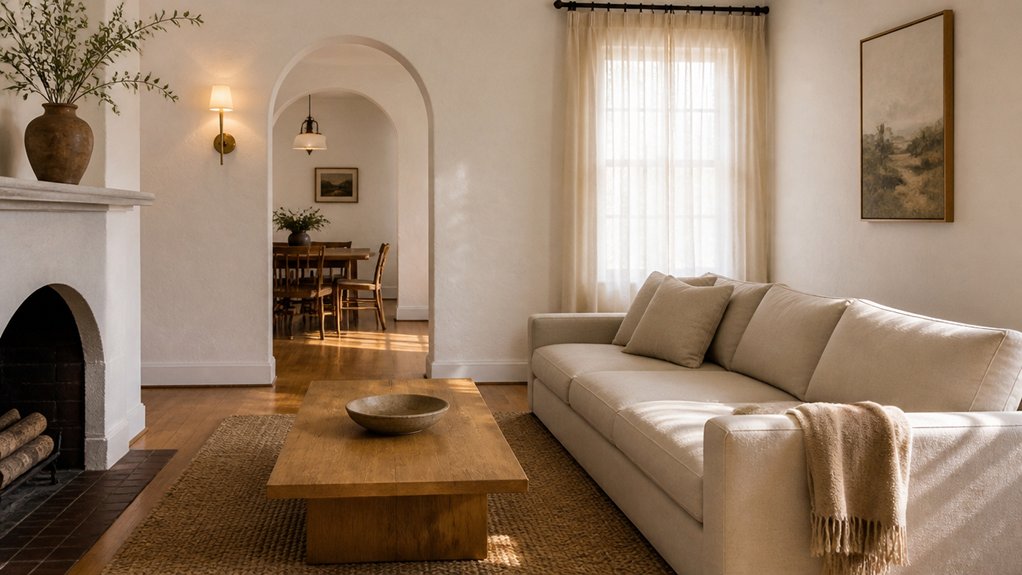
Because a 1930s house already carries texture in its plaster, oak, and aged hardware, you can style soft rustic minimalism by editing hard and choosing a few honest pieces that earn their keep.
Start by clearing sightlines: let casings, baseboards, and original doors read as the “decor.” Keep one warm wood tone, one metal finish, and a tight textile palette—linen, wool, cotton—so the rooms feel calm, not themed.
Choose furniture with legs and simple silhouettes, then ground it with a single vintage rug or a woven runner.
For Vintage charm, display one crock, one framed print, or a small stack of well-used books, not collections.
Add rustic accents through function: a peg rail, oak stool, iron hooks, and a clay vessel for branches.
Conclusion
You don’t need to remake your 1930s home; you need to tune it. Keep the plaster, the trim, the hearth—repair, don’t replace—and let honest materials lead. Choose a soft rustic palette that sits quietly against age: limewash whites, warm oak, muted stone, matte metal. Edit your furniture to clean lines, then leave space for light and shadow. Think of it like putting your house on airplane mode: calmer, clearer, still itself.