


Start by mapping your must-haves—year-round access, parking, broadband, and heating—then match them to the right patch. You’ll pay more around Windermere, Bowness, Ambleside, and Grasmere for walkable villages and easy services. For better value and space, look to the Eden Valley for M6 and rail access, the Cartmel Peninsula for coastal village life, or western valleys like Eskdale for wilder settings—just check winter access and flood history. Keep going to see how costs and rules shift.
Key Takeaways
- Start with villages near key routes to Kendal, Penrith, and Windermere for year-round access, parking, broadband, and easier school or GP trips.
- Search just off main tourist corridors for better value and less sealed-bid pressure, while keeping quick links to amenities and public transport.
- Consider Keswick and Borrowdale for outdoor-focused living, with farmhouses and cottages offering storage, slate terraces, and proximity to shops and services.
- Look around Ullswater and Pooley Bridge for quieter lakeside options with good access to Penrith, including waterfront or elevated properties.
- Explore Western Lakes, Eden Valley, and coastal villages for more space and lower prices, but verify flood history, winter access, tracks, and property rights.
Set Your Lake District Buying Must-Haves
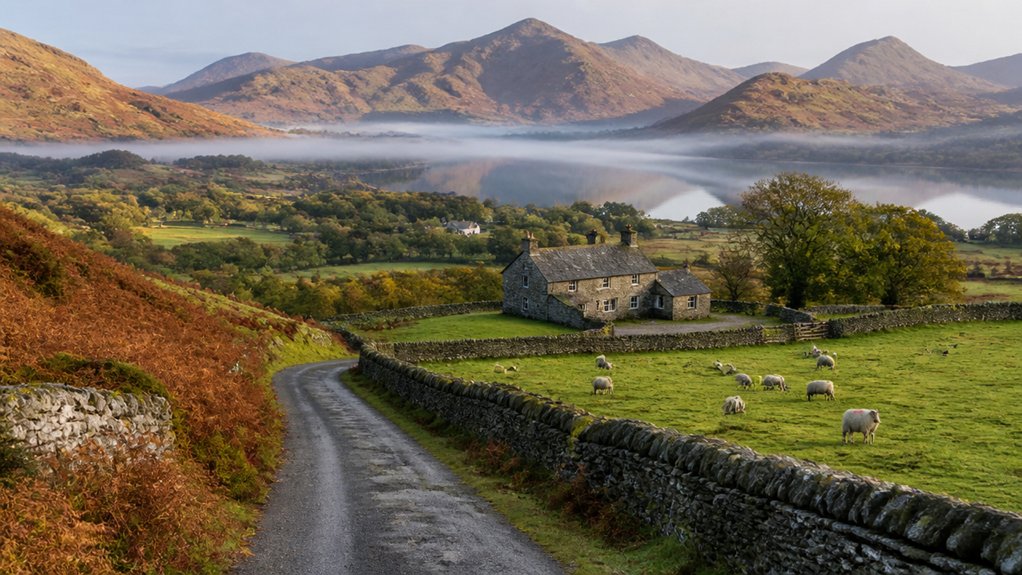
Before you start booking viewings across the fells, get crystal-clear on what you must have in a Lake District countryside home—because “rural” here can mean anything from a tucked-away stone cottage up a single-track lane to a farmhouse with working neighbours and limited mobile signal.
List your non-negotiables: year-round access, parking, broadband speed, and whether you’ll tolerate oil heating or a septic tank. If you’re drawn to historical architecture, check ceiling heights, damp risk, and what materials you can realistically repair locally—slate, lime, and stone aren’t DIY-friendly.
Map your daily life: school runs, GP, and a winter drive to Kendal or Penrith. Finally, watch local market trends: some valleys move fast, others sit; price your “must-haves” before you fall for a view.
Buying Inside the National Park: What Changes?
If you buy inside the Lake District National Park, you’ll face tighter planning rules. Even a simple extension, new track, or window change can need permission and extra time.
You’ll also work within conservation requirements—listed status, traditional materials, dark-sky and landscape protections—which can push up quotes and limit quick fixes.
Before you commit, you should check the Park Authority’s policies and budget for specialist surveys, heritage input, and ongoing maintenance costs.
Planning Restrictions And Permissions
Although the Lake District’s landscapes can feel timeless, buying a countryside home inside the National Park changes what you can alter, extend, or even add outside the front door. You’ll usually deal with the Lake District National Park Authority, not just the district council, so timelines and scrutiny can increase.
Before you budget for a porch, loft conversion, barn tweaks, or new driveway gates, check whether you need building permits for “minor” works that might be permitted elsewhere. Read past decision notices for your parish to see what’s been approved locally, and ask your solicitor for any existing conditions tied to previous consents.
Expect stricter environmental regulations on drainage, septic upgrades, surface water run-off, lighting, and access tracks. Book a pre-application chat early; it can save you redesign costs later.
Conservation Rules And Costs
Planning permission is only half the story in the National Park; conservation controls can dictate what you’re allowed to repair, replace, or even repaint—and what it’ll cost. If the house sits in a Conservation Area or carries listed status, you’ll likely need consent for window styles, roof slate, boundary walls, and even paint colour, especially in villages like Grasmere, Hawkshead, or Cartmel.
Budget for specialist surveys, traditional materials, and craftspeople; “like-for-like” repairs can still trigger approvals and higher labour rates. Ask the solicitor for Article 4 directions, past consents, and any enforcement history.
You can sometimes tap Conservation incentives for stonework, woodland, or habitat management, but you’ll still need to plan Cost effective upgrades like draught-proofing, secondary glazing, and sympathetic insulation.
Budget, Value, and Hidden Costs in the Lakes

In the Lake District, you can’t budget off the asking price alone—you’ve got stamp duty, surveys, legal fees, and park-related permissions that shift the true purchase price.
If the cottage looks “characterful,” assume you’ll pay for damp fixes, roof slates, septic checks, and ongoing maintenance that Lake weather speeds up.
You’ll also spend on access: long lanes need winter clearance, parking can be tight, and the cost—in time and fuel—adds up fast when the nearest services aren’t in the next village.
True Purchase Price
How much does a Lake District cottage really cost once you’ve got the keys? The headline figure reflects Market pricing in Ambleside, Keswick, or the quieter valleys, but your true purchase price stacks up fast.
You’ll pay stamp duty (or LBTT if you’re buying just over the border), plus solicitor, survey, and mortgage fees.
In popular second-home areas, lenders often want bigger deposits, so budget for extra cash tied up.
If you plan holiday lets, factor in specialist insurance and compliance checks before you take bookings, and check council tax vs business rates early.
Don’t ignore access: shared drives, private water, or septic systems can trigger extra legal checks and negotiations, affecting your Investment potential.
Renovation And Maintenance Costs
Although the Lakes look timeless, your cottage won’t stay that way without steady spending, and renovation budgets can jump quickly once you start lifting floors or stripping back stone.
In many valleys, damp proofing, lime repointing, and roof repairs cost more than you’d expect because trades book out and materials must suit local stone and slate.
Before you price work, check conservation constraints and factor in building permits, surveys, and listed-building specialists.
Old septic systems, private water supplies, and tired electrics often surface late and swallow contingencies.
You’ll also pay for seasonal upkeep: clearing gutters after autumn storms, treating timber against wet winters, managing mossy paths, and servicing oil or biomass heating.
If you budget for annual maintenance from day one, you’ll protect value and avoid urgent, pricier fixes later.
Transport And Access Expenses
Where does the real cost of reaching your Lake District place show up—on paper or on the lane outside? You’ll feel it when winter closes passes, tourists clog the A591, or the nearest station sits miles away.
Before you buy, price in fuel, bus timetables, and the time cost of every school run, vet visit, and grocery trip to Kendal or Keswick.
Check local transport infrastructure plans: a resurfaced main road can lift value, but a downgraded gritting route can trap you.
Ask who owns the track, what rights you’ve got, and whether you’re on the hook for access road maintenance, drainage, gates, and snow clearance.
Also budget for delivery surcharges, breakdown cover, and parking permits in honeypot villages.
Windermere & Bowness: Convenience vs Crowds

If you want the Lake District on your doorstep with minimal faff, Windermere and Bowness deliver: trains, supermarkets, schools, and year-round services sit within easy reach. You can still be on the water or up on Orrest Head in minutes.
That convenience brings crowds, so you’ll want to choose your micro-location carefully. Stick to quieter lanes above Bowness, or look toward Troutbeck Bridge for breathing space while staying close to the action.
Watch local market trends: holiday-let demand can tighten supply and lift asking prices, especially near the lakefront and ferry. Use property pricing strategies like benchmarking against recent solds, not just glossy listings, and factor in parking, noise, and footfall.
If you’ll live here full-time, prioritise walkability to the station over a postcard view.
Ambleside & Grasmere: Classic Scenery, Premium Prices
In Ambleside and Grasmere, you’re paying for postcard views—fells on the doorstep, lake access nearby, and walks that start at your gate.
Demand stays high because the village centres feel lived-in year-round, but the charm comes with premium prices and tight competition.
Supply’s limited by protected landscapes and small housing stock, so you’ll need to move fast and stay flexible on layout, parking, or renovation work.
Iconic Views, High Demand
Although Ambleside and Grasmere sit only a few miles apart, they command some of the Lake District’s most consistent premium prices because buyers don’t just pay for a house—they buy the postcard: fells rising behind stone cottages, quick access to Windermere and Rydal Water, and a village-centre lifestyle you can walk in year-round.
You’ll compete with second-home budgets, so move fast, line up finance, and expect sealed bids on the best plots. Check sightlines and footpath rights; a “view” can disappear behind a planned extension or trees you can’t control.
If you want quieter value, look just off the A591, but still within easy bus links. You’ll also need to respect Wildlife habitats and support rural communities.
Village Charm, Limited Supply
That same postcard appeal shows up most sharply in day-to-day village life, and it’s why Ambleside and Grasmere stay tight on supply. You’re buying walkability to pubs, schools, and the fells, plus quick access to Windermere and the A591, so sellers rarely linger.
Expect premium prices for stone cottages with parking, and be ready to compromise on space, gardens, or modern layouts.
If you want value, you’ll need speed and realism: line up finance, track local agents, and consider edge-of-village lanes toward Rydal or Troutbeck Bridge.
Check holiday-let restrictions, conservation rules, and flood history near beck crossings.
You’ll feel Rural traditions through church bells, fell races, and village festivals, but you’ll pay for it in scarcity and competition.
Keswick & Borrowdale: North Lakes Outdoor Base
When you base yourself in Keswick and Borrowdale, you’re stepping into the North Lakes’ most practical launchpad for walking, scrambling, and year-round outdoor time. From your door you’ll reach Catbells, Skiddaw, and the Borrowdale fells fast, while Derwentwater keeps views open and routes varied in all weather.
For property, you’ll find sturdy slate-built terraces and farmhouses with Historical architecture, plus newer edge-of-town homes that trade charm for parking and storage. Stay close to Local amenities in Keswick—shops, cafés, GP, schools, gear stores—so you’re not driving after every hike or winter errand.
Borrowdale offers quieter lanes and bigger plots, but check access in floods, phone signal, and holiday-let pressure. Prioritise dry foundations, off-road parking, and a boot room.
Ullswater & Pooley Bridge: Quieter, Still Connected
A base around Ullswater and Pooley Bridge gives you the calmer side of the Lake District without cutting you off from everyday needs. You’ll still reach Penrith quickly for supermarkets, rail links, and the M6, while enjoying villages that feel lived-in rather than visitor-led.
Choose a shoreline cottage for Waterfront serenity, or look just above the lake for better light, views, and fewer walkers passing your gate.
For rural privacy, target small lanes toward Martindale, Askham, or the quieter edges of Watermillock, where plots come with stone barns and space for outbuildings. Check flood history near the beck and lake margins, and factor in parking—Pooley Bridge gets busy in peak weeks.
You can walk straight onto the Ullswater Way, then retreat to quiet evenings.
Western Lakes (Wasdale, Eskdale): Wild and Better Value
Although the roads feel narrower and the weather can turn faster, Wasdale and Eskdale reward you with the Lake District at its most elemental—and prices that often undercut the central lakes. You’ll wake to wild landscapes: scree slopes under Scafell Pike, dark skies, and a hush broken by beck water and sheep.
For property value, look for stone cottages in Nether Wasdale or mid-valley farmhouses near Boot, where demand is steadier than hotspots yet holiday letting still works. Check flood history by rivers and be honest about winter access; some lanes drift or ice.
Prioritise a solid roof, good drainage, and a reliable stove over cosmetic finishes. If you need amenities, you’ll plan ahead, but you’ll gain space, views, and true solitude.
Eden Valley: Space, Villages, and Easier Access
Eden Valley suits you if Wasdale’s drama feels a bit too remote day-to-day, because you still get big skies and fells on the horizon but with villages, schools, and decent road links close by. You’ll find steadier commutes via the M6, A66, and rail at Penrith, while still being minutes from quiet lanes, riverside walks, and open farmland.
Look around Kirkby Stephen, Appleby-in-Westmorland, and the smaller villages between them for stone farmhouses, barn conversions, and plots with proper breathing space. You’ll pay for convenience, but you can often secure more land than inside the central park.
Check flood history near the Eden and be clear on septic and broadband. You can still plug into Local cuisine and traditional events year-round.
Cartmel Peninsula: Village Life Near the Coast
If you want Lake District scenery without feeling cut off, the Cartmel Peninsula gives you lively village centres and quick access to the coast. You’ll find a compact network of settlements where daily needs stay close: shops, pubs, post offices, and schools sit within an easy stroll.
Coastal village amenities feel practical year-round, not just seasonal.
Look around Cartmel, Allithwaite, and Flookburgh for cottages with gardens, barn conversions, and Farmstead opportunities on the fringes where you can keep space without losing village buzz.
Check parking, flood history near low-lying marshes, and footpath rights that can shape privacy. You’ll also want reliable broadband for work-from-home and a clear view on holiday-let restrictions before you commit.
Choose an Area by Commute (Kendal, Penrith, M6)
Whether you’re heading south to Lancaster or north to Carlisle, your day-to-day commute should steer your Lake District search as much as the view, because Kendal, Penrith, and the M6 corridor each deliver a different mix of drive times, rail options, and winter resilience.
If you need fast rail, base yourself near Kendal’s Oxenholme station for London trains and easy runs to the A590 and M6. You’ll find Luxury estates on the fringes toward Sedbergh and Burneside, with quieter lanes but longer school runs.
Penrith suits you if you commute to Carlisle, Newcastle, or Glasgow; the West Coast Main Line and quick M6 access make it dependable when passes close.
Along the M6 corridor, target villages with a gritted approach and a decent bus link; Historic cottages can be charming, but check parking, turning, and broadband.
How Local Agents Find Off-Market Countryside Homes
Once you’ve narrowed your search by commute—Kendal for rail speed, Penrith for M6 reliability, or a gritted corridor village—the next advantage comes from hearing about homes before they ever hit Rightmove.
Local agents get that edge by tracking Local market trends at parish level: who’s downsizing from a fellside farm, which barns just gained consent, and where holiday lets are quietly returning to residential use.
To tap their off market network, you’ll need to brief them like a surveyor: radius, exposure, water source, broadband minimum, outbuildings, and realistic budget.
Then keep momentum. Ask for “pre-marketing” viewings, leave proof of funds, and stay flexible on completion dates—many sellers value discretion more than a headline price.
Conclusion
You’ve just learned the “simple” way to find a quiet Lake District bolthole: define your must-haves, price in park rules, then pick your patch—Windermere for ease (and people), Ambleside for postcard views (and premiums), Eden Valley for space, Cartmel for village charm. Then you choose by commute, because nothing says rural escape like timing the M6. And when the best places aren’t listed, you’ll lean on local agents’ off‑market whispers.