

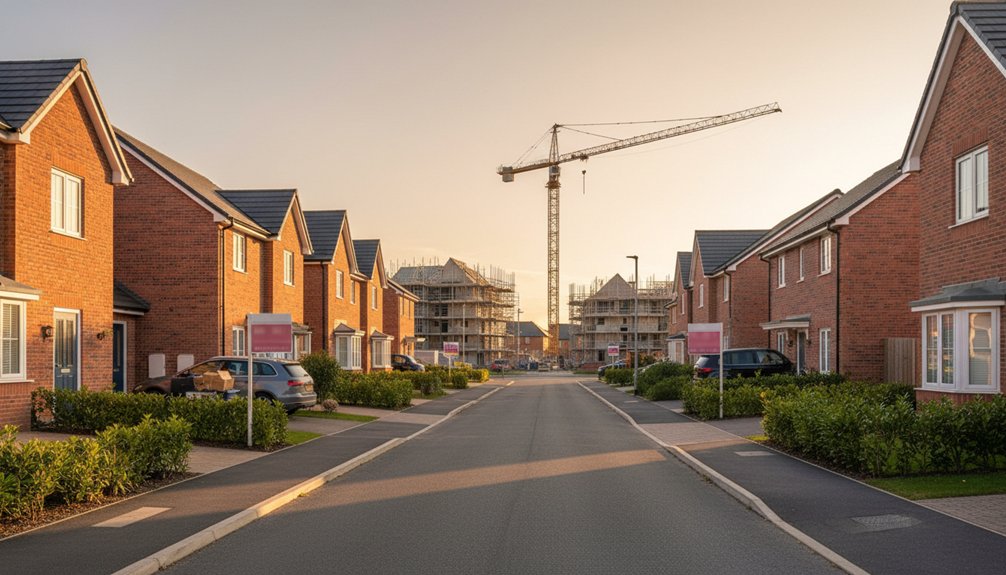
Bracknell house prices are still higher than last year, but you’re seeing clear cooling. Month-to-month gains are flatter, marketing times are longer, and price reductions are more common, showing softer seller power. Mortgage-rate swings have tightened affordability, so demand is concentrating on well-priced, energy-efficient homes and strong micro-locations near rail links and top schools. Supply has edged up but remains below long-term norms, keeping a floor under prices. Next, you’ll see where gaps and timings are shifting.
Key Takeaways
- Bracknell prices show modest year-on-year gains, but monthly momentum is flattening, signalling a cooling market rather than sharp declines.
- More listings and longer marketing times are increasing buyer choice, reducing sellers’ pricing power and driving more price reductions.
- Mortgage-rate volatility is tightening affordability, shifting demand toward well-priced, energy-efficient homes and away from higher-value stock.
- Sold prices are more often below asking, widening the sold-to-list gap and indicating greater negotiation and re-pricing.
- Prime micro-locations near stations and top schools remain resilient, while fringe estates and premium detached homes soften more noticeably.
Are Bracknell House Prices Rising or Cooling Now?
While headline figures can still show year‑on‑year gains, the latest indicators suggest Bracknell’s house prices are cooling rather than accelerating. You’ll notice momentum easing as new listings build and price reductions become more common, signalling softer seller pricing power.
Recent mortgage-rate volatility has tightened affordability, so you see demand concentrating on well-priced, energy-efficient homes. If you track monthly indices, you’ll typically find smaller uplifts or flat prints, which aligns with normal market fluctuations after the post‑pandemic surge.
You should also watch time-to-sell trends: longer marketing periods usually confirm cooling conditions even when averages lag. For buyers, this shift can create investment opportunities through sharper negotiation and selective value plays, especially where supply is rising faster than enquiries.
Sold Prices vs Asking Prices: What’s the Gap?
To gauge Bracknell house prices accurately, you need to compare asking prices with achieved sold prices and track the sold-to-list spread over time.
When that gap widens, you’re typically seeing more overpricing and longer negotiations.
When it narrows or turns positive, underpricing and stronger competition tend to dominate.
You can use this spread trend to set expectations on whether you’ll likely accept reductions or secure a premium.
Sold-To-List Price Spread
Because asking prices reflect seller ambition and sold prices reflect buyer reality, the sold-to-list spread tells you how much negotiating power exists in Bracknell’s market. Track it as a percentage: (sold price ÷ final asking price) − 1.
When the spread sits near 0% for several months, you’re seeing Market stability; when it swings wider, you’re seeing Price fluctuation driven by demand shifts and mortgage-rate sensitivity.
If recent deals cluster at -1% to -3%, you can expect modest negotiation and realistic vendor pricing.
If you’re seeing -5% or more, buyers are regaining leverage and transactions may take longer.
If results push to 0% or slightly positive, you’re likely in a tighter segment where bidding pressure persists.
Use the three-month rolling average to reduce noise and spot direction.
Overpricing Vs Underpricing Trends
Even when headline asking prices look steady, the gap between what sellers list for and what buyers actually pay reveals whether Bracknell homes skew overpriced or underpriced in the current cycle.
If sold prices consistently land below asking, you’re seeing over-ambitious pricing strategies, longer marketing times, and more renegotiations after surveys.
If sold prices meet or exceed asking, you’re seeing underpricing tactics designed to trigger competition, reduce time on market, and protect momentum.
Track the median sold-to-list ratio and the share of homes cutting prices before sale: rising reductions signal overpricing, while fewer reductions plus faster sales signal tighter demand.
In a period of market stabilization, the gap usually narrows, so even small shifts become meaningful for your next move.
Bracknell House Prices: 2026 Vs 2025 so Far

While 2026 is still unfolding, the early data already shows how Bracknell house prices are tracking against 2025’s pace so far, with clear signals in average sold prices, asking-price movement, and time-to-sell.
You’ll notice sold-price growth looks flatter year to date, while asking prices show smaller uplifts, suggesting sellers are testing ceilings less aggressively than in 2025. You’re also seeing marketing times edge up, which typically points to softer demand rather than sudden price drops.
If you’re watching Luxury developments, you’ll find premiums still hold, but they’re taking longer to convert from listing to completion.
In the Rental market, steady tenant demand can support yields, yet it doesn’t automatically translate into faster sales or higher achieved prices.
Which Bracknell Neighbourhoods Changed the Most?
Bracknell’s headline price trend only tells you part of the story, so the next step is to see where the biggest shifts actually happened at neighbourhood level. You’ll spot the sharpest uplifts near regenerated retail and transport links, where new amenities compress demand into fewer streets and accelerate neighborhood gentrification. These pockets often outperform the borough average over short windows, even when the wider market cools.
You can also see where momentum faded: fringe estates with weaker school catchment signals and slower resale turnover tend to lag.
Compare current achieved prices to historic property values over 3–5 years and you’ll notice a widening spread between top quartile streets and the middle. Track listing-to-sale ratios and time-on-market by postcode sector to pinpoint which areas re-priced fastest.
Bracknell House Prices by Property Type (Flat to Detached)
When you break Bracknell house prices down by property type, you’ll see flats often set the entry-level benchmark and show the sharpest shifts in affordability.
You can then compare how terraced and semi-detached homes track—typically moving with family demand and supply, but not always at the same pace as flats.
Detached homes usually command the clearest premium, so you’ll want to quantify how that gap widens or narrows over time.
Flat Price Trends
Although flats typically sit at the entry-level of Bracknell’s market, their price trend has been defined less by headline jumps and more by steady, incremental movement compared with larger property types. You’ll often see smaller quarterly changes, with fewer sharp spikes, which can reduce market volatility in your pricing expectations.
When mortgage rates tighten, flat demand can soften first, but it also tends to recover faster as affordability-driven buyers return.
If you track achieved prices rather than asking levels, you’ll notice a narrower spread between best-in-block and average units when supply rises. That pattern signals a more efficient, numbers-led market where condition, lease length, and service charges directly shape value.
For investment opportunities, you can target well-managed blocks and strong rental corridors, where yields cushion slower capital growth.
Terraced And Semi Values
Where do terraced and semi-detached homes sit on the value curve in Bracknell? You’ll typically see them priced above flats but below larger family stock, making them the mid-market bellwether.
Recent sales data often shows steadier pricing here, with smaller month-to-month swings than entry-level flats. When mortgage rates bite, you may notice longer listing times, yet achieved prices can hold up if homes are modernised and near transport links.
You’ll also find demand supported by the rental market: landlords target terraces for yield, while semis attract longer-tenancy households. That keeps transaction volumes resilient even when sentiment cools.
Compared with Luxury estates, these homes compete on practicality and running costs, so buyers stay sensitive to EPC ratings, layout, and renovation budgets.
Detached Home Premiums
Detached homes sit at the top end of Bracknell’s mainstream market, and the price gap over terraces and semis widens most sharply when buyers prioritise space, parking, and plot size. You’ll typically see detached values track broader sentiment faster because fewer listings and higher budgets amplify competition in peak months and soften more in quieter quarters.
When mortgage rates rise, you often notice detached premiums compress as buyers trade down to semis; when confidence returns, premiums rebuild quickly. You can also expect stronger resilience where homes offer Luxury amenities like EV charging, home offices, and larger gardens, which reduce substitution with smaller stock.
Pockets with Historic architecture and mature streets tend to hold a higher per-square-foot baseline, keeping detached pricing less volatile than newer estates overall.
Are Price Reductions Turning Into Lower Sale Prices?
As sellers in Bracknell adjust asking prices to match today’s demand, you can track whether those reductions are translating into lower agreed sale prices by watching the gap between original list price, final asking price, and achieved price.
If final asking prices fall but achieved prices hold steady, reductions are mainly “re-pricing” to market, not discounting at completion. If achieved prices also slip, you’re seeing true softening.
You can quantify it by comparing average discount-to-ask and discount-to-original across recent completions, then checking whether the achieved-to-final ratio is trending down.
Rising time-on-market alongside widening gaps usually signals buyers gaining leverage.
Keep Market speculation in check: one month’s spike can be noise.
For Investment strategies, focus on three-month rolling trends, not anecdotes.
How Mortgage Rates Are Affecting Bracknell House Prices
When mortgage rates shift, you see affordability change quickly: the same Bracknell price point now demands a higher monthly payment and a larger income multiple.
As rates rise, you typically see buyer demand cool, fewer bids per listing, and more price sensitivity across comparable sales.
You can also track the impact through lending—tighter approvals and lower loan-to-value appetite tend to reduce the pool of qualified buyers and cap achievable prices.
Rate Shifts And Affordability
Although Bracknell’s sale prices don’t reset overnight, mortgage rate shifts are tightening affordability fast by pushing up monthly repayments and shrinking the budgets buyers can borrow against.
If you model a typical 25-year repayment loan, each 1 percentage-point rise lifts payments roughly 12–13%, so a move from 3% to 5% can add about a quarter to monthly costs. That translates into lower maximum loan sizes unless incomes rise at the same pace.
In periods of market volatility, you’ll see sellers resist discounting while buyers’ payment limits fall, widening the pricing gap.
The economic impact shows up in longer time-to-sell and more price reductions on over-optimistic listings, especially for higher-value homes where rate sensitivity is strongest.
Buyer Demand And Lending
Higher mortgage rates don’t just squeeze affordability on paper; they change who can actually get a loan and how confidently they bid in Bracknell. You’ll see lenders tighten stress tests, so a bigger share of applicants fails affordability checks or needs larger deposits. That shrinks the financed buyer pool, lengthens decision times, and increases renegotiations after surveys and valuations.
As rate expectations stabilise, you typically get market stability through steadier offer-to-ask ratios and fewer fall-throughs, even if volumes stay muted. If you’re selling, pricing close to comparable evidence matters more because down-valuations bite harder when rates are elevated.
If you’re buying, lower competition can reopen investment opportunities, especially on homes needing upgrades where cashflow planning and fixed-rate budgeting improve your leverage.
Is Bracknell Supply Tight or Building Up?
How tight is Bracknell’s housing supply right now? You’ll see a market that’s no longer ultra-thin but still constrained. Market inventory has edged up versus last year, giving buyers slightly more choice, yet it remains below longer-run norms. That imbalance continues to support pricing power for well-presented homes, especially in family segments.
You should also track construction activity, because it’s the main lever that can loosen supply. New-build completions and pipeline schemes can add stock, but delivery often lags permissions, and build rates rarely offset years of underbuilding.
If listings keep rising while completions accelerate, supply will look like it’s building. If either stalls, tightness returns quickly in Bracknell.
Days on Market in Bracknell: Faster or Slower Sales?
As supply has loosened slightly, days on market in Bracknell have generally drifted up from the fastest post‑pandemic pace, signalling a shift from “sell in days” urgency to a more measured timeline. You’ll typically see well‑priced homes still move quickly, but average listings now need extra viewings and sharper pricing to convert.
This longer runway reflects Market fluctuations: buyers compare more options, scrutinise condition, and negotiate harder on price and incentives. If you’re selling, you can’t rely on momentum; you’ll need realistic pricing, strong presentation, and rapid follow‑up.
If you’re buying, slower sales can create investment opportunities, since vendors may accept staged offers or modest discounts, especially on stock that’s lingered past the local median marketing window.
Do Schools and Commuting Still Add a Price Premium?
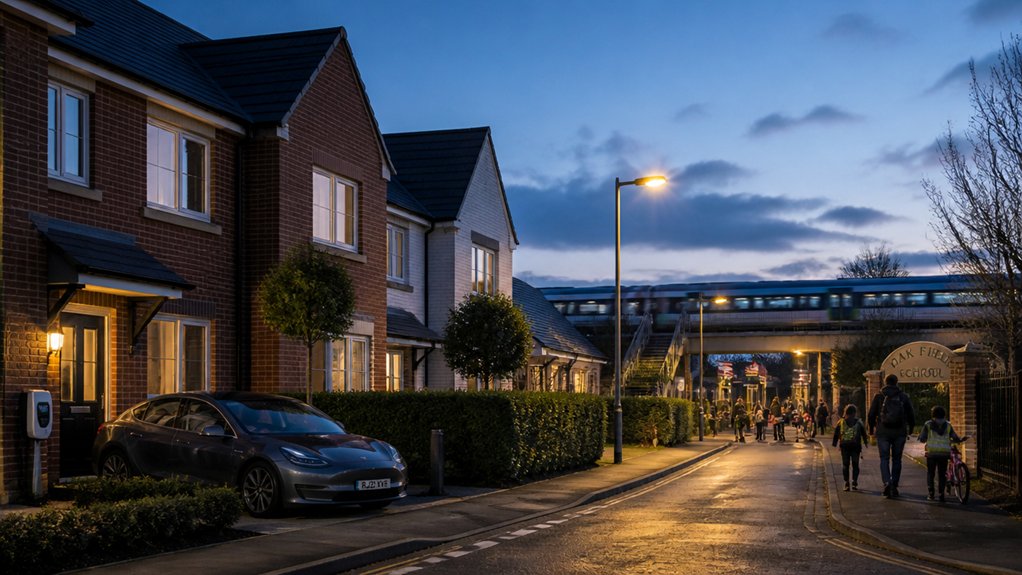
Even if broader Bracknell price growth has cooled from its peak, strong school catchments and quick rail access to London still command a measurable premium in what buyers are willing to pay.
Recent listings show tighter price bands where School quality is highest, with fewer “discount to sell” reductions compared with similar homes outside top-rated catchments.
You’ll also see sharper competition for properties within a short walk of Bracknell station, where commuting distance to London typically sits under an hour door-to-door for many households.
In slower weeks, these micro-locations keep pricing firmer and limit the size of agreed reductions.
The premium isn’t uniform: it widens for family-sized semis and detached homes, but narrows for smaller flats where yield and service charges influence bids.
What Today’s Bracknell House Prices Mean for Buyers and Sellers
While price growth has slowed from the highs of 2021–22, today’s Bracknell house prices still set clear expectations. You’ll see fewer bidding wars and more price-sensitive buyers, so accurate pricing matters more than momentum. Recent sold prices, not last year’s asking figures, should anchor your offers and valuations.
If you’re buying, you can negotiate harder on homes needing work, long listings, or weaker EPC ratings, because Market volatility keeps demand uneven across streets and property types.
You should also stress-test affordability against higher mortgage rates to gauge the economic impact on repayments.
If you’re selling, you’ll win serious viewings by launching at a realistic level, proving condition with evidence, and staying flexible on timelines, surveys, and minor concessions.
Conclusion
You’ve watched Bracknell prices do their best impression of a “stable” market: asking prices strut, sold prices negotiate, and the gap tells you who’s really in charge. Versus 2025, 2026 looks less like a surge and more like a recalibration—some neighbourhoods pop, others pause, and property type matters more than ever. Supply isn’t vanishing, days-on-market signal buyer leverage, and schools/commutes still charge their premium.