

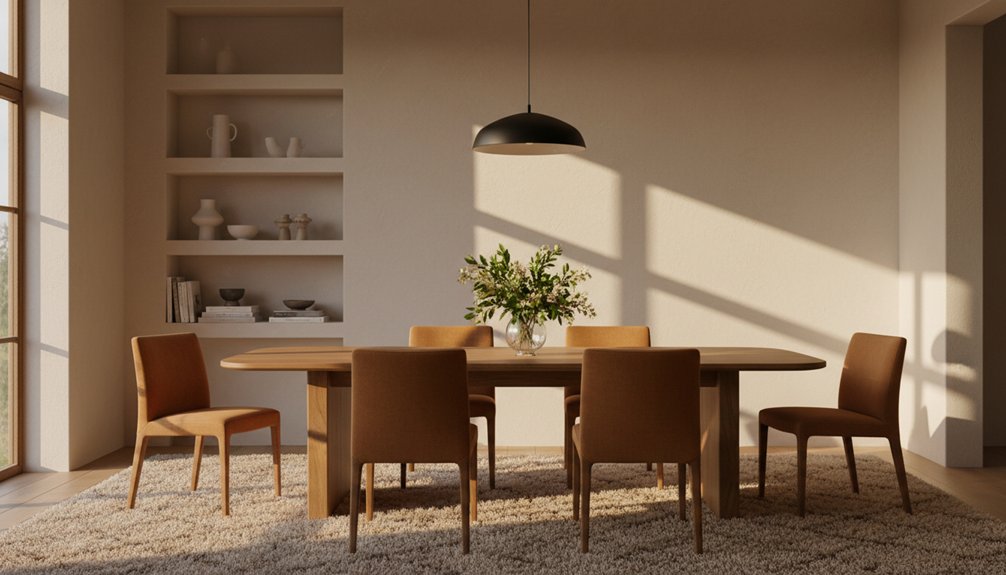
You’ll get a warm, welcoming modern dining space by starting with clean lines and softening them with natural wood, creamy off-whites, and tactile upholstery like bouclé or leather. Choose a streamlined oak or walnut table, add curved chairs that actually support long meals, and keep 36 inches of clearance for easy flow. Ground everything with a low-pile heathered rug and full-height linen drapery, then layer dimmable pendant light with slim sconces for glow. Next, you’ll see how to pull it all together.
Key Takeaways
- Start with a streamlined table in white oak or walnut, then soften it with curved upholstered chairs and tactile fabrics.
- Use a warm, modern palette: creamy off-whites, camel, clay, and smoked olive, accented with aged brass or matte black.
- Plan comfort-first clearances: allow 24 inches per person and at least 36 inches behind chairs for easy circulation.
- Layer lighting with a statement pendant and slim sconces on dimmers to shift from bright everyday meals to intimate dinners.
- Add quiet texture with a low-pile rug, full-height linen drapery, and a low, tonal centerpiece in ceramic, stone, or ribbed glass.
Start With the Warm-Modern Dining Room Basics
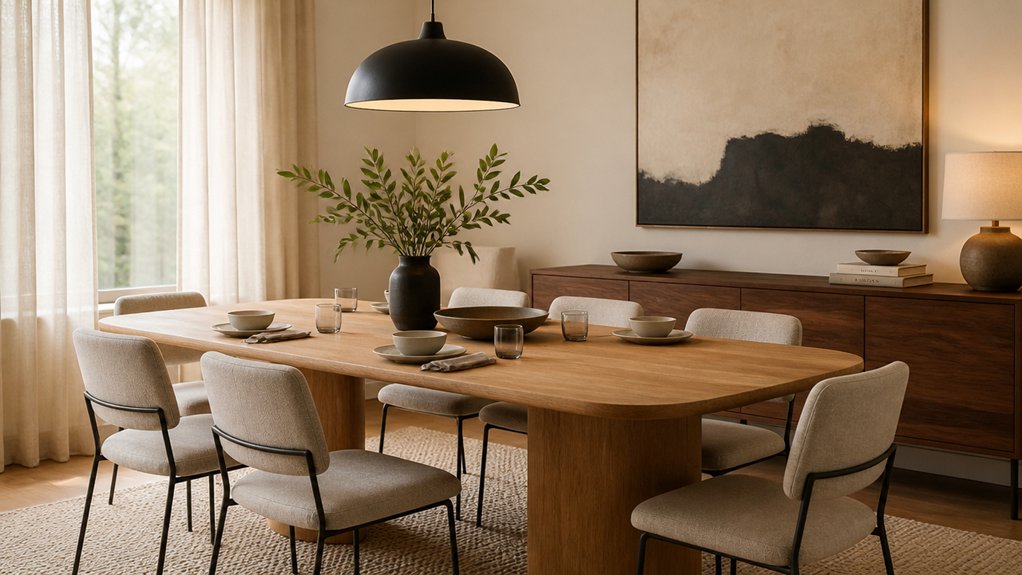
Whether you’re starting from scratch or rejuvenating what you’ve got, warm-modern dining room basics come down to a clean-lined foundation softened by inviting texture. Choose a streamlined table in light oak, walnut, or matte black, then layer in curved, upholstered chairs to keep the silhouette current and comfortable.
Ground everything with a low-pile rug in heathered neutrals, and add linen drapery for a quiet, tailored finish. Keep your palette warm: creamy whites, camel, clay, and smoked olive, punctuated by aged brass or blackened steel.
For Dining etiquette, make hospitality visible—set a centerpiece that stays low and conversational, like a ceramic bowl with citrus or branches. Elevate table settings with stoneware, slim flatware, and stemware with a soft tint, so everyday meals feel intentional.
Plan Your Dining Layout and Clearances First
Before you shop for chairs or a statement pendant, you’ll map your dining footprint by choosing a table size that fits your room and your guest count.
You’ll protect that warm-modern ease with generous clearances for smooth circulation—no chair-scooting bottlenecks or tight corners.
Then you’ll balance seating placement so every spot feels intentional, visually aligned, and comfortable from pull-out to sit-down.
Determine Table Size
To land that warm, welcoming, modern dining vibe, you’ve got to size the table around the space—not the other way around. Start by mapping how many you host most nights, then size for that baseline with a little stretch for weekends.
Let the room’s proportions steer your Table shape: a round table softens tight corners and reads conversational; an oval keeps that curve but adds usable length; a rectangle feels architectural and works beautifully under linear pendants.
Dial in Table height to match your seating style and finishes. Standard dining height keeps things timeless, while a slightly thicker top or sculpted pedestal base feels current and grounded.
If you’re mixing chairs, choose a tabletop thickness that won’t visually overwhelm slimmer silhouettes.
Allow Comfortable Circulation
Once you’ve nailed the table size, give the room enough breathing space so it feels effortless—not cramped—when chairs slide out and people move around. Start by mapping clear walkways from kitchen to dining to patio, then protect them like design features, not leftovers.
In an open layout, define the dining zone with a rug while keeping edges clear, so movement reads clean and modern. Aim for generous clearance behind pulled-out chairs, and leave extra room where people naturally pause—near a sideboard, at the end of the table, or by a doorway.
Watch traffic flow: avoid tight pinch points at corners, and offset pathways so guests don’t collide. A slim-profile table and airy lighting help circulation feel intentional.
Balance Seating Placement
Clear circulation sets the stage, but the room only feels truly welcoming when every seat lands in the right spot. Start by centering the table on the room’s visual axis—often aligned with a pendant or rug—so your seating arrangement looks intentional, not crowded.
Keep at least 36 inches behind pulled-out chairs on main pathways, and aim for 24 inches of width per diner to avoid elbow clashes.
Balance chair placement by pairing heavier host chairs with lighter side chairs, or mixing upholstered and wood for a modern, layered feel.
If you’re tight on space, swap one side for a slim bench that tucks in cleanly.
Finish by checking sightlines to windows and conversation flow; no one should feel stranded at the end.
Choose the Right Dining Table Size and Shape
You’ll want a dining table that fits your room with clean, walkable clearances, so chairs glide out without crowding the flow.
Match the shape to your layout—rectangles suit long rooms, rounds soften tight corners, and ovals give that modern, space-smart compromise.
Then size it for real life: plan the seat count you host most often and keep each place setting comfortable, not squeezed.
Measure Room And Clearances
Before you fall for a sculptural pedestal base or that on-trend oval top, measure your dining zone like a designer and build in real-life clearances. Grab reliable measuring tools: a steel tape, laser measurer, and painter’s tape to mock the footprint on the floor, including chair pull-back.
Then follow clearance guidelines that keep the room feeling airy and modern: aim for 36 inches from table edge to wall or casework for passable flow, and 42–48 inches where traffic cuts through. Account for door swings, radiator depth, and sideboard drawers opening without collisions.
Calculate seating by giving each place setting about 24 inches of table edge. Finally, leave space for a rug border so chairs stay on-pile when you scoot in and out.
Match Shape To Layout
With your clearances mapped on the floor, let the layout call the shots on table shape and size. In long, narrow rooms, choose an elongated rectangle that tracks the architecture and keeps pathways crisp.
If you’ve got a squarer footprint, a round or softly oval top centers the space and smooths circulation around corners. For open plans, anchor the dining zone with a larger silhouette that aligns with the kitchen island or rug edges, so it reads intentional, not floating.
Match scale to nearby door swings and sightlines to windows. Then refine the look with table materials: veined stone for modern warmth, white oak for airy minimalism, or dark walnut for depth.
Coordinate lighting styles—linear pendants for rectangles, globes for rounds—to echo the geometry.
Seat Count And Comfort
Even if the table looks perfectly proportioned to the room, it won’t feel modern-welcoming unless the seat count matches how you actually live. Plan for your daily number first, then add flex seating for weekends: a bench on one side, two slim chairs on the ends, or a pull-up accent chair that stores elsewhere. You’ll keep the look airy while staying ready for guests.
Prioritize Seating ergonomics so lingering dinners feel effortless. Aim for 24 inches of table edge per person, and keep 36 inches clear behind chairs for smooth traffic flow.
Choose chairs with supportive back angles and seat heights that meet the tabletop cleanly. For trend-forward softness, add Cushion comfort: tailored upholstered seats, performance bouclé, or wipeable vegan leather that feels cozy but stays crisp.
Pick Dining Chairs That Look Good and Sit Well
Because dining chairs pull double duty as style pieces and everyday seating, you’ll want options that look sculptural from across the room but feel supportive through a long meal. Aim for a curved back that hugs your shoulders, a slightly waterfall seat edge, and a firm-but-giving cushion that keeps you upright without stiffness.
For a modern-warm mix, pair clean-lined oak or ash frames with textured upholstery like bouclé, heathered tweed, or saddle leather; it reads tailored, not precious.
If you crave Vintage charm, try cane backs or spindle silhouettes, then update them with matte black hardware or a slim, tapered leg.
Prioritize ergonomic comfort: check seat depth, back angle, and arm clearance so chairs tuck neatly and conversations linger comfortably.
Layer Dining Room Lighting (Pendant, Sconces, Dimmers)
You’ll get that warm-modern dining glow when you layer a statement pendant over the table with streamlined sconces that wash the walls in soft light.
Keep the look balanced—match finishes or mix metals intentionally, and size each fixture so the pendant anchors while the sconces fill in shadows.
Add dimmers on both circuits so you can shift from bright, crisp dinners to a low, candlelike ambiance in seconds.
Balance Pendants And Sconces
While a single statement pendant can anchor your dining table, it won’t create the kind of warm, modern glow that feels inviting from every angle. Pair it with slim sconces to spread light across faces, artwork, and wall texture, so the room reads cozy yet crisp.
Aim for Lighting contrast: choose a pendant with a focused downlight and sconces with diffused shades to soften shadows at the perimeter. Keep the scale balanced—hang the pendant low enough to feel intimate, then place sconces at eye level, spaced evenly to frame the table.
For Color coordination, echo finishes across fixtures: matte black with blackened brass, or brushed nickel with warm white glass. This layered mix feels current, intentional, and flattering, without overpowering your centerpiece.
Add Dimmers For Ambiance
Once you’ve layered a statement pendant with clean-lined sconces, add dimmers to make the whole setup feel effortlessly warm from brunch to late-night dinner. You’ll get instant control over ambient lighting, shifting from bright, task-ready clarity to a soft glow that flatters faces and food.
Choose a low-profile wallbox dimmer in matte black or brushed brass to match modern hardware, and opt for LED-compatible models to avoid flicker. Set your pendant slightly higher for visual airiness, then dim it to keep the tabletop intimate while sconces stay gentle and even.
For trend-forward mood enhancement, program scenes: “weekday” at 70%, “hosting” at 50%, and “after-dinner” at 20%. The room feels curated, not staged, every time you tap.
Warm Up Modern Design With Wood and Natural Finishes
Even the sleekest modern dining room feels more inviting when you layer in wood and other natural finishes. Start with a walnut or white oak table to soften crisp lines and add depth.
If you’ve already got a lacquered piece, balance it with a wood sideboard or slim floating shelves that show the grain.
Bring in Rustic accents with restraint: a live-edge serving board on display, turned-wood bowls, or a vintage timber bench paired with streamlined chairs. Keep the palette current by mixing pale woods with matte black hardware, brushed brass, or stone.
Choose Natural finishes like oil-rubbed wood, honed marble, or limewashed cabinetry so the room reads calm, modern, and tactile without looking overly rustic. Let the variation in tone do the work.
Add Cozy Texture With Rugs, Curtains, and Upholstery
Because modern dining rooms often lean clean and crisp, you can instantly warm yours up by layering soft texture underfoot, at the windows, and on the seating. Anchor the table with a low-pile wool or flatweave rug that’s easy to slide chairs across, then size it so every chair stays on the rug when pulled out.
At the windows, hang full-height curtains in linen, cotton, or a linen blend to soften hard lines and filter glare without feeling fussy.
Finish with upholstery that invites lingering: performance bouclé, brushed velvet, or textured leather on chairs and a bench. Mix subtle weaves and nubby finishes as textural accents, keeping everything tailored.
These cozy textiles make the space feel finished, quiet, and comfortably modern.
Build a Warm-Modern Dining Color Palette That Lasts
While cool whites and stark grays can read ultra-modern, a warm-modern dining palette holds up longer when you build it around soft, grounded neutrals and a few deliberate accents.
Start with creamy off-white or oat on walls, then layer camel, mushroom, or greige through upholstery and drapery for depth.
Add color contrast with a walnut table, matte-black lighting, or bronzed hardware—those darker notes sharpen the look without turning cold.
Keep bold color controlled: try muted terracotta, olive, or ink blue in one or two repeatable spots.
Choose accent accessories that echo the undertone—warm metals, smoked glass, or stoneware—so everything feels intentional.
Finally, test swatches under day and evening light before committing.
Your palette stays cohesive, even as trends shift over time.
Style a Simple Dining Centerpiece That Isn’t Fussy
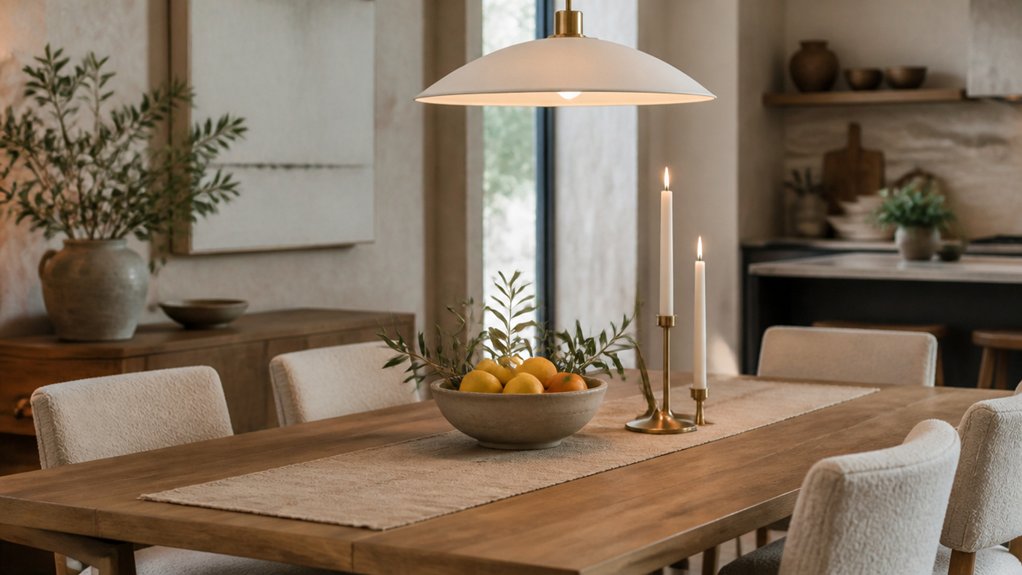
If you want a warm-modern dining table to feel styled but not staged, keep the centerpiece low, tonal, and repeatable. Start with a narrow tray in matte wood or stone, then cluster two to three objects with similar finishes: a ribbed glass vase, a ceramic bud vessel, and a shallow bowl.
Choose one organic element—olive branches, dried grasses, or a few seasonal stems—so it reads fresh without shouting. For simple centerpiece ideas, rely on quiet texture and odd numbers, not height.
Add two taper candles in sand or charcoal to bring evening glow, and stop there.
In minimalist table settings, leave generous negative space around plates so the table still feels usable daily.
Finish With Personal Dining Room Details (Art, Shelves, Accents)
After you’ve nailed the table and lighting, layer in personal details that make the dining room feel lived-in, not showroom-perfect. Start with art displays that echo your palette: an oversized abstract, a tight grid of black-and-white photos, or a leaning frame on a ledge for that relaxed, modern feel. Keep frames consistent, then vary scale for energy.
Next, refine shelf arrangements if you’ve got open shelving or a sideboard hutch. Mix matte ceramics, a stack of linen napkins, and one sculptural object, leaving negative space so it reads intentional. Add warmth with a small lamp, a vintage bowl for matches, or textured runners.
Finish with one seasonal swap—branches, citrus, or dried stems—to keep it current without clutter.
Conclusion
As you dial in warm-modern basics, you’ll notice how the right clearances, table shape, and chairs align at the same time your layered lighting lands—pendant glow, soft sconces, dimmers ready. Coincidentally, the textures you add—rug pile, linen curtains, subtle upholstery—make the palette feel richer without trying. Keep the centerpiece simple, then let art, shelves, and small accents echo your story. Suddenly, your dining space feels current, welcoming, and effortlessly lived-in.