

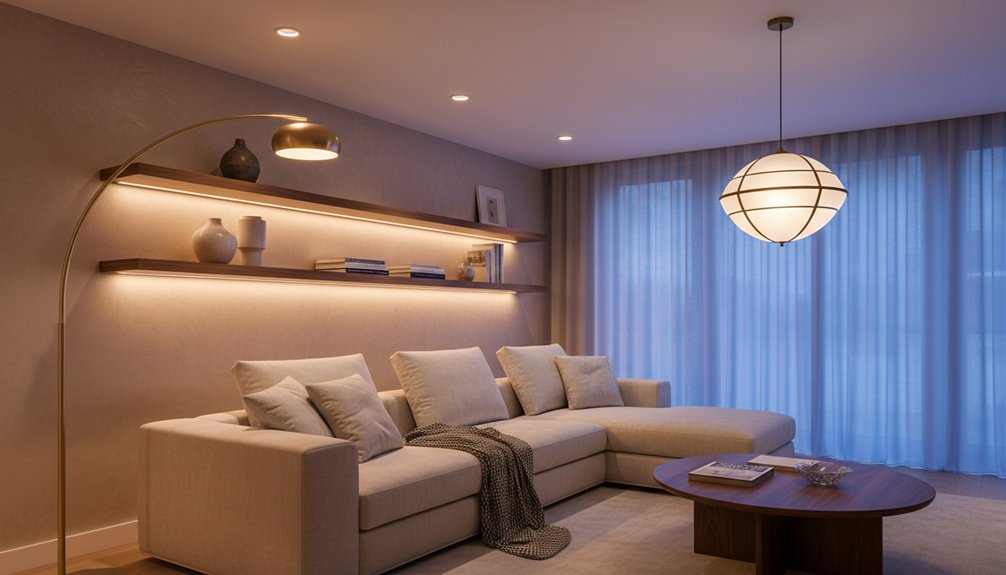
You’ll change your living room fast by layering three lights: warm ambient, focused task, and subtle accent, all in a cohesive 2700K–3000K glow. Start with dimmable overhead light or recessed cans for even coverage, then add adjustable floor or wall lamps by sofas and chairs for effortless comfort. Finish with picture lights or LED strips on shelves to highlight texture and art. Place fixtures at varied heights to soften shadows and avoid glare. Keep going for simple placement fixes and bulb picks.
Key Takeaways
- Layer ambient, task, and accent lighting to add depth, function, and atmosphere in one cohesive plan.
- Keep bulbs at 2700K–3000K with high CRI (90+) so skin tones, fabrics, and finishes look richer.
- Put lights at multiple heights—ceiling, table, floor, and wall—to soften shadows and make seating areas feel sculpted.
- Add dimmers or two-level switches to shift from bright daytime living to relaxed evening ambience instantly.
- Aim fixtures at walls, shelves, and artwork instead of eyes to reduce glare and make the room feel larger and warmer.
Build a 3-Layer Living Room Lighting Plan
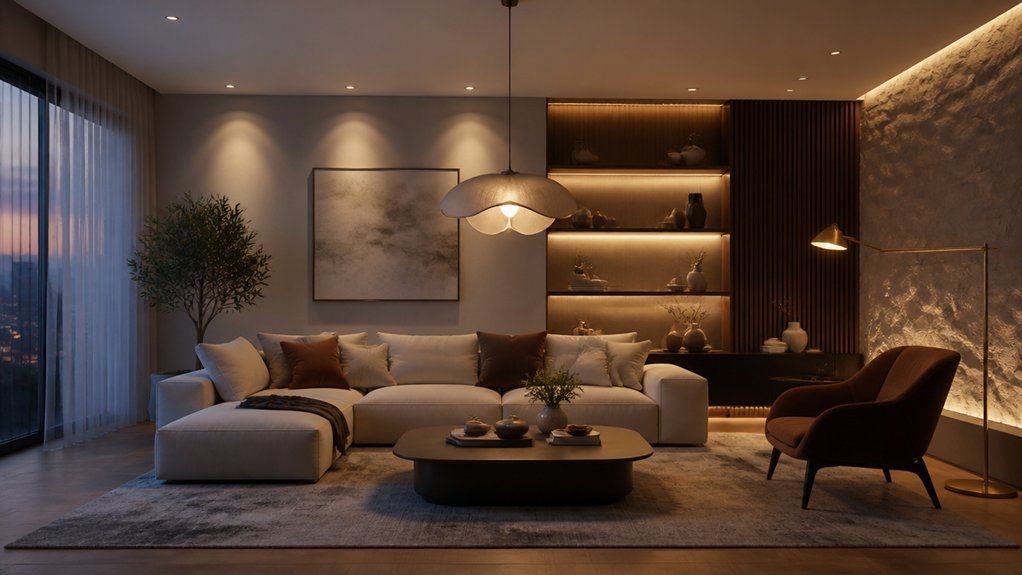
If you want your living room to feel both effortless and intentional, start with a three-layer lighting plan that balances function and atmosphere. Think in roles: ambient for overall glow, task for what you do, accent for what you love.
Choose a cohesive Color temperature across layers so light feels unified—warm for softness, neutral for clarity—then vary intensity, not mood.
Plan fixture placement like you’re composing a scene: anchor light where people gather, aim task beams at reading and work zones, and graze walls or artwork to add depth. Keep sources at different heights—ceiling, eye level, and low—so shadows soften and corners lift.
Add dimmers to shift seamlessly from daytime energy to evening calm.
Set Your Ambient Lighting (Ceiling, Cans, or Lamps)
Start with a warm overhead glow that sets the room’s baseline mood, whether it’s a ceiling fixture or a clean grid of recessed cans.
Then you layer in recessed light where you need gentle coverage and add floor or table lamps to soften corners and bring the space down to eye level.
With those elements working together, you’ll get an ambient foundation that feels cohesive, calm, and design-forward.
Choose Warm Overhead Glow
How do you make a living room feel instantly inviting the moment the sun drops? You start overhead, but you keep it warm. Choose a soft Color temperature—think 2700K to 3000K—so skin tones look natural and your textiles read rich, not stark.
A dimmable ceiling fixture, flush mount, or subtle cans can wash the room in a gentle halo instead of a harsh spotlight. Prioritize fixture placement: center the glow where people gather, but avoid blasting the seating zone from directly above.
If your ceiling is high, pick a pendant that drops the light closer to the room’s volume. Aim for even coverage, no glare, and an ambient base that feels calm.
Layer Recessed And Lamps
Where do you go once you’ve nailed that warm overhead glow? You build Layered illumination with recessed cans and lamps that soften corners and sculpt seating. Space 4-inch or 6-inch LEDs around the room’s perimeter, not dead-center, so the ceiling floats and faces stay flattering. Use a dimmer and aim for 2700K–3000K to keep everything cozy.
Next, add floor and table lamps at different heights to create pools of light near the sofa, reading chair, and media console. Think of fixture placement like choreography: one lamp anchors each zone, while recessed lights fill the gaps.
Keep shades translucent, avoid glare by hiding bulbs from sightlines, and let the layers overlap for a seamless ambient wash.
Add Task Lights by Sofas, Chairs, and Desks

Even if your overhead fixture looks polished, you’ll feel the room work harder once you add task lights beside sofas, chairs, and desks. Place a slim floor lamp at the sofa’s arm, or tuck a pivoting sconce just above a reading chair so light lands on pages, not in your eyes.
For a compact desk, choose an adjustable lamp with a warm LED and a focused beam to keep screens comfortable. Aim for Task lighting that creates a calm “pool” within your ambient glow, so the space feels intentional after dark.
Use dimmers or two-level switches to shift from reading to lounging without resetting the whole room. Match finishes to nearby hardware, and treat cords and shades as part of the furniture illumination, not an afterthought.
Use Accent Lighting to Highlight Art and Shelves
Once your task lights create comfortable zones for reading and working, accent lighting can give the room its gallery-level polish by drawing attention to what you love most. Use Art spotlighting to frame a favorite painting, photo wall, or sculptural piece, turning it into a focal point that feels intentional, not accidental.
Choose adjustable heads or discreet picture lights so you can fine-tune the beam and keep colors true. For shelf illumination, tuck LED strips or slim puck lights under each shelf to lift books, ceramics, and collected objects with a soft, even glow.
Keep the color temperature consistent with your ambient layer, and put accents on dimmers so you can shift from bright, curated display to relaxed evening mood without changing the layout.
Place Fixtures to Avoid Glare and Dark Corners
Because placement matters as much as fixture choice, you’ll get a smoother, more flattering living-room glow when you aim light at surfaces—not straight into sightlines.
Start with Fixture placement: float floor lamps slightly behind seating, so shades wash walls and ceilings instead of eyes. Tuck table lamps toward the back of consoles to bounce light forward and soften shadows.
For glare prevention, keep exposed bulbs out of direct view, and angle adjustable heads toward artwork, drapery, or a pale wall.
Balance the room by pairing a brighter corner with a quieter one—add a slim uplight near a dark bookcase, or a small sconce opposite a window. You’ll erase cave-like pockets and keep the atmosphere calm and composed.
Choose Bulbs by Warmth, Lumens, and CRI
While fixtures shape the look, the bulb determines the mood: choose a warm color temperature (around 2700K–3000K) to keep the living room soft and inviting.
Then match lumens to the job—lower output for accent and evening layers, higher output for reading corners and task light.
Treat bulb color like a finish: warm whites flatter wood, leather, and skin tones, while cooler temps can feel stark against cozy textiles.
Check CRI (90+ is ideal) so art, plants, and rugs read true, not gray or washed out.
Use consistent bulbs across zones to keep layered illumination seamless, and let fixture placement guide output—brighter where you aim light, gentler where you bounce it off walls for ambient glow.
Add Dimmers and Fix Common Lighting Mistakes
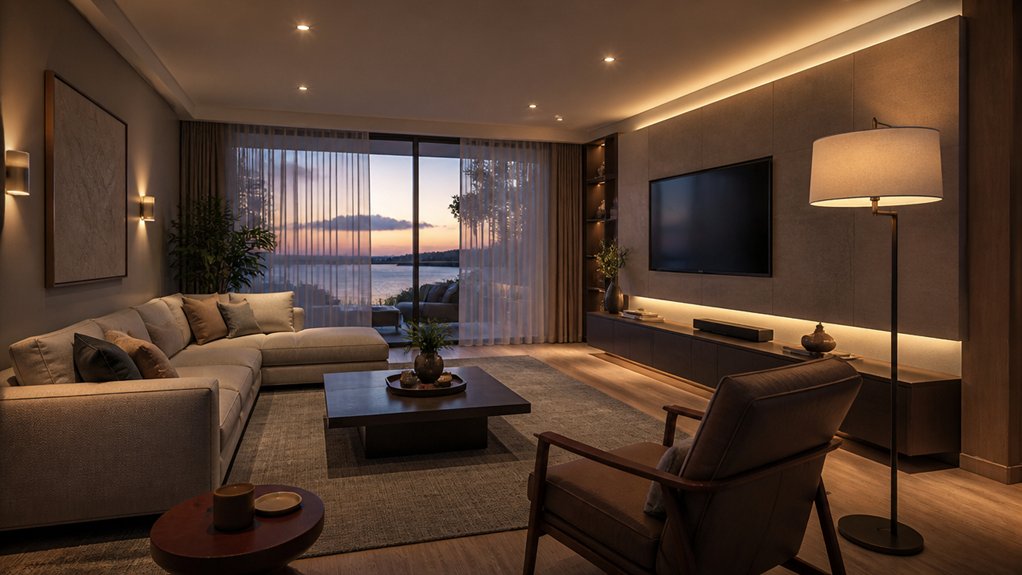
If you want your living room to feel effortless from morning to movie night, add dimmers to every main layer—ambient, task, and accent—so you can tune the space instead of living with one harsh setting. Choose quality dimmer switches that match your bulb type, or you’ll get flicker, buzzing, or dead zones at low levels.
Fix common mistakes by spacing light sources instead of relying on one ceiling fixture, and aim lamps at walls or drapery to build soft, room-filling glow. Keep task light close to seating, not behind your head, and hide hot spots with shades or diffusers.
Balance color temperature across fixtures so the room reads cohesive. Add lighting automation for scenes—“Entertain,” “Read,” “Relax”—and you’ll always land on the right mood instantly.
Conclusion
You don’t need more fixtures—you need smarter layers. Pair soft ambient light overhead with focused task lamps by the sofa, then let accent lighting graze art and shelves: cozy glow beside crisp clarity, quiet corners beside lively focal points. Place lights to dodge glare and erase shadows, and choose warm, high-CRI bulbs so colors look rich, not flat. Add dimmers, and your living room shifts from bright-and-busy to calm-and-cinematic in seconds.