


You nail industrial chic interior design when you strip the space back to honest brick, steel, wood, and concrete, then warm it up with oat-and-putty neutrals, soft rugs, and worn leather. Keep it edited: fewer, heavier pieces with real presence, plus open shelving and hidden storage to kill clutter. Build contrast in texture—matte vs. sheen, rough vs. smooth—and add vintage signage or factory finds sparingly. Keep going and you’ll get room-by-room moves, lighting layers, and budget swaps.
Key Takeaways
- Start with the warm-and-raw formula: honest materials (brick, metal, wood, concrete) balanced by soft rugs, throws, and upholstery.
- Use a warm neutral base (oat, sand, putty) and add depth with charcoal, inky black, rust, and olive accents.
- Keep it edited: choose fewer, weighty furniture pieces with open sightlines, practical storage, and visible work elements.
- Create contrast through texture—matte versus sheen, rough versus smooth, and heavy structure against draped textiles.
- Layer lighting with metal pendants, cage fixtures, and vintage sconces, using warm bulbs and dimmers to highlight textured surfaces.
Industrial Chic Basics: The Warm-and-Raw Formula
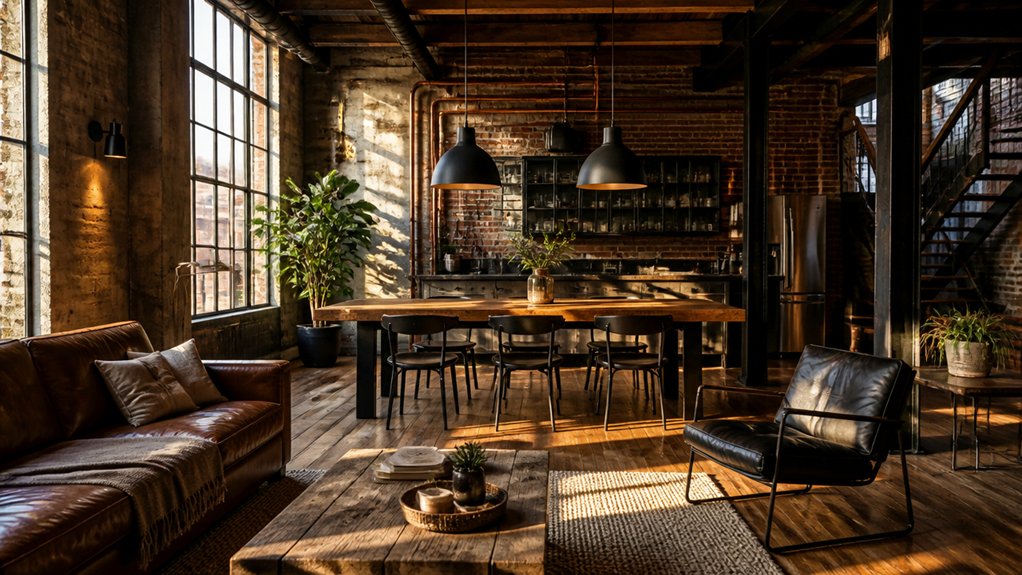
If you want industrial chic to feel lived-in instead of cold, start with the warm-and-raw formula: pair hard, honest materials—steel, concrete, brick, and exposed wood—with soft, grounding layers like worn leather, linen, wool, and warm light.
Then keep the space edited. You don’t decorate; you equip. Choose fewer pieces, but make them weighty: a solid table, a low sofa, a task lamp that works.
Build contrast through texture, not clutter—matte against sheen, rough against smooth, heavy against drape.
Add Vintage accents that look earned: scuffed frames, factory stools, old signage used sparingly.
Aim for Urban industrial balance: open sightlines, practical storage, and a sense of work left visible, not hidden.
Industrial Chic Materials: Brick, Metal, Wood, Concrete
Because industrial chic runs on honest surfaces, your material choices do most of the decorating. Start with brick: leave it rough, patch it, seal it, and let the scars show. Use it as a full wall or a hard backsplash that can take abuse.
Bring in metal for muscle. Choose blackened steel shelving, wire lockers, and riveted hardware. Let Exposed piping run where it wants; it becomes structure and storage when you add hooks or hanging rails.
Balance that hardness with wood—reclaimed planks, butcher-block tops, and worn beams that you can sand and oil, not gloss.
Ground everything with concrete: floors, counters, or a cast sink that shrugs off heat.
Finish with Vintage signage, bolted up like a shop label, not art.
Industrial Chic Color Palette: Warm Neutrals + Contrast
Where do you start with industrial chic color when the materials already shout? You don’t fight brick, steel, and concrete; you frame them. Build your base with warm neutrals: oat, sand, putty, smoked white. They soften hard edges and let texture read—pitted metal, rough timber, matte plaster—without looking cold.
Then punch in color contrast like you mean it. Use inky black to sharpen lines, charcoal to deepen shadows, and a dirty rust or olive to echo age. Keep it controlled: one dark anchor, one muted tone, plenty of breathing room.
Add Vintage accents in brass, tobacco leather, or worn enamel to warm the scene. If you need a spark, go small—oxide red, mustard, or deep teal—so the grit stays center stage.
Pick Industrial Chic Furniture: Scale, Mix, Comfort
Once you’ve locked in that warm-neutral base and your black-and-rust contrast, furniture becomes the muscle that holds it all together. Go big where it counts: a deep sofa, a solid dining table, a workbench-style island. Keep legs exposed so the room breathes, and choose pieces with honest grain, worn leather, and blackened steel.
Mix eras, not chaos. Pair a clean-lined sectional with a battered factory cart, then anchor it with one heavy cabinet instead of many small bits. Build comfort in on purpose: thick cushions, wide seats, and a rug that softens concrete without getting precious. Use Open shelving for everyday gear and ceramics, and flank it with storage that hides the mess.
Let Vintage fixtures sit nearby as artifacts, not clutter.
Industrial Chic Lighting: Layers That Soften the Space

Even if you love the hard edges—steel, concrete, exposed brick—lighting decides whether the room feels like a warehouse or a place you can actually live in. You need layers: a hard-working overhead, a focused task beam, and low, dirty-glow accents that cut the chill.
Start with pendant lighting to anchor the ceiling and define zones. Choose metal shades, cage forms, or smoky glass that throws textured shadows. Add Vintage fixtures—factory sconces, swing-arm lamps, exposed-filament bulbs—to bring warmth without getting precious.
Then build in dimmers so you can throttle brightness from grit to calm. Mix cool industrial tones with warmer color temperature bulbs to keep skin from looking grey. Aim light at brick, grain, and concrete; let surfaces do the talking.
Style Industrial Chic by Room (And on a Budget)
You don’t need a big spend to get industrial chic—just rough textures, hard lines, and a few gritty staples.
In the living room, you anchor the space with a worn leather (or faux) seat, a metal-and-wood table, and thrifted storage that shows its bolts.
In the bedroom, you keep it lean with crisp bedding, a black steel headboard (or pipe frame), and one concrete or factory-style lamp to seal the mood.
Budget Industrial Living Room
Where do you start when your living room needs that industrial-chic edge without the designer price tag? Steal the bones of urban lofts: exposed structure, honest materials, nothing precious. Paint one wall matte charcoal, then let the rest stay light and worn.
Hunt secondhand for a solid wood coffee table, then swap in hairpin legs or a black steel frame. Use open shelving: pipe brackets, reclaimed boards, visible screws.
Layer texture, not clutter—canvas, leather, nubby throws, a flatweave rug. Add vintage accents that earn their keep: a factory stool as a side table, a caged work lamp, a weathered trunk for storage.
Finish with one oversized print and warm bulbs. Keep it tough, simple, livable.
Affordable Industrial Bedroom Styling
Carry that same stripped-back loft energy from the living room into the bedroom, just quieter and more grounded. Start with a matte black metal bed frame or thrift a simple platform and add steel pipe legs. Keep walls honest: white paint, raw plaster, or a single charcoal accent. Layer texture, not clutter—washed linen, a worn cotton throw, and one chunky knit.
For industrial bedroom decor on a budget, swap pricey nightstands for stacked crates or a salvaged cabinet. Use clamp lamps or hardwired sconces with warm Edison LEDs. Hang one large, weathered mirror to bounce light.
Finish with budget friendly industrial accents: concrete tray, wire basket, leather pulls, and a jute rug to soften the grit.
Conclusion
You’ve got the industrial chic formula now: keep it warm, keep it raw. Let brick breathe, let metal bite, let wood ground the room, and let concrete stay honest. Work a tight palette, then punch it with contrast. Choose furniture with weight and comfort—no museum stiff. Layer lighting like you’re dialing in a switchboard, softening edges without hiding them. Room by room, you can thrift, salvage, repeat.This is a fun way to get your interior design feel you actually want.