

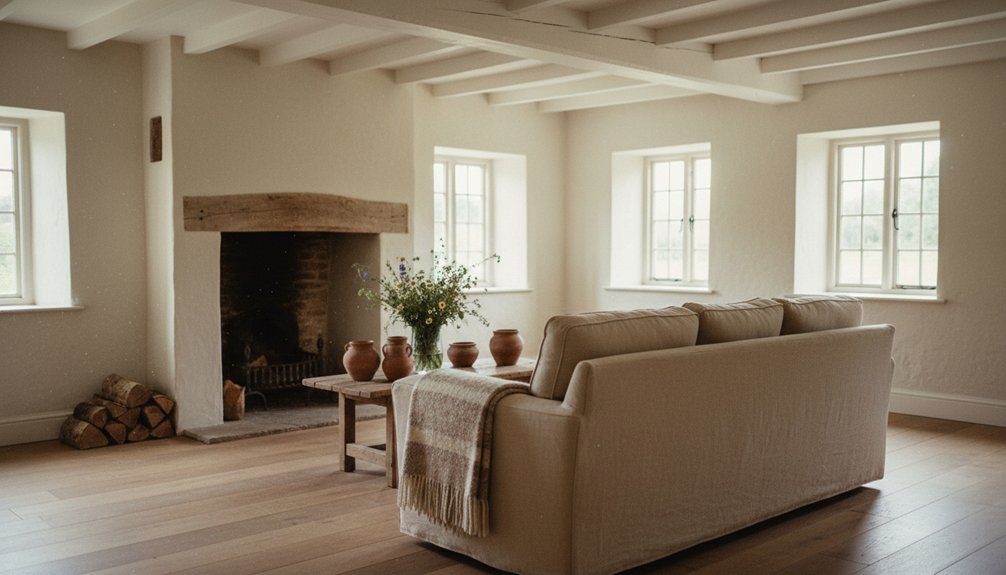
Renovate your cottage with soft rustic charm by keeping a tight palette of creamy white, warm greige, muted sage, and dusty rose, then layering reclaimed oak, linen, honed stone, and matte ceramics. Start with a room-by-room check for rot, leaks, and musty damp, and fix roofing, wiring, plumbing, and ventilation first. Restore trim, doors, beams, and hearth brick gently, keeping age marks. Add linen, wool throws, and stacked rugs, and you’ll find extra ideas ahead.
Key Takeaways
- Use a cohesive palette of creamy whites, warm greige, muted sage, and dusty pigments to keep undertones consistent and light soft.
- Layer reclaimed wood, linen, honed stone, matte ceramics, and brushed brass; prioritize texture and simple Shaker-style silhouettes over clutter.
- Inspect and fix moisture and structural issues first—roofing, plumbing leaks, ventilation, and rot—especially around baths, kitchens, attic, and crawlspace.
- Preserve original character by repairing trim, rehanging doors, retaining vintage hardware, and gently cleaning beams and brick hearths rather than over-refinishing.
- Plan a staged budget with a 10–15% contingency; DIY paint and shelving, but hire pros for electrical, structural work, permits, and core systems.
Define Your Soft Rustic Cottage Style (and What to Avoid)
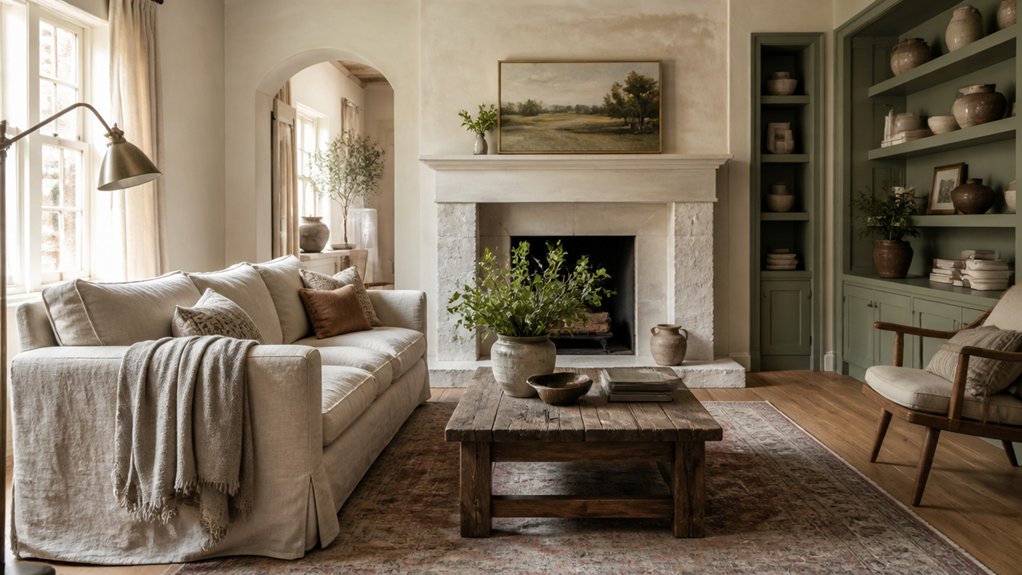
Where do you start with “soft rustic” so it feels charming instead of cluttered? You begin by choosing a tight palette—creamy whites, warm greige, muted sage—then layer only a few honest materials: aged oak, linen, brushed brass, and matte ceramics. Let texture do the work, not trinkets.
Aim for Modern minimalism in silhouettes: simple shaker fronts, clean-edged shelves, and unfussy upholstery, so the room can breathe.
Then add restraint-focused character: one reclaimed beam, a vintage runner, a hand-thrown lamp. Use industrial accents sparingly—blackened steel brackets, a factory-style sconce—to sharpen the softness.
Avoid “theme” cottage: too many signs, distressed-everything finishes, busy florals, and tiny clutter clusters that collect dust and steal light. Keep edits ruthless, and warmth stays effortless.
Do a Room-by-Room Walkthrough: Safety, Structure, Moisture
Before you pick paint chips or source reclaimed oak, walk the cottage room by room with a sharp eye for safety, structure, and moisture—because soft rustic charm only lasts if the bones stay dry and sound.
Start at the entry: feel for spongy boards and listen for squeaks that hint at rot.
In the kitchen, check under sinks, around the dishwasher, and along exterior walls for swelling, stains, and musty air.
In bath and laundry, test the fan, inspect grout lines, and look for peeling paint near windows.
Scan ceilings for old leaks and probe baseboards for damp.
For fire safety, note cracked stove pipe joints, overloaded outlets, and tired extension cords.
In the attic and crawlspace, spot sagging rafters, shifting piers, and insulation clumped with mold—your quickest read on structural integrity.
Set a Budget and Decide What You’ll DIY vs Hire
Once you’ve flagged the soggy spots and shaky joints, put real numbers to the renovation so the cozy details don’t eat the money meant for essentials. List must-fix items first—roofing, wiring, plumbing, insulation—then add a 10–15% cushion for surprises hiding behind plaster.
Next, sort tasks by risk and tool skill. You can DIY paint, simple shelving, patching, and hardware swaps on quiet weekends. Hire pros for structural work, electrical, gas, and anything that needs permits or ladders you don’t trust.
Get three quotes, check timelines, and lock a written scope.
Don’t forget outside costs: garden landscaping, drainage, and outdoor furniture. Treat them as phase-two lines, so your interior stays safe, warm, and finished.
Restore Original Cottage Details: Trim, Doors, Beams, Hearths
Although fresh paint and new lighting make an instant difference, the cottage really comes alive when you restore the original bones—chunky trim, old doors, hand-hewn beams, and a well-worn hearth.
Start by stripping trim gently, then patch with wood filler and sand just enough to keep tool marks and age. Rehang sticking doors, tighten hinges, and keep vintage knobs; a new latch can hide behind old hardware.
For beams, vacuum dust, treat for pests, and oil or wax to bring out grain without making them glossy.
At the hearth, rake ash, repoint loose mortar, and scrub brick with mild soap.
Tie these details to garden landscaping and exterior paint choices by repeating materials—stone, timber, iron—so inside and out feel like one home.
Choose a Soft Rustic Cottage Color Palette That Warms Light
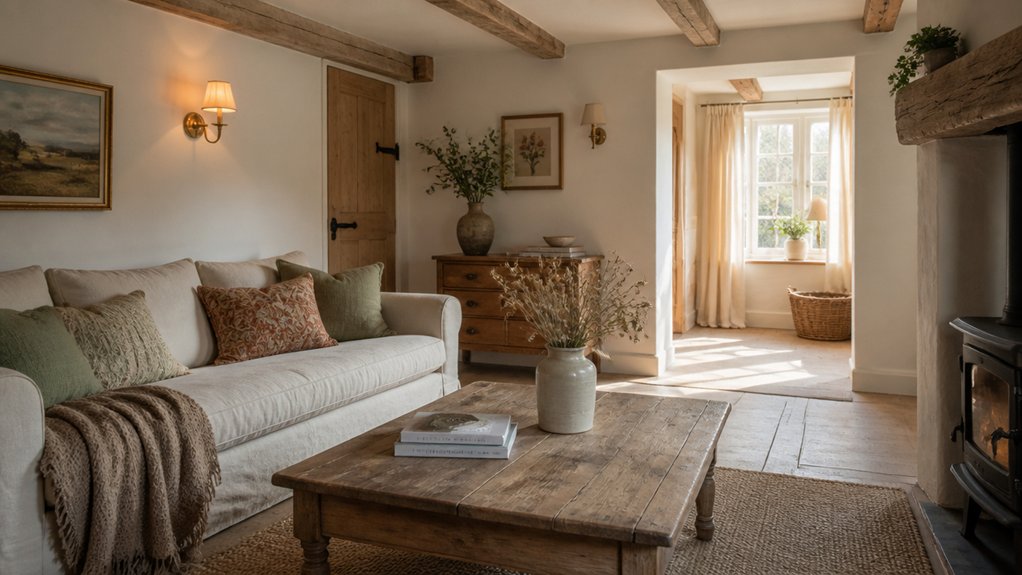
With the trim cleaned up, the beams nourished, and the hearth back in working order, your next job is to choose colors that flatter that aged wood and stone and make daylight feel buttery instead of sharp.
Start with warm whites, oatmeal, and pale putty on the walls; they bounce light while keeping it soft. Then layer gentle pigments—sage, dusty rose, smoke blue—on cabinetry, built-ins, or a single snug wall so the room feels deep, not dark.
Keep undertones consistent: creamy with creamy, gray with gray, so everything reads calm. Bring in pattern through Vintage florals on curtains or cushions, but ground them with Modern minimalism in clean-lined lamps, plain linens, and simple matte hardware.
Finish with a satin or eggshell sheen to blur glare.
Pick Cottage Interior Floors That Age Well (Wood, Stone, Brick)
Because your floors take every muddy boot, spilled tea, and sunbeam, you’ll want a surface that looks better as it wears instead of crying out for perfection. Choose wide-plank wood with a matte oil finish; it develops a gentle patina and hides dings, especially in hallways and near the hearth.
If you love cool, grounded texture, pick limestone or slate with a honed surface—easy to sweep, calm underfoot, and forgiving with age. For true cottage grit, brick pavers bring warmth and grip; seal them lightly so they resist stains but still breathe.
Let the floor anchor your style: it softens Vintage florals in rugs and curtains, and it also steadies Modern minimalism with honest, timeworn character.
Add Cottage Wall Texture: Plaster, Paneling, Simple Trim
Once you’ve grounded the cottage with a floor that can take a beating, let the walls add the soft, lived-in depth that makes every room feel held. Start with plaster where you want calm: a thin skim coat over old drywall hides waviness and leaves gentle trowel marks that read authentic, not perfect.
For instant Cottage wall textures, add simple paneling—beadboard, shiplap, or a board-and-batten wainscot—kept to one height to protect scuff zones. Paint it in muted tones so shadows do the work. Use flat or eggshell finishes to keep glare down.
Finish with straightforward trim: slim casings, a modest baseboard, and a picture rail if ceilings feel tall. These Rustic wall finishes age gracefully and are easy to patch.
Plan Cozy Cottage Lighting: Fixtures, Bulbs, and Layering
While the right fixtures add character, it’s the layering that makes cottage lighting feel truly cozy and lived-in. Start with a soft overhead: a small pendant, shallow drum shade, or simple lantern that doesn’t glare. Choose warm LEDs (2200–2700K) and keep them under 800 lumens in snug rooms, so plaster and paneling read creamy, not stark.
Then add task light where you live: a swing-arm by the chair, a shaded lamp on a side table, a discreet under-shelf strip in the kitchen.
Finish with glow—Candle placement on the hearth, windowsill, or dining table—and keep it safe with sturdy holders. Build in Light dimming on every circuit, so evenings settle into a gentle, honeyed hush.
Mix Vintage Pieces With Modern Comfort (Without Clutter)
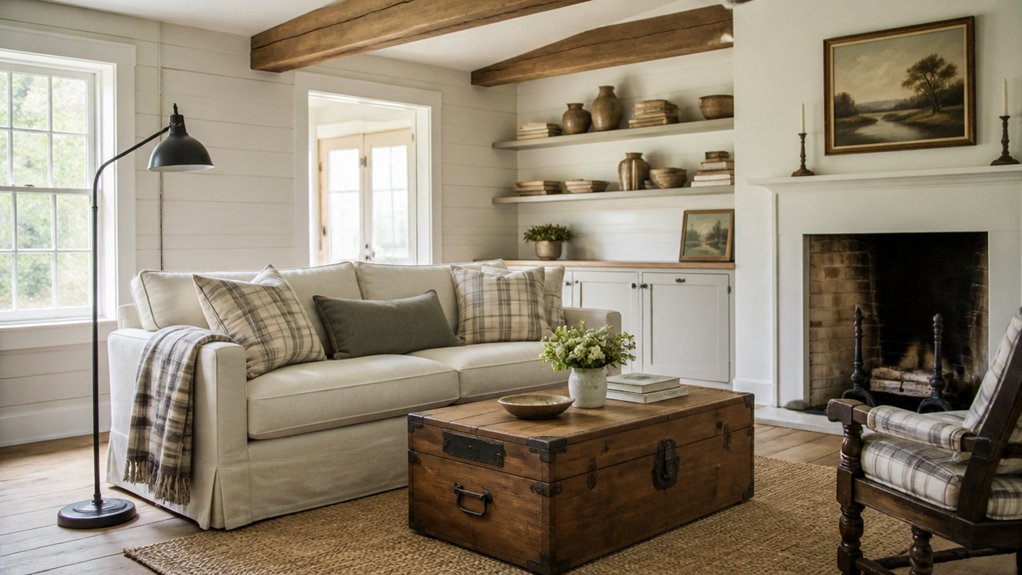
Even if you love the patina of old pine and rubbed brass, you don’t need a roomful of “finds” to make a cottage feel authentic. Choose one or two anchor pieces of antique furniture—a farmhouse table, a worn rocker, a small sideboard—and let them set the mood.
Then bring in modern comfort with a streamlined sofa, supportive dining chairs, and a clean-lined bed frame that won’t fight the grain and age around it.
Keep surfaces calm: edit to a few vintage accessories that earn their space, like a stoneware jug, framed botanicals, or a brass candlestick.
Repeat materials and finishes so the room feels collected, not crowded, and leave breathing room for daily living.
Layer Cottage Textiles: Linen, Wool, Quilts, and Rugs
You can soften a cottage fast by layering natural linen—start with relaxed curtains, a rumpled sofa slip, or a simple table runner for breathable texture.
Then add cozy weight with a wool throw and a quilt, pairing smooth and stitched fabrics so the room feels warm without looking heavy.
Finish underfoot by stacking rugs—a flatwoven base with a smaller vintage or wool rug on top—to trap warmth and define seating zones.
Natural Linen Layering Ideas
Because cottage rooms feel their coziest when every surface has a little give, start your soft-rustic layering with natural linen as the base and build upward with wool throws, patched quilts, and grounded rugs.
Choose washed linen slipcovers and curtain panels in oat, fog, or clay so light stays gentle and edges look relaxed.
On beds, stack a linen fitted sheet, a flat sheet, then a slightly heavier linen coverlet for breathable weight and year-round comfort.
Add linen napkins, runners, and tea towels in the kitchen; they soften with use and improve textile durability when you rotate them.
For linen care, wash cool, skip fabric softener, and line-dry to keep fibers strong.
Finish with a flatweave rug underfoot to anchor the drape and hush footsteps.
Cozy Wool And Quilt Pairings
Once linen sets that easy, breathable baseline, bring in wool and quilts to add warmth, texture, and a little cottage history. Drape a heathered throw over the sofa and you’ll soften hard edges while keeping the room pulled together. Choose wool in oatmeal, charcoal, or muted plaid for Farmhouse charm without feeling themed.
Then fold a quilt at the foot of the bed or over a bench, letting its stitching do the decorating. If you lean toward Modern minimalism, pick a solid or two-tone quilt and pair it with one patterned wool accent, not three.
Mix weights: a dense wool blanket for cold nights, a lighter quilt for layering, and you’ll adjust comfort fast. Finish with simple wood buttons or a leather strap to store extras neatly.
Rug Stacking For Warmth
While bare floorboards look charming in daylight, a stacked rug setup keeps a cottage room warmer underfoot and noticeably quieter. Start with a large flatweave or jute base to grip the floor, then lay a smaller wool or vintage-pattern rug on top for softness and color. Keep the top rug’s edge visible by 8–12 inches so the layers read intentional, not cluttered.
Use felt pads or a thin underlay to stop creeping, especially near doorways. Anchor your furniture arrangement by tucking front chair legs on the top rug and leaving back legs on the base layer.
Add decorative accents through fringe, muted plaids, or faded florals that echo your linens and quilts. Rotate seasonally to refresh wear and keep the room cozy.
Update a Cottage Kitchen and Keep the Character
Even if you’re upgrading for better storage and newer appliances, you can keep a cottage kitchen’s character by working with what already feels honest—aged wood, simple lines, and a lived-in patina. Keep original cabinet faces if they’re sound, then add deep drawers and pullouts behind them for function. Choose quiet hardware in iron or unlacquered brass so it wears in, not out.
Swap bulky uppers for a few open shelves in scrubbed pine, and let everyday crockery become texture. Tuck Modern minimalism into the layout: clean counters, one strong material, and concealed bins.
Warm the scene with Wildlife accents—etched glass, a hare print, or carved wooden hooks. Finish with a soft runner, linen towels, and warm LEDs that mimic candlelight at dusk.
Refresh a Cottage Bathroom Gently (Tile, Paint, Fittings)
If your cottage bathroom feels tired but you don’t want to sand away its soul, refresh it with small, faithful changes in tile, paint, and fittings. Keep existing layout, then swap cracked tiles for handmade-look ceramics in soft chalky whites or mossy greens; use a simple border to echo age.
Paint walls in breathable, moisture-friendly matte, like warm limestone or clay, so light feels gentle, not glossy.
Choose fittings that read traditional but work like Modern appliances: a thermostatic shower valve, a quiet extractor, and a slim radiator that warms towels fast. Replace taps with brushed nickel or unlacquered brass for a lived-in patina.
Let minimalist decor guide the palette—two tones, clean grout lines, and a simple mirror—so the room stays calm and authentic.
Build Cottage-Friendly Storage and Style the Finishing Touches
Once you’ve settled the big finishes, build storage that looks like it’s always belonged there: shallow shelves in painted timber, a pegged rail for towels and baskets, and a freestanding cabinet that tucks into awkward corners without forcing the room into symmetry. Keep door fronts simple, add beadboard backs, and use cup pulls that patina nicely. Line shelves with offcuts of linen or ticking for quiet grip and softness.
Then style in layers: stack folded towels, tuck soaps into a lidded tin, and corral daily items on a small tray. Reuse garden furniture hooks or a slim stool as a perch for robes. If wood needs toughening, seal it with a whisper of exterior paint for a cottage-worn finish. Finish with a small mirror and a sprig in a bottle.
Conclusion
You’ve mapped your soft rustic cottage style, checked the bones, and set a budget that keeps surprises small. Now let the originals lead: restore trim, doors, beams, and the hearth, then warm the light with a gentle palette. Add linen, wool, quilts, and rugs for that lived-in hush. Update kitchen and bath with a light hand, build smart storage, and finish with simple layers—like butter melting into toast.