


You’ll uncover hidden, affordable rural villages by targeting low-tax counties in the Midwest, rural South, and interior high plains where median prices sit below national benchmarks and local jobs (ag, manufacturing, logistics) stay steady. Use satellite and terrain maps to spot underbuilt hamlets while avoiding floodplains and steep grades that spike insurance and site work. Then check local agent sites and bulletin boards for off-market deals, and stress-test payments under 35% of income. Keep going to see exact tools and checks.
Key Takeaways
- Target Midwest and rural South counties with low median prices, moderate taxes, and stable local employers for lower all-in ownership costs.
- Use satellite and parcel maps to spot underbuilt hamlets, utility access, and minimal new construction where prices often lag.
- Check terrain and hazard layers for floodplains, steep grades, and wildfire zones that can erase “cheap” pricing through insurance and repairs.
- Search local listing sites and filter by days-on-market, price cuts, and price-per-acre to find overlooked inventory and motivated sellers.
- Visit in person to verify broadband, mobile coverage, amenities, and commute times, and ask locals about seasonal income swings and demand.
What “Affordable” Means for Rural Village Homes
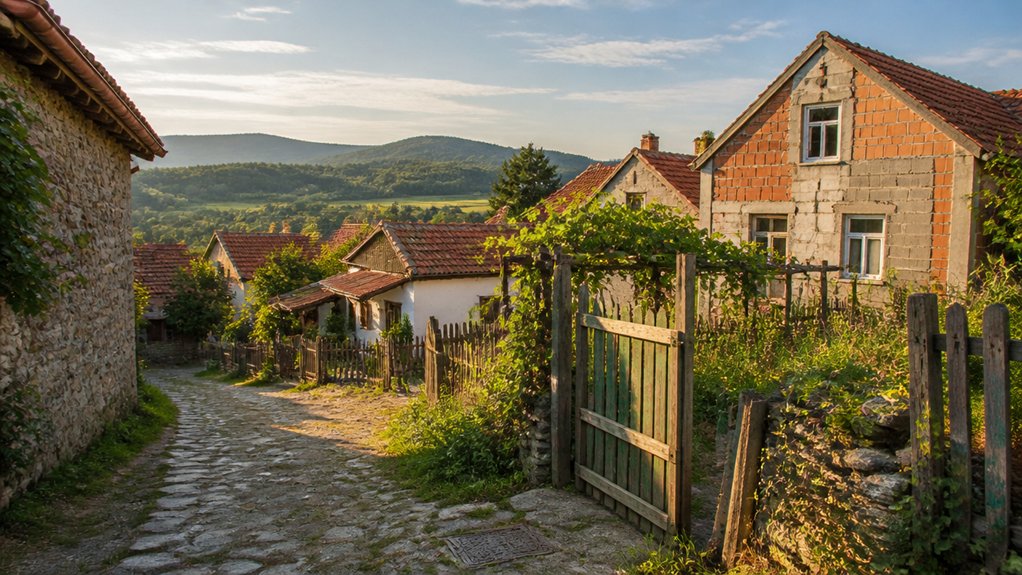
Because “affordable” shifts with local wages, financing costs, and maintenance realities, you can’t judge a rural village home by the asking price alone. You’ll define affordability by debt-to-income: target housing costs under 30–35% of gross pay, then stress-test at higher interest rates and seasonal income dips.
Compare loan terms, down-payment requirements, and insurance availability; a “cheap” home can turn expensive if you need specialist coverage for flood, fire, or historic structures.
Next, price in total cost of ownership: utilities, septic, roof age, heating fuel, and travel time converted to money. If you must drive 40 minutes daily, compute annual mileage and depreciation.
Finally, track Rural development signals—broadband, school enrollment, and employer growth—because they protect Affordable housing value and resale.
Cheapest Regions to Find Rural Villages
Once you’ve defined affordability by total monthly cost—not just the list price—you can narrow your search to regions where land values, taxes, and insurance premiums stay structurally low.
In the U.S., you’ll typically see the lowest all-in carrying costs in parts of the Midwest and the rural South, where median home prices and assessed values trend below national benchmarks and property-tax rates remain moderate.
You can also find value in interior mountain and high-plains counties with ample housing stock and slower in-migration, which reduces bidding pressure.
Look for areas with steady local employment anchors (ag, manufacturing, logistics) so rents and resale don’t collapse.
Rural tourism can lift weekend demand without driving metro-style prices. Cultural festivals add predictable seasonal cashflow for short stays.
Use Maps to Uncover Affordable Hidden Villages
While listing sites show you what’s for sale, maps show you why it’s priced that way—and that’s where the best bargains hide. Start with satellite view to spot underbuilt hamlets: low roof density, small parking areas, and limited new construction often correlate with softer demand and lower €/m².
Switch to terrain to flag steep grades, floodplains, and narrow valleys; these raise insurance and renovation costs, which can discount prices 10–30% versus nearby flat towns. Use drive-time layers to measure access to regional jobs and hospitals; every 10 minutes farther out typically compresses buyer pools.
Then overlay points of interest: Historical landmarks can signal stable tourism cashflow, while clusters of Local cuisine businesses indicate recurring visitor spend. Finally, check parcel boundaries and utility lines to budget hookups.
Find Rural Village Listings Locals Actually Use
To spot underpriced rural homes before they hit national portals, you’ll track the local listing platforms residents check daily and compare their asking prices to regional comps.
You’ll also monitor community bulletin sources—town websites, co-op noticeboards, and local Facebook groups—where off-market leads and motivated sellers surface with lower marketing overhead.
When you log these sources weekly and price-per-square-meter the finds, you’ll build a tighter view of true supply and negotiation room.
Local Listing Platforms
Because the best rural deals rarely hit the big national portals first, you’ll save time and money by starting on the local listing platforms that residents and small-town agents actually use. Prioritize county or regional MLS public feeds, cooperative broker sites, and town-based realty pages; they often show listings 7–21 days earlier than national syndicators and include fuller disclosures.
Filter by days-on-market, price-per-acre, and sold comps to spot underpriced inventory and avoid stale listings. Verify carrying costs: many local platforms display assessed values, which let you model property taxes before you call a local agent.
Cross-check parcel IDs, zoning, and utility hookups so you don’t overpay for “cheap” land with expensive site work. Track weekly price cuts to time offers.
Community Bulletin Sources
Where do locals quietly advertise a house, a small farm, or a buildable lot before it ever touches an MLS? You’ll find it on village bulletin boards: the post office, feed store, co-op, church narthex, community center, and library entrance. Track postings weekly; in thin markets, a single board can surface 5–15% of all near-term inventory.
Treat each notice like a lead sheet. Call the number, confirm acreage, utilities, road access, and property tax band. Ask how long it’s been posted; listings under 10 days often price 3–8% below brokered comps. Budget small: $10–$30 for printed flyers and fuel beats buyer-agent fees.
You’ll also spot “Cultural preservation” homes tied to Local folklore, which can affect renovation rules and grants.
Visit the Village: Amenities, Commute, and Vibe
Before you run numbers on a rural bargain, visit the village and audit it like an investment: map grocery and pharmacy access, test mobile coverage and broadband speeds, and price out essentials such as fuel, childcare, and tradespeople call-out fees.
Time the commute at peak hours, not just midday; track minutes to the nearest rail station, hospital, and major employer, then convert that into monthly fuel, parking, and time-cost.
Walk the high street: count vacancies, check opening hours, and note whether services cluster or require car trips.
Talk to shop owners about seasonal demand, especially around Village festivals, and watch whether Traditional crafts attract buyers or just tourists.
Spend one weeknight there; you’ll hear noise, see lighting, and gauge safety.
Due Diligence Checks for Rural Village Property Risks
Even if the asking price looks like a steal, you’ll want due diligence that targets rural-specific risks, since one missed constraint can erase your “discount” in a single repair or compliance bill. Start with title, easements, and right-of-way: a shared track can cut resale liquidity and valuation.
Verify utilities: well yield tests, septic inspections, and broadband speed reports; replacements can run five figures. Pull planning records for Historical preservation status; protected façades can add permitting time and 10–30% to renovation budgets.
Model Environmental impact exposure—flood maps, wildfire zones, soil contamination, and protected habitats—because insurance premiums and exclusions move faster than prices.
Price in access costs: winter road maintenance, drainage, and retaining walls. Finally, benchmark recent rural comps and days-on-market to avoid overpaying.
Conclusion
You’re hunting quiet lanes, but you’re pricing risk. One village offers €40k stone cottages and a 90‑minute commute; another lists €70k homes with fiber, a clinic, and steady rental demand. You’ll spot bargains on heatmaps and local portals, then confirm them on foot—empty streets versus thriving markets. Before you bid, you’ll audit flood zones, septic costs, titles, and renovation quotes. Low sticker prices feel idyllic; total cost decides.