

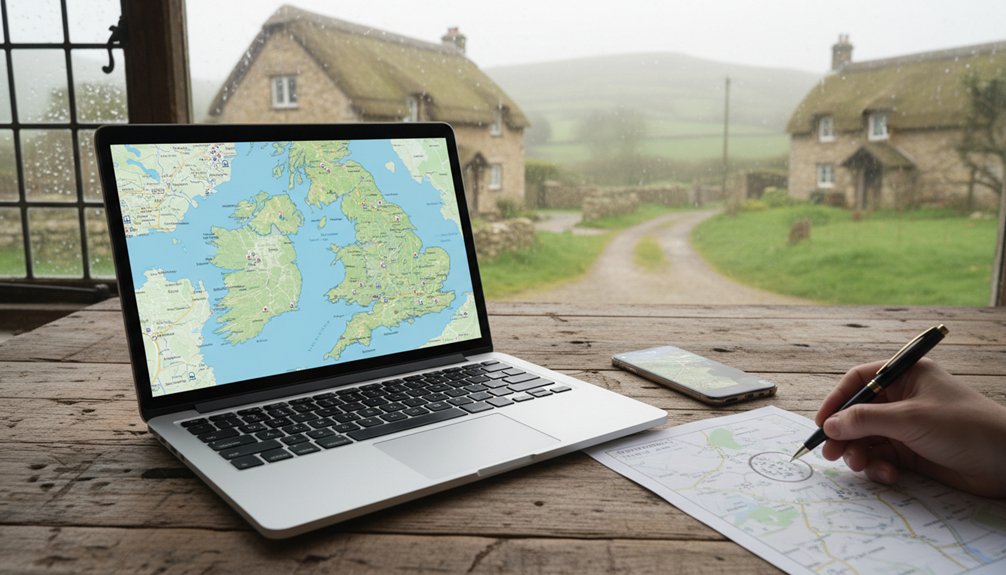
You’ll find homes in remote UK villages fastest by pairing portal searches with local intel. Use Rightmove, Zoopla, and OnTheMarket, then check sold prices, relistings, and listing caveats like ag ties or holiday restrictions. Draw map boundaries around hamlets, set tight filters (land, outbuildings, broadband, parking), and switch on instant alerts. Call the parish’s rural agent for early heads-up stock, and work Facebook groups and noticeboards for off-market leads. Next, you’ll pick up extra checks that save wasted viewings.
Key Takeaways
- Search Rightmove, Zoopla, and OnTheMarket; compare listings, time-on-market, relistings, and sold prices across nearby parishes.
- Use tight filters and drawn map boundaries for village cores and hamlets; save searches and enable instant alerts for new listings.
- Contact the local rural estate agent branch covering the parish; share budget, chain status, and must-haves to access early opportunities.
- Find off-market homes via parish Facebook groups, “wanted” posts, village walks, and classifieds like Gumtree; respond quickly to leads.
- Verify constraints and practicality before viewing: planning history, flood risk, access rights, septic compliance, and broadband/mobile coverage with maps and neighbors.
Use Property Portals to Find Rural Homes for Sale
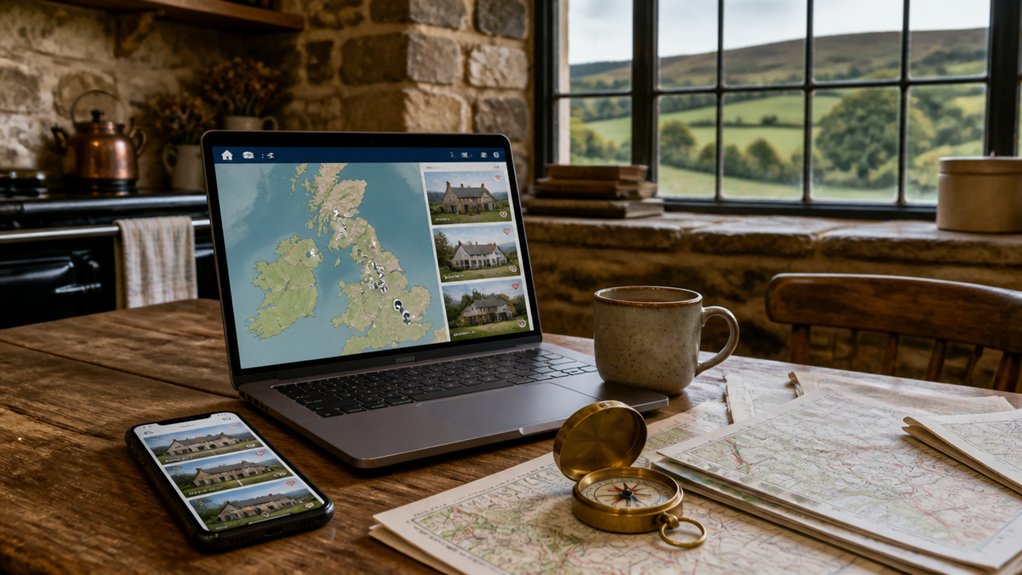
If you’re starting your search for a home in a remote UK village, property portals are the fastest way to see what’s actually on the market right now. Use Rightmove, Zoopla, and OnTheMarket to compare asking prices, time-on-market, and relistings across nearby parishes, not just one postcode.
Check sold-price pages and local authority data alongside listings to spot historical property trends, like seasonal drops in coastal hamlets or spikes near new broadband rollouts.
Read listing details for constraints that bite in villages: agricultural ties, holiday-use restrictions, and conservation-area limits driven by Rural housing regulations.
Cross-check each property on planning portals and flood maps before you book viewings, and call agents to confirm access, services, and septic compliance.
Set Smart Filters, Maps, and Alerts for Villages
While rural listings can vanish overnight, you’ll stay ahead by setting tight filters, drawing map boundaries around the actual villages (and their outlying hamlets), and turning on instant alerts for new instructions and price cuts.
Use Smart filtering to narrow by postcode district, maximum travel time to the nearest market town, and essentials like broadband speed, parking, land size, and outbuildings. Exclude “near village” results that sit on A-roads or isolated ribbons of development.
Lean on map tools to sketch around the village core, then add a second ring to catch crofts, farms, and edge-of-parish cottages.
Save multiple searches for different budgets and property types, and set alerts to “immediate” so you see reductions before weekend viewings fill up.
Use Local Rural Estate Agents to Find Listings
Because many of the best remote village homes trade quietly before they ever hit Rightmove, you’ll move faster by building relationships with local rural estate agents who know the parish patch and its quirks.
Phone the branch that actually covers the lanes you’re targeting, not a town office forty minutes away, and tell them your budget, chain position, and must-haves (parking, broadband, outbuildings, flood history).
Ask what’s selling fastest and where buyers are getting gazumped. Local estate agents can flag realistic pricing by comparing recent completions on the same road, not just postcode averages.
Get on their email list for rural listings and request details packs early, including EPC, tenure, septic compliance, and access rights.
When you view, arrive prompt and give clear feedback.
Find Off-Market Village Homes (Facebook, Boards)
Local rural agents can get you first look, but you’ll often beat the wider market by hunting off‑market leads yourself in the village’s own channels. Join parish and community Social media groups, then switch on post notifications for “for sale,” “downsizing,” and “moving on” threads.
Post a polite wanted message with your budget, timescale, and what you can compromise on, and ask locals to DM rather than comment.
Walk the village and check the shop, pub, and noticeboard for handwritten ads, “testing the market” flyers, and builders’ boards that hint at upcoming sales.
Scan Online classifieds like Gumtree and Preloved, and set radius alerts for nearby hamlets.
Move fast: ring the seller, offer viewing flexibility, and show you’re proceedable.
Check Broadband, Access, and Services Before Viewing
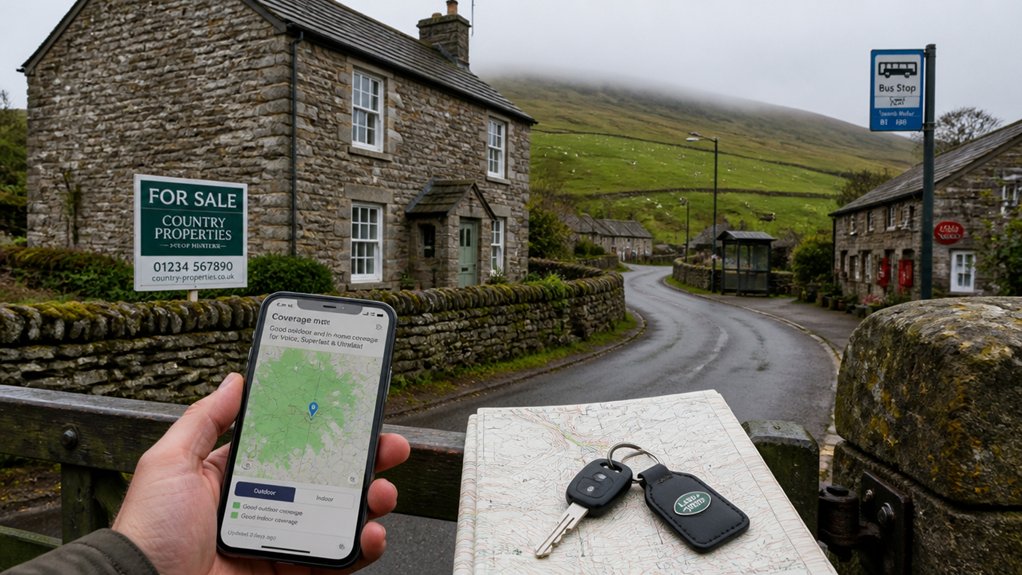
Before you book a viewing, sanity‑check the basics that can make or break a remote village buy: broadband and mobile signal, year‑round access, and the day‑to‑day services you’ll rely on. Check Openreach and Ofcom maps, then confirm speeds with neighbours—“fibre available” can mean “down the lane, not to the door.” If you’ll work from home, test calls on every network and ask about power cuts.
Next, drive the route in poor weather. Look for single‑track pinch points, steep lanes, flood signs, and winter gritting coverage; insurers and lenders may care.
Finally, map your essentials: nearest shop, school run, and petrol, plus healthcare facilities like a GP, pharmacy, and urgent care distance. These affect resale and your offer price.
Conclusion
You’ll find remote village homes fastest when you combine portals, smart map filters, and instant alerts with a few well-placed calls to local rural agents. Don’t stop there—check parish noticeboards, Facebook groups, and community pages for off-market leads that never hit Rightmove. Before you book a viewing, confirm broadband speeds, winter road access, and day-to-day services. In rural buying, you’ve got to strike while the iron’s hot.