


Start with free upgrades: declutter surfaces, clean windows, swap pillow covers between rooms, and restyle shelves with fewer, bigger accents. Rearrange for flow by keeping 30-inch walkways, floating the sofa off the wall, and angling chairs toward a focal point. Set a small budget, splurge on high-use pieces like rugs or lighting, and save on trendy decor. Add warm LED bulbs, simple curtains, and an easy plant for instant polish—there’s more ahead.
Key Takeaways
- Declutter surfaces, clean windows and mirrors, and use trays or baskets you already own for instant, low-cost polish.
- Rearrange furniture to highlight a focal point, float the sofa, and keep 30-inch pathways for better flow and depth.
- “Shop your home” by swapping pillows, throws, lamps, and art between rooms to refresh color and style for free.
- Upgrade lighting cheaply with warm-white LED bulbs, plug-in dimmers, and layered lamps to make the room feel larger and cozier.
- Add affordable texture and color using washable rugs, thrifted frames with DIY art, and low-maintenance plants or quality faux greenery.
Start With 5 Free Living Room Upgrades
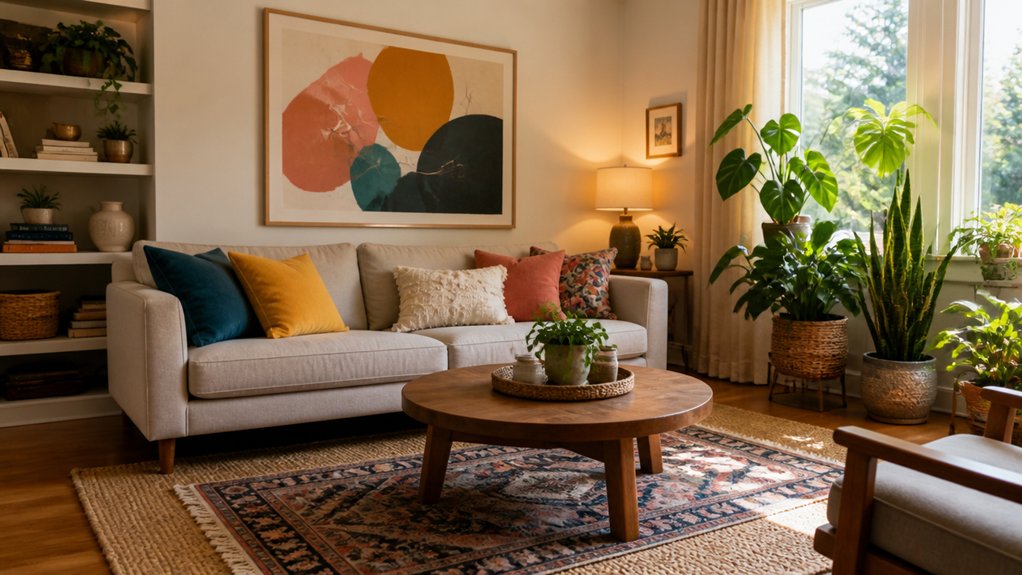
Why spend money before you’ve tried the easiest fixes? Start with five free upgrades that make your living room feel fresh and current.
First, declutter surfaces and stash extras in baskets you already own.
Second, swap out pillow covers between rooms for an instant color update.
Third, rotate lamps and bulbs to warm the lighting and reduce harsh glare.
Fourth, style your coffee table with a tight trio: a book, a tray, and a plant cutting in a glass.
Fifth, clean your windows and mirrors to bounce more light, making small spaces look bigger.
If you’re eyeing Budget friendly furniture, wait—your room may need only these tweaks.
Then plan DIY wall art from leftover frames and printable downloads.
Rearrange Furniture for a Better Layout
Before you buy anything new, rearrange what you already own to improve flow and make the room feel larger. Start by identifying your main focal point—TV, fireplace, or window—and angle seating toward it.
Then refine furniture placement so pathways stay at least 30 inches wide, which instantly upgrades room flow. Pull the sofa a few inches off the wall to create depth, and float chairs to form a conversation zone.
Keep a clear line from the entry to the seating area, and avoid blocking natural light. If your coffee table crowds the space, swap it with an ottoman or go without for a cleaner, trend-forward look.
Finish by balancing visual weight: pair tall pieces with low ones.
Shop Your Home for Living Room Decor Wins
Before you buy anything new, shop your own rooms and pull pieces you can repurpose—an extra stool becomes a side table, and a tray can corral remotes in a clean, modern way.
Swap pillows, throws, art, and lamps between spaces to refresh the look without spending a dime.
Then restyle shelves and surfaces with fewer, bigger accents so your living room feels trend-right and less cluttered.
Repurpose What You Own
Even if you’re not buying a single new thing, you can refresh your living room fast by “shopping” your own home for pieces with untapped potential. Turn a forgotten tray into a sleek coffee-table catchall, or stack hardcovers as a pedestal for a candle. Swap pillow covers from a guest room to hit today’s warm neutrals, or frame postcards, kids’ art, or ticket stubs as Personalized accessories that feel curated, not cluttered.
Give worn pieces a second life with Upcycled furniture moves: paint a side table in a trendy muted green, wrap a lamp base in jute, or add peel-and-stick rattan to cabinet fronts.
Corral remotes in a lidded box, use baskets to hide cords, and repurpose a bar cart as a compact media station. You’ll save money and gain polish.
Rearrange For Fresh Style
When you’re craving a new look without spending a dime, rearranging what you already own delivers the quickest living room upgrade. Start by floating the sofa a few inches off the wall to open pathways, then angle a chair to create a conversation zone. Swap side tables between seats to balance height and scale.
Next, “shop” your shelves: move Vintage accents to the coffee table or mantel so they read as curated, not cluttered. Stack books in twos, top with a tray, and corral remotes.
If your room feels flat, shift art to build a statement wall—group frames tighter, align centers at eye level, and mix sizes for a modern gallery look. Finally, rotate lamps and pillows between rooms to refresh color without buying new.
Set a Realistic Budget (and Where to Splurge)
Although it’s tempting to chase every trend at once, a realistic living room budget keeps your space cohesive and your spending intentional. Start with Budget planning: list what you already own, measure your room, then set a firm total and break it into must-haves, nice-to-haves, and “later.” Use a simple 60/30/10 split for essentials, upgrades, and styling.
Next, choose smart splurge strategies so the room feels elevated without constant rebuys. Spend more on high-touch, high-use pieces like a comfortable sofa, a durable rug pad, or quality lighting that improves ambiance. Save on swap-friendly trends—pillows, throws, small art, and decor trays—so you can refresh seasonally.
Track every purchase, and stop when the line’s hit.
Use Paint for the Biggest Cheap Impact
If you want the fastest, cheapest way to transform your living room, paint does more heavy lifting than almost any new furniture purchase. You’ll get instant color transformation with a weekend and a couple of gallons, not a maxed-out card.
Start with a warm white or greige to bounce light and make tight spaces feel larger, then add a deep accent shade to ground the room and look designer.
Try paint techniques that mimic high-end upgrades: a matte ceiling to hide glare, color-drenching trim for a modern cocoon, or a half-wall to define zones in open layouts.
Refresh tired furniture with cabinet-grade paint, and swap dated hardware for a polished finish.
Keep samples taped up 24 hours first.
Update Pillows Fast With Mix-and-Match Covers
Because pillows sit front and center on your sofa, swapping in mix-and-match covers gives your living room a fresh, trend-right look in minutes—without buying new inserts or taking up extra storage.
Keep two to three cover sets per season and rotate them in a slim bin or file-style organizer.
For Pattern mixing, pick one “hero” print, one simple stripe or geometric, and one solid that pulls a color from your art or curtains.
Use pillow layering to make it look styled: start with two larger covers in back, then add a smaller accent in front, and finish with a textured lumbar.
Shop clearance, thrift stores, or online bundles, and stick to invisible zippers for a cleaner, pricier look.
Washable fabrics keep upkeep easy.
Layer Rugs and Throws for Instant Cozy

You can make your living room feel instantly cozier by layering rugs—try mixing sizes like a smaller patterned rug over a larger neutral to define zones without adding furniture.
Toss on a couple of budget-friendly throws (think cotton, knit, or faux fur) to warm up the sofa and keep things flexible in a small space.
Keep it trend-aware by coordinating a tight color palette and mixing textures so the layers look intentional, not busy.
Mix Rug Sizes Creatively
While a single oversized rug can get pricey fast, mixing rug sizes lets you build a cozy, trend-forward living room on a budget. Start with an affordable 5×7 or 6×9 under your front sofa legs, then angle a smaller 3×5 near an accent chair to “zone” seating in tight spaces.
You’ll get layered textures without paying for wall-to-wall coverage. Try mismatched patterns on purpose: pair a neutral jute base with a bold geometric or vintage-style runner to add personality and hide wear. Keep the palette linked—repeat one color across both rugs—so it looks curated, not chaotic.
Shop remnants, washable options, or thrifted finds, and use rug tape so corners stay put.
Add Budget-Friendly Throws
How do you make a living room feel instantly warmer without buying new furniture? Add budget-friendly throws that work hard in small spaces. Drape one over the sofa arm, fold another across the back, and keep a third in a basket by the coffee table for grab-and-go comfort.
You’ll get Cozy layering that softens sharp lines and makes seating look intentional, even in rentals. Shop Affordable textiles like cotton blends, fleece, or lightweight knits; they’re easy to wash and look current with relaxed, lived-in styling.
Use one throw to hide worn cushions, protect upholstery from pets, or pad a reading chair. Rotate throws seasonally, and you’ll refresh the room’s vibe for pocket change.
Coordinate Colors And Textures
Even on a tight budget, coordinating colors and textures can make a small living room look styled instead of scattered. Pick a simple palette—two neutrals plus one accent—and repeat it across pillows, art, and baskets for Color harmony without buying a full set.
For instant cozy, try Texture layering: place a flatweave or jute rug as your base, then top it with a smaller plush rug to define the seating zone and hide wear. Add a throw with a different weave (chunky knit, waffle, or faux fur) to your sofa, and fold another over an ottoman for extra depth.
Shop clearance, thrift stores, and online marketplaces, and choose washable pieces so your upgrades stay practical and polished year-round.
Fix Your Lighting With 3 Budget Tweaks

Because lighting sets the mood faster than any pillow or paint color, you can make your living room look bigger, warmer, and more current with a few low-cost swaps. Start by upgrading bulb types: warm-white LEDs (2700K–3000K) soften faces, while neutral-white (3500K) sharpens a work nook—instant Lighting ambiance on a budget.
Next, add a plug-in dimmer or smart bulb to your main lamp so you can shift from movie-night low glow to bright daytime cleaning without buying new fixtures.
Finally, layer light to stretch the room: place one floor lamp in a dark corner, aim a small clip light at shelves, and bounce light off a wall for a trend-ready, spacious feel.
DIY Wall Art That Looks Store-Bought
Once you’ve dialed in the lighting, bare walls start to stand out—so upgrade them with DIY art that reads high-end, not homemade. Start with oversized impact: one large piece makes a small room feel bigger and calmer than a cluster of tiny prints.
Use budget-friendly DIY techniques like painting tonal abstract blocks on canvas drop cloth, or printing public-domain photos on matte paper at a copy shop.
Make it look store-bought with clean edges and intentional color: pull one hue from your rug or pillows, then repeat it in the artwork. Finish strong with art framing—use thrifted frames, spray-paint them satin black, and add a wide white mat (cut from poster board) for gallery polish.
Hang at eye level and keep spacing tight.
Style Shelves and Tables With the Rule of Three
If your shelves and coffee table feel cluttered or oddly empty, the rule of three gives you an instant, designer-looking fix without buying more stuff. Group items in threes—tall, medium, small—to create movement and balance.
For shelf styling, stack two books, add a candle, then lean a framed photo behind to save depth. Mix textures (ceramic, glass, wood) so it feels current, not matchy.
For table arrangement, corral three pieces on a tray: a small bowl for remotes, a sculptural object, and a coaster stack. Keep negative space around the trio so your surface still works.
Shop your home first, then swap one item per season for a fresh look. Measure before you place anything to avoid overcrowding.
Add Easy Plants (Real or Faux) for Freshness
After you’ve nailed those clean trios on shelves and tables, add a hit of greenery to soften the lines and make the whole room feel more alive. You don’t need a jungle—one statement plant plus a couple of minis looks intentional and costs less.
If you want real plants, choose low-drama options like pothos, snake plant, or ZZ; they handle missed waterings and can subtly improve indoor air. Pop them into thrifted ceramic pots or simple baskets for a high-low, on-trend look.
Short on light or time? Faux foliage has gotten wildly realistic, and it never drops leaves on your rug. Tuck a faux stem into a bud vase, or stack a small faux topiary on books for height without crowding surfaces.
Rotate pieces seasonally to keep it fresh.
Use Curtains to Make the Room Feel Taller
Even when your ceilings are standard height, curtains can trick the eye into seeing a taller, airier room without touching the drywall. For instant Vertical illusions, mount your rod 4–8 inches below the ceiling (or right at the crown line) and extend it 6–12 inches past each side of the window.
That Curtain placement lets panels stack mostly off the glass, so you maximize daylight and make the window look wider. Choose long panels that kiss the floor; skipping the “puddle” keeps it clean and modern.
Want it even cheaper? Use clip rings to lengthen budget drapes, or hem no-sew tape for a tailored finish. Stick to light neutrals or subtle stripes for a current, height-boosting vibe.
Swap One Small Furniture Piece for Big Change
While a full furniture overhaul can drain your budget fast, swapping one small piece can refresh your living room in a weekend. Replace a bulky coffee table with a slim nesting set, or trade an oversized armchair for a compact accent chair that swivels. You’ll open up walkways, improve sightlines, and make the room feel larger without moving walls.
Shop secondhand for Vintage accents like a cane side table or a mid-century magazine rack, then anchor it with a fresh tray and one textured throw. If your layout needs a focal point, swap in a petite console behind the sofa to add storage and styling space.
Pair the new piece with statement lighting—an arched floor lamp or plug-in sconce—to spotlight your update and boost evening coziness.
Budget Decor Mistakes That Make Rooms Look Cheap
You can spend very little and still make your living room look polished, but a few common missteps can read “cheap” fast.
If you overcrowd shelves and tables with lots of tiny decor, the space feels cluttered instead of curated, especially in smaller rooms.
You’ll also undercut the whole look when you ignore lighting and scale, so choose fewer, bigger-impact pieces and layer affordable light sources that fit the room.
Overcrowding With Small Decor
Because small decor feels like the cheapest way to “finish” a living room, it’s easy to overdo it and end up with a cluttered, bargain-bin look. When every surface gets a candle, mini vase, and novelty tray, your eye can’t rest, and even nicer pieces read as decorative excess.
Use clutter management like a budget pro: pick one “hero” object per surface and group smaller items in tight sets of three. Edit by color and material so thrifted finds look curated, not random.
Store extras in a lidded basket or console drawer and rotate them seasonally for a fresh, trend-forward vibe without buying more. Leave negative space on shelves and coffee tables; it makes the room feel bigger and your best deals look intentional.
Ignoring Lighting And Scale
Even if you’ve scored great furniture deals, the wrong lighting and scale can make the whole living room read cheap. Relying on a single overhead fixture flattens everything and kills lighting ambiance.
Instead, layer light: a thrifted floor lamp, a plug-in sconce, and a small table lamp with warm LED bulbs. Use dimmers or smart bulbs for a modern, cozy vibe without rewiring.
Then check scale proportions. A tiny rug floating under a sofa looks like an afterthought—go bigger with an affordable 8×10, or try a large jute or washable option.
Hang curtains high and wide to fake taller ceilings. Choose one statement piece (oversized art or mirror) rather than many small frames to keep the room polished.
Conclusion
You don’t need a huge budget to make your living room feel brand-new—you just need smart moves. Rearrange what you own, steal decor from other rooms, and pick one high-impact splurge (like a rug or lighting) while saving everywhere else. A fresh coat of paint still delivers one of the best returns—home projects like painting can boost resale value by about 107%, so picture your walls paying you back. Keep it airy, tall, and intentionally styled.