


Start by anchoring your bed on the longest uninterrupted wall so you keep clear pathways and easy access. Use light, airy paint and hang sheer curtains high and wide to lift the ceiling and soften daylight. Choose slim, multifunctional furniture like a storage bed and a nightstand with shelves to hide essentials. Maximize under-bed, closet, and vertical storage zones, then layer warm, dimmable lighting. Keep decor minimal with one mirror and calm textiles—next, you’ll see simple ways to refine it further.
Key Takeaways
- Place the bed on the longest uninterrupted wall, keeping at least one side open to maintain clear, comfortable pathways.
- Use light wall colors and ceiling paint one shade lighter to reflect daylight and make the room feel taller and calmer.
- Hang sheer curtains high and wide, with hems grazing the floor, to visually expand windows without adding visual weight.
- Choose multi-functional, closed-storage furniture like drawer beds and shelf nightstands to reduce surface clutter and simplify resets.
- Layer warm, dimmable lighting (2700K–3000K) and keep decor minimal, using one large mirror and a few muted textiles.
Plan an Open Layout (Start With Bed Placement)
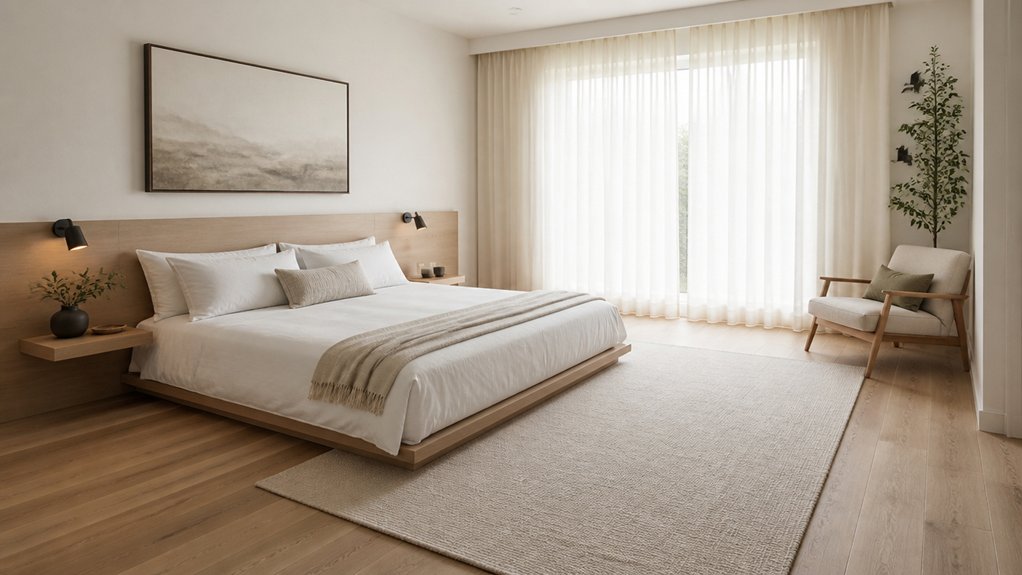
Before you buy anything new, map an open layout by placing the bed first: it’s the largest piece, and it sets every pathway. Slide it to the longest uninterrupted wall so you keep clear entry and closet access. If you can, leave one side open for easy making and a calmer flow; if not, keep a minimum walking lane at the foot.
Use bed placement to anchor everything else: align nightstands, lamps, and a slim dresser on the same axis so the room feels intentional, not cramped. Skip extra chairs and wide tables; choose wall-mounted shelves or a narrow bench instead.
Measure door swings, drawers, and window clearance, then commit to fewer, better-fitting pieces.
Use Light Paint and Curtains to Widen the Room
You can make your small bedroom feel wider by letting light lead the palette. Choose airy paint shades that bounce daylight and keep the walls visually quiet.
Hang sheer, light curtains to soften the window line and open the room up without adding bulk.
Choose Airy Paint Shades
Although a small bedroom can feel boxed in, airy paint shades instantly soften the edges and make the space read wider. Choose whisper-light whites, warm ivories, or pale greiges with a subtle undertone that matches your floor and bedding, so everything flows.
Let color psychology guide you: cool blue-grays calm a busy mind, while creamy neutrals feel protective without closing in. Keep the ceiling a step lighter than the walls to lift height, and paint trim in the same family to erase visual breaks.
Test swatches in morning and evening light, then commit to a low-sheen eggshell that bounces glow but hides flaws. Prioritize paint durability with scrubbable formulas, so scuffs don’t add clutter.
Hang Sheer Light Curtains
Since daylight does the heavy lifting in a tight bedroom, hang sheer, light curtains to let the window read larger and the walls feel farther apart. Mount the rod close to the ceiling and extend it beyond the frame so the panels stack off glass, not on it. You’ll borrow extra inches without moving furniture.
Choose sheer curtains in soft white or the same tone as your wall paint to keep edges quiet and the palette continuous. For privacy, pick light filtering fabric rather than heavy liners; it softens views while still brightening corners.
Keep hems just grazing the floor to lengthen the wall and prevent puddling clutter. If you need blackout, add a hidden roller shade so the sheers stay calm all day and night.
Choose Space-Saving Furniture With Built-In Storage
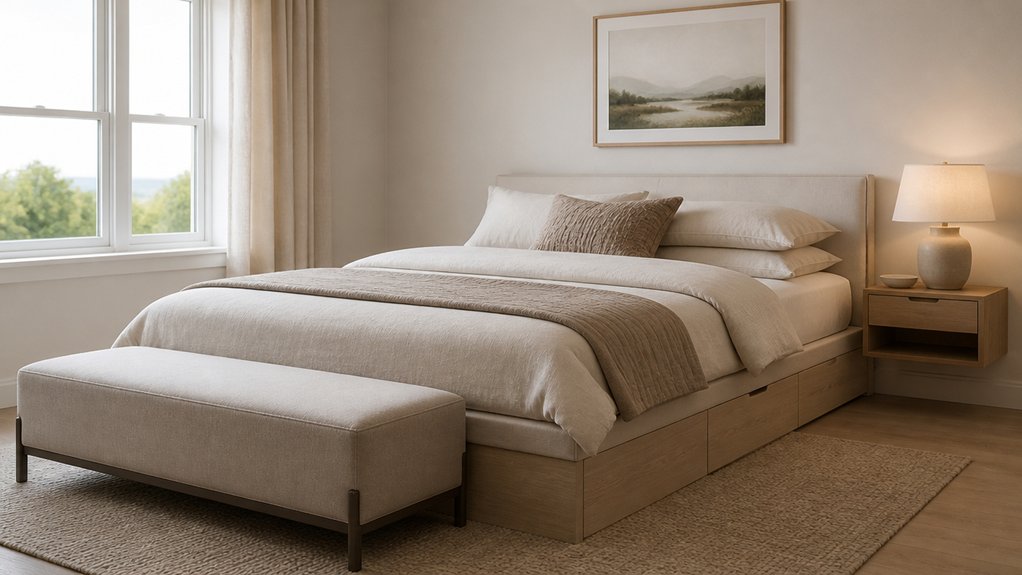
When every inch has to earn its keep, space-saving furniture with built-in storage keeps the room calm and functional. Start with a bed frame that tucks linens into drawers, so your surfaces stay clear. Choose a nightstand with a shelf or pullout tray, and you’ll keep books, chargers, and glasses contained.
Look for multifunctional furniture that does double duty: a bench that opens for extra blankets, a desk that folds down with cubbies for supplies, or a headboard with slim shelving. Favor clean lines and closed fronts, so visual noise disappears.
Use hidden compartments for valuables and small items you’d otherwise scatter—keys, earbuds, skincare—then you can reset the room in minutes. Stick to one finish family to keep everything cohesive and serene.
Add Under-Bed, Closet, and Vertical Storage Zones
If you zone your storage on purpose, you’ll reclaim floor space fast. Start with under bed storage: use low, lidded bins or drawers on casters, and group items by season so you can pull one category at a time. Keep the top of your nightstand clear by relocating backups and rarely used pieces below.
Next, tighten closet organization with matching slim hangers, a second hanging rod, and shelf dividers to stop stacks from slumping. Add a small tray for daily essentials so they don’t migrate to surfaces.
Finally, build vertical zones: mount a narrow wall shelf, add an over-door rack, or stackable cubes in one corner. Choose one calm color for containers to keep everything visually quiet and tidy.
Layer Warm Lighting (Ambient, Task, Bedside)
Layer warm lighting so your small bedroom feels calm, not cramped: start with a soft ambient glow that smooths edges and lifts the room.
Add a focused task light where you read, dress, or work so you’re not relying on one overhead fixture.
Then balance bedside lamps on both sides (or use a sconce) to keep the bed centered and the light easy on your eyes.
Build A Soft Glow
How do you make a small bedroom feel calm without adding clutter? You build a soft glow by layering light so the room feels gentle from every angle.
Start with Ambient lighting that’s warm and dimmable: a flush-mount, slim pendant, or wall-mounted fixture keeps the ceiling clear and the footprint zero. Add a hidden LED strip behind a headboard or along a floating shelf to wash the wall and visually widen the space.
Keep bulbs in the 2700K range and match finishes so everything reads as one quiet set. Let Soft color palettes do the rest—creamy whites, sand, or muted sage reflect light evenly, reduce contrast, and help the room settle at night.
Add Focused Task Light
Because overhead light can feel flat up close, add focused task lighting where you actually read, dress, and wind down. Mount a slim swing-arm sconce by your headboard, or clamp a tiny lamp to a shelf so your nightstand stays clear. Aim it down and slightly forward, so the beam hits pages and fabrics without bouncing glare into your eyes.
Choose warm LEDs (2700K–3000K) and a dimmer switch, letting you move from crisp task illumination to a quieter glow in seconds.
For dressing, tuck an adjustable spotlight near the closet or mirror, keeping the source small and the effect precise. Stick to one finish and shade material, so focused lighting feels calm, not busy, especially in tight corners.
Balance Bedside Lamps
Focused task lights handle the close-up moments, but balanced bedside lamps give the room its steady, lived-in glow. Keep them warm and simple: matching shades, similar height, and bulbs in the 2700K range so your walls soften instead of glare.
For small rooms, choose slim bases or wall-mounted sconces to free the nightstand.
Aim for symmetrical lighting balance even if your furniture isn’t identical. You can center each lamp to the bed, not the table, so your light feels intentional.
Nail bedside lamp placement by setting the shade bottom near chin level when you sit up; it cuts eye strain and keeps light off the ceiling.
Add dimmers or low-watt LEDs, and you’ll layer ambient, task, and bedside light without clutter.
Keep Decor Minimal With Mirrors and Calm Textiles
Even if your bedroom’s footprint is tight, you can make it feel open by keeping decor minimal and letting a few intentional pieces do the work. Hang one generously sized mirror opposite a window to bounce light and visually widen the room, or lean it behind a slim dresser to avoid extra holes and hardware. Skip clusters of frames; choose one calm print in a thin profile.
Let textile textures add softness without visual noise: a breathable linen duvet, a matte cotton throw, and two pillows in the same muted palette. Layer tone-on-tone solids instead of busy patterns, so everything reads cohesive.
Keep Decorative accents to a tray, a small vase, and one candle, then tuck the rest away. You’ll get serenity, not clutter.
Conclusion
You’ve mapped the bed, brightened the walls, and recruited furniture that secretly hoards your stuff like a polite magician. You’ve tamed the under-bed, the closet, and the vertical “sure, I’ll hang that” zone. You’ve layered lighting so you don’t live in interrogation-glare. And now, décor stays minimal—because apparently every trinket “sparks joy” until it sparks chaos. Keep it calm, keep it clear, keep it yours.