

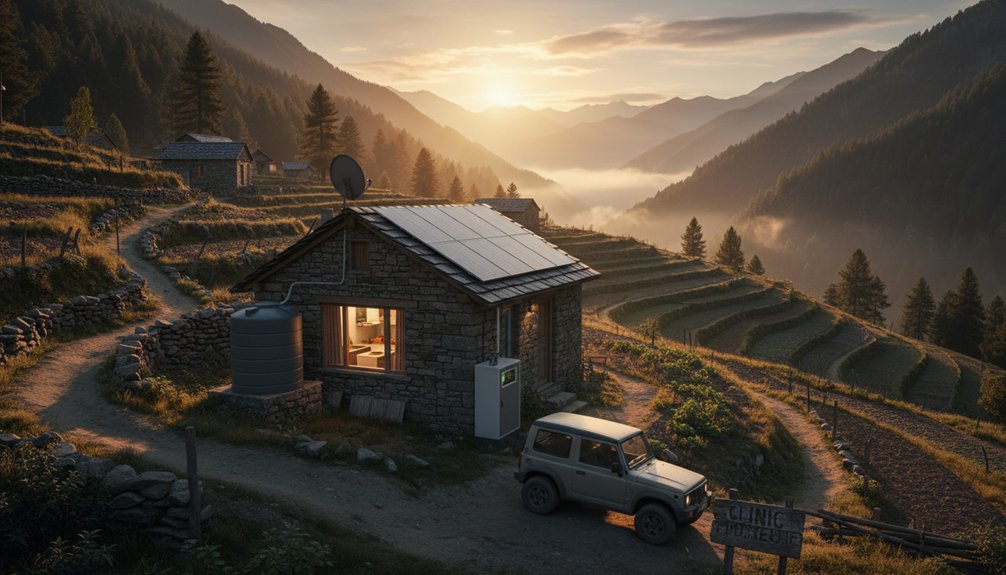
You can buy in a remote village without losing essentials if you audit livability like infrastructure. Set maximum travel times to clinics, pharmacies, and emergency care, then verify potable water, wastewater, grid stability, backup power, and waste pickup. Run on-site internet speed tests at peak hours and test multiple carriers indoors and out. Map groceries, fuel, schools, and seasonal closures, and confirm winter road access and plowing. Keep going to see the key viewing questions.
Key Takeaways
- Set non-negotiable travel-time limits to clinics, pharmacies, and emergency services before viewing any property.
- Verify utilities on-site: potable water, wastewater treatment, grid reliability, backup power options, and consistent waste collection.
- Test internet and mobile coverage at the home during peak hours, and confirm real speeds and outages with neighbors.
- Map year-round access to groceries, schools, fuel, and childcare, accounting for seasonal closures, delivery limits, and outages.
- During viewings, request maintenance records for well, septic, heating, and roads, and ask residents about response times and governance.
Build Your Essential Village Amenities Checklist

Before you fall in love with a view or a bargain price, build a non-negotiables checklist that reflects how the village actually functions day to day. Start with travel-time thresholds: minutes to a primary care clinic, pharmacy, and emergency services, plus winter road reliability and public transport frequency.
Add utilities you can verify: potable water source, wastewater treatment, grid stability, backup power prevalence, and waste collection schedules.
Map daily needs—grocery basics, fuel, childcare, and school enrollment capacity—and note seasonal closures.
Use Community engagement to validate the numbers: ask shopkeepers about supply gaps and residents about response times.
Review Local governance documents for planned maintenance, zoning limits, and tax rates.
Your checklist turns charm into measurable liveability.
Verify Rural Internet Speeds and Mobile Signal
Although the listing might claim “high-speed internet,” you should verify rural broadband and mobile signal with on-the-ground tests and local records, because last-mile infrastructure varies street by street. Run speed tests at the house at peak hours, then compare results with ISP availability maps and county broadband reports.
Ask neighbors what upload speeds they actually get, what outages look like, and whether fiber or fixed wireless expansion is funded or delayed.
Check Mobile coverage by testing multiple carriers on the property, indoors and outside, and noting LTE/5G bands and dead zones.
Confirm if the area relies on Satellite connectivity, and review latency, data caps, and weather sensitivity.
Finally, inspect the route to the nearest cabinet or tower; distance and terrain drive performance for years.
Check Groceries, Schools, and Healthcare Access
Fast internet helps, but day-to-day livability in a remote village hinges on how quickly you can reach food, classrooms, and care. Map the nearest grocer, bakery, and weekly market; check opening hours, delivery coverage, and refrigeration reliability during outages.
Ask residents what a “full shop” actually stocks and how prices compare to the nearest town. For schools, verify class sizes, teacher turnover, language support, and after-school programs; a small roll can mean closures or merged grades.
For healthcare, confirm the clinic’s staffing days, emergency response coverage, pharmacy access, and referral pathways to hospitals. Attend local community events to hear unfiltered feedback and observe traditional village customs that shape service priorities and volunteer support networks.
Confirm Year-Round Transport and Commute Times
When you can’t count on a road staying open in every season, transport turns from a convenience into the backbone of daily life. Map your Transportation options across winter storms, spring thaw, and tourist peaks: paved access, gravel maintenance, ferry schedules, bus routes, and community ride-shares.
Verify commuting duration with real numbers, not estimates. Time a workday trip to the nearest job hub, school, clinic, and grocery, then add buffers for snow clearance, livestock crossings, and single-lane bridges.
Check who plows, how fast they respond, and whether power outages affect fuel pumps or charging. Review mobile coverage for breakdowns and confirm emergency response routes.
Talk with residents about weekly bottlenecks and seasonal closures so you can plan childcare, shifts, and deliveries year-round.
Ask Viewing Questions That Uncover Hidden Gaps

Before you fall for the view or the price, use the showing to run a gap analysis: ask targeted questions that produce dates, costs, and responsible parties, not “it’s usually fine.”
Get the seller and agent to name the last service year for the well/septic/heating system, the outage frequency and typical restoration time, the exact internet type and tested speeds at the property line, and who maintains the road, ditching, and culverts in each season.
Then verify: request permits, pump-out receipts, utility outage logs, and a speed test screenshot.
Ask what happens when you’re away—who checks for freezes, storm damage, or trespass.
Map local community dynamics: who you call first, what services volunteer, and what’s fee-based.
Finally, ask how renovations align with Cultural preservation rules.
Conclusion
You can love village life and still keep essentials close. Start with your amenities checklist, then verify real internet and mobile signal at the property—not just the postcode. Map groceries, schools, and healthcare, and time the drive in winter conditions. Ask pointed viewing questions to reveal hidden gaps like septic upkeep or delivery limits. Remember: around 40% of rural households still lack decent broadband access—so you’re not being picky, you’re protecting your future.